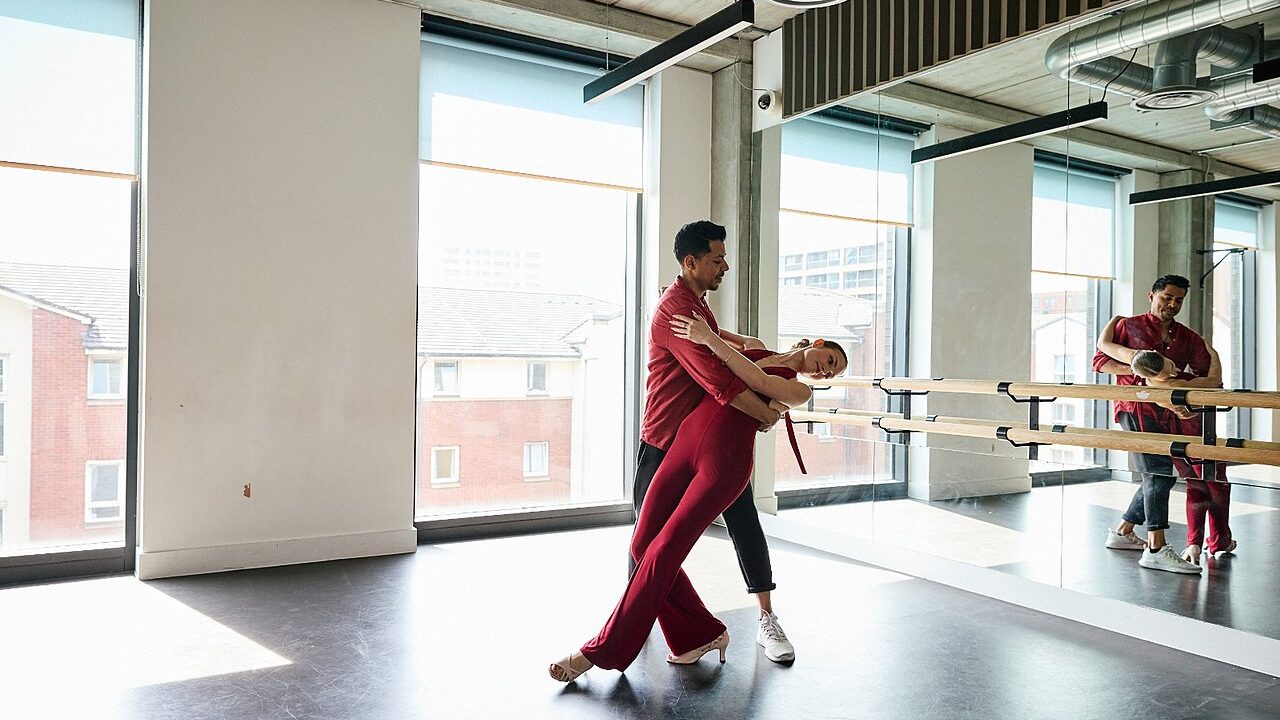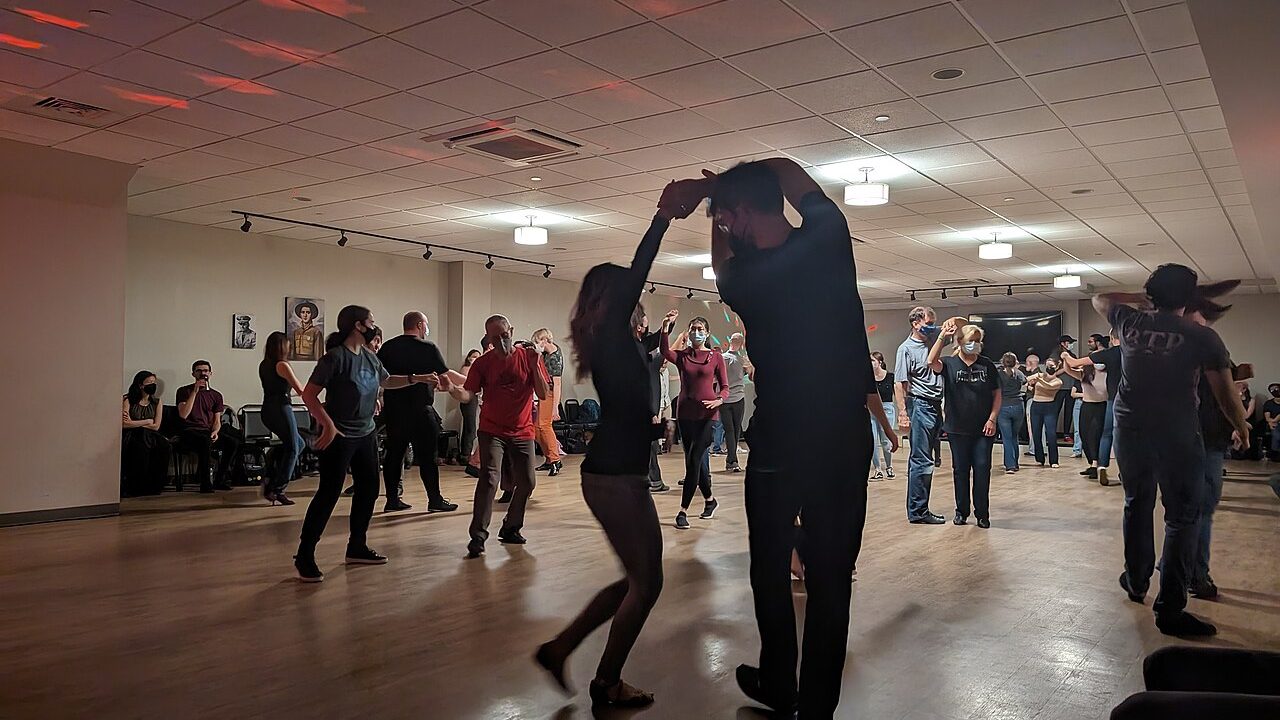
West Coast Swing is a partner dance from California, with roots in Lindy Hop. Partners dance in a narrow slot, with an elastic connection built on stretching and compressing the frame, and the dance adapts to almost any modern music, from blues and R&B to pop and hip-hop. In 1988, the California Legislature made it the state's official dance. Today it has a big international scene of social dances and competitions, famous for its improvised Jack and Jill contests.
From Lindy Hop
The California State Capitol Museum describes West Coast Swing as a California story, rooted in the Lindy Hop of the 1930s and the jitterbug that followed. In the 1940s and 1950s, many regional styles of swing existed across the United States.
On the West Coast, dancers adapted swing to new music and to dance floors and studios, and the style became smoother and more linear. Lindy hopper Dean Collins, who arrived in Los Angeles in the 1930s and danced in Hollywood films, is often cited as an influence. The name "West Coast Swing" came later, as the dance was codified by teachers.
The slot
The most recognisable feature is the slot. The follower travels up and down a narrow line, while the leader moves in and out of it. This shape is often explained by crowded dance floors, though the exact origin is debated.
Patterns are built on six and eight counts, with names such as the sugar push, the left side pass, the underarm turn and the whip, and many end with an anchor step where partners settle and reconnect.
Official state dance
In 1988, the California Legislature passed Senate Bill 2460, which made West Coast Swing the official state dance and square dancing the official state folk dance. The World Swing Dance Council dates the designation to 1 October 1988.
Music and improvisation
West Coast Swing's great strength is musical freedom. Dancers play with the lyrics, the breaks and the rhythm of almost any song with a steady beat, and the dance changes with the music of each era.
That is also why competitions often use Jack and Jill formats, in which partners are drawn at random and must improvise to music they have not chosen. The World Swing Dance Council, founded in 1993, runs a points system that ranks dancers by level.
Why dancers from other scenes try it
Many kizomba, bachata and salsa dancers end up taking West Coast Swing classes, because it trains connection, musicality and improvisation to pop and R&B. Its festival culture, with workshops, social dancing and competitions, works much like the congress circuit we describe in Who Invented the Dance Congress?.
FAQ
What is West Coast Swing?
A partner dance with roots in Lindy Hop, danced in a narrow 'slot' with an elastic connection between partners. It is danced to blues, R&B, pop, hip-hop and other modern music.
Is West Coast Swing the state dance of California?
Yes. The California Legislature made it the official state dance in 1988 (Senate Bill 2460), with square dancing as the official state folk dance.
What is the difference between West Coast and East Coast Swing?
East Coast Swing is a circular, bouncy dance usually danced to swing and rock 'n' roll. West Coast Swing is danced in a slot, smoother and more elastic, and adapts to slower modern music.
Sources
- California State Capitol Museum, "Dance: West Coast Swing"
- World Swing Dance Council, "Evolution of WCS"
- State Symbols USA, "West Coast Swing"