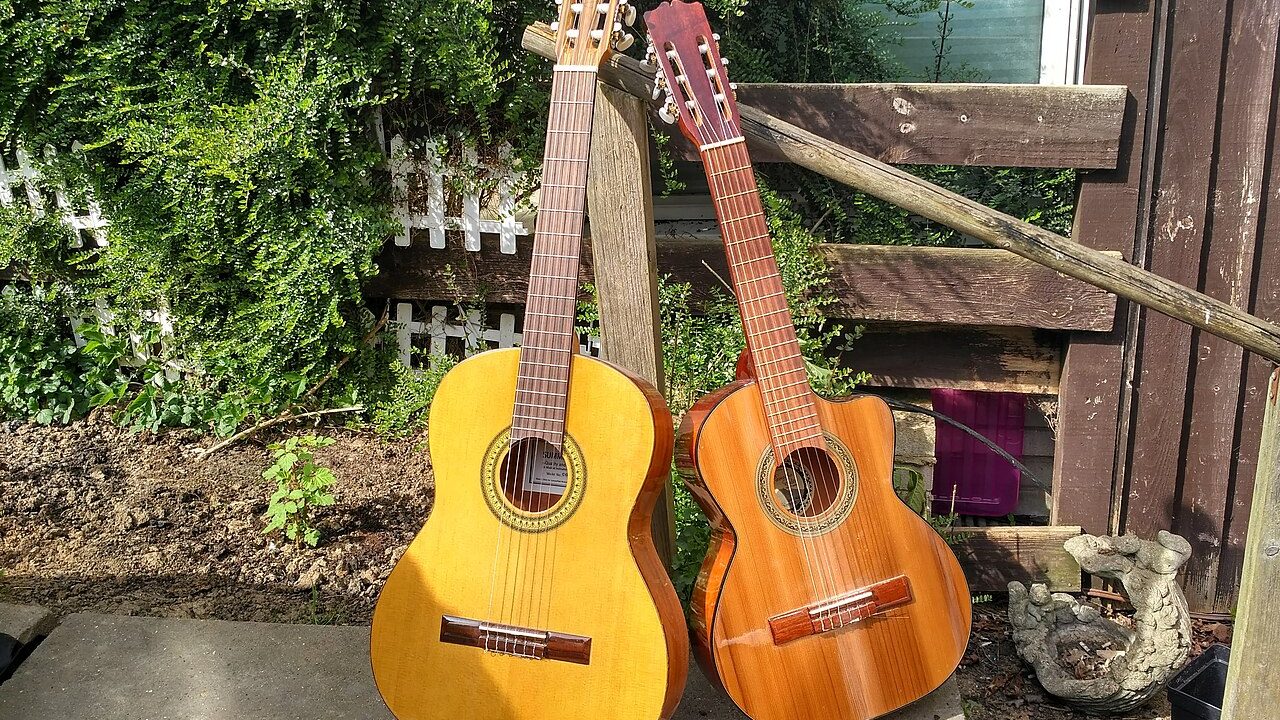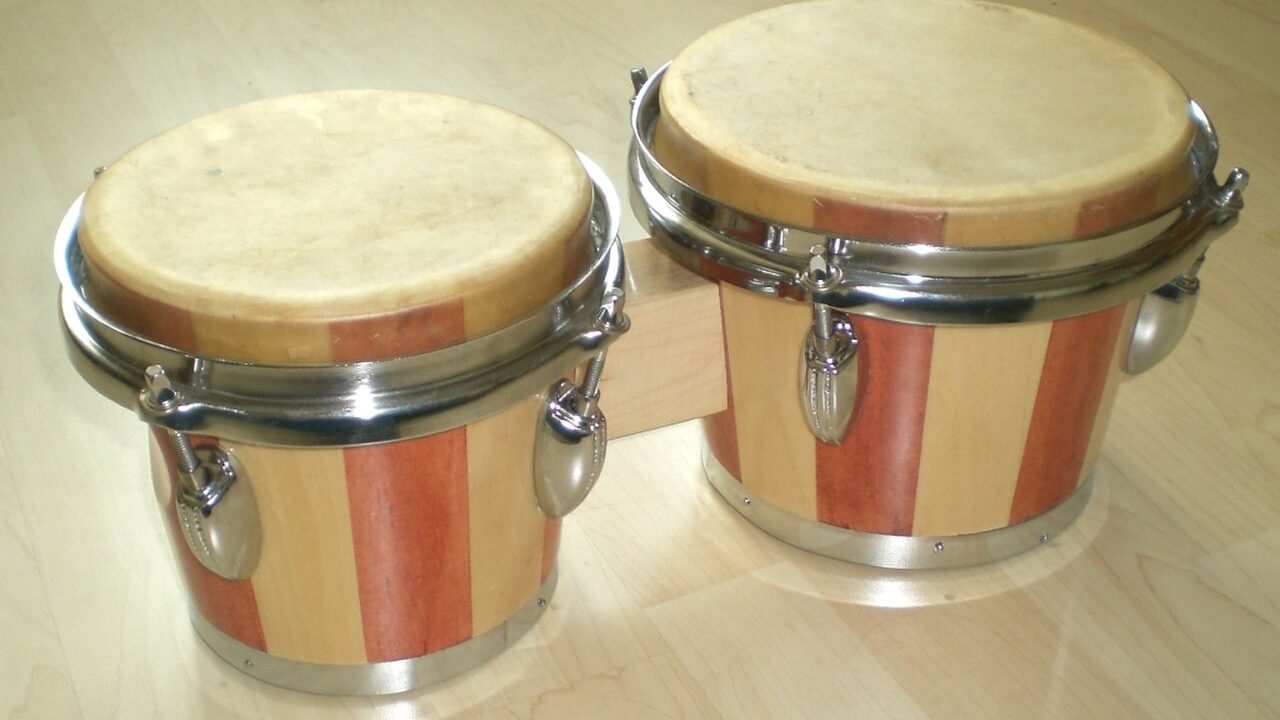
A traditional bachata band is built on five instruments: the requinto (lead guitar), the segunda (rhythm guitar), the bass guitar, the bongo and the güira, a metal scraper played with a brush. Each one plays its own pattern, and together they make the swaying, syncopated groove dancers step to. The crying lead guitar you recognise in any bachata song is the requinto. Knowing what each instrument does is one of the quickest ways to dance bachata with more musicality.
A small band with a big sound
Bachata was born as guitar music in the Dominican Republic, closer to the bolero than to the big orchestras of salsa. The band stayed small: two guitars, a bass and two percussion instruments. Ubisoft's Breaking Down Bachata series, written for guitar learners, describes the five parts as pieces of a musical puzzle, each with its own rhythm, melody and syncopation.
Bachata is in 4/4 time, four beats to a bar. Dancers usually count in eights, two bars at a time, with the famous tap or hip movement on four and eight.
The requinto: the voice of bachata
The requinto is the lead guitar, and the star of the band. Ubisoft describes a nylon-string requinto as roughly four-fifths the size of a classical guitar and tuned a fourth higher, which gives it its bright, high voice. In many modern bands the lead guitar is electric or steel-strung: The Dance Dojo notes that the lead guitar went electric in the late 1980s, part of what gives today's bachata its sound.
The requinto plays fast runs, arpeggios and the "crying" melodic lines between the singer's phrases. It often opens the song with an introduction that tells you immediately what kind of bachata you are about to dance.
The segunda: the engine
The segunda, or second guitar, is usually a standard acoustic guitar. It plays a steady, defined pattern. According to Ubisoft, it plays on all the upbeats and downbeats, with low "bass" notes on beats one, three and four. Wikipedia notes that the segunda's main job is adding syncopation.
If the requinto is the voice, the segunda is the engine room: you rarely notice it, but without it the music falls apart.
The bass: where you step
The bass guitar holds the low end. Ubisoft explains that in the verses it often matches the segunda's bass notes on beats one, three and four, but drops the second beat, keeping just a pick-up into the third. That rhythmic pattern is a big part of bachata's swing.
For many dancers, the bass is the easiest instrument to follow to find the beat. When you are lost, listen for it.
The bongo and the güira: the percussion
The bongo, a pair of small drums, gives bachata its rhythmic chatter, with fills and accents that push the music forward. The güira, a metal scraper played with a brush, adds a bright, shimmering pulse.
The güira was not always there. Wikipedia notes that in the 1960s and 1970s, bachata bands used maracas instead, and that the change to the more versatile güira in the 1980s came as bachata became more dance-oriented.
How a song changes: derecho and majao
Bachata songs move between different rhythmic sections. The verses are usually played in the derecho, a steadier groove. In the majao, the percussion changes pattern, the energy builds and the song often lifts. Ubisoft explains that the bongos and güira change their patterns when the music moves from derecho to majao, while the segunda and bass keep theirs.
Many songs also have instrumental breaks where the requinto takes over, and moments where the band stops for a beat or two. These are the moments dancers wait for.
Using the instruments as a dancer
You do not need to play an instrument to use this knowledge. A few ideas:
- Follow the bass to stay on time, especially in fast or complex songs.
- Play with the requinto. Its runs invite footwork, small styling or a change of rhythm in your steps.
- Feel the majao. When the percussion changes, raise your energy: bigger footwork, more movement, a turn.
- Hit the breaks. When the band stops, stop with it, or hold a shape until the music returns.
This kind of musicality is at the heart of Dominican bachata, where the feet often answer the guitars directly.
From guitar boleros to today
The instruments tell bachata's history. The earliest recordings, such as José Manuel Calderón's in 1962, were close to guitar boleros, with maracas and nylon guitars. Over the following decades the music got faster, the güira replaced the maracas and the lead guitar went electric. Modern and urban bachata added synthesizers and production from pop and R&B, but most songs still keep the five-instrument core.
For the bigger story of the genre, read What is bachata?.
FAQ
What instruments are used in bachata?
A traditional bachata band uses five instruments: the requinto (lead guitar), the segunda (rhythm guitar), the bass guitar, the bongo and the güira, a metal scraper played with a brush.
What is a requinto?
The lead guitar of bachata, usually smaller than a classical guitar and tuned higher. It plays the crying melodic lines that define the bachata sound.
What are derecho and majao in bachata?
Two of the rhythmic sections of a bachata song. The derecho is the steadier groove of the verses; in the majao, the percussion changes pattern and the music builds energy.
Sources
- Ubisoft Rocksmith+, "Breaking down bachata" series, parts 1 and 3 (Leila Abdul-Rauf), 2021
- The Dance Dojo, "Bachata music: the instruments, sound and songs of bachata"
- Wikipedia, "Bachata (music)"