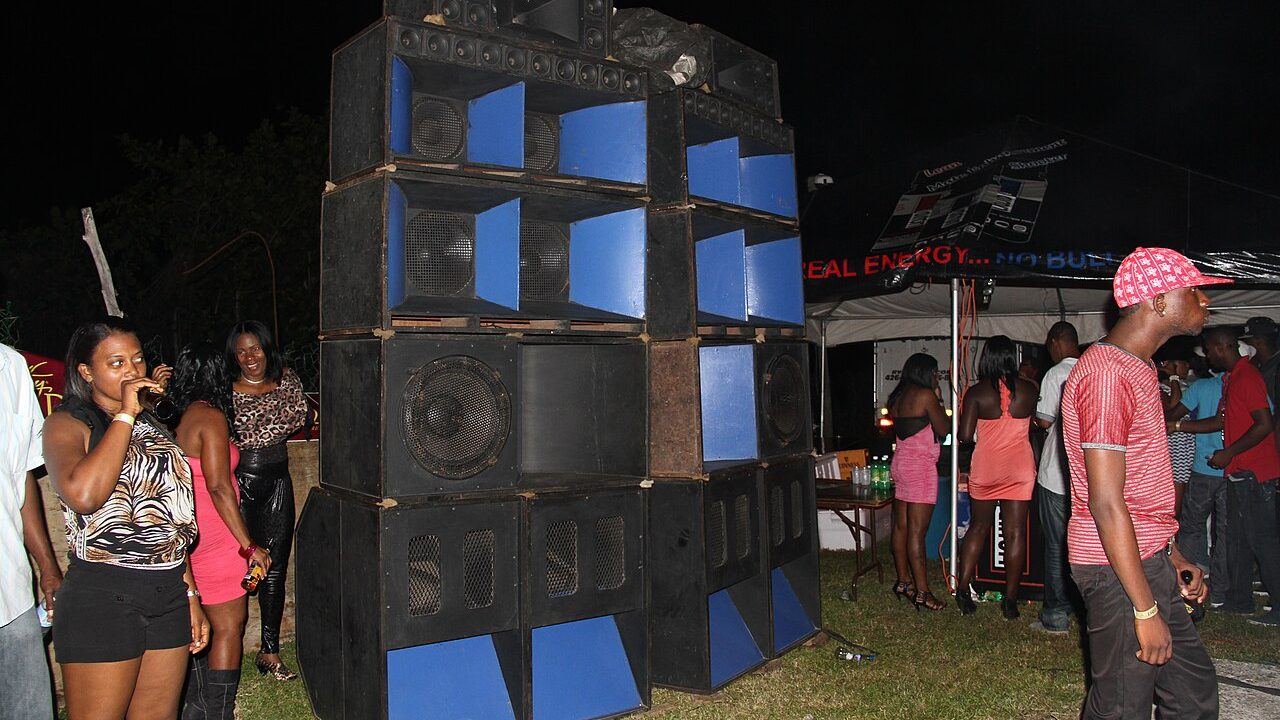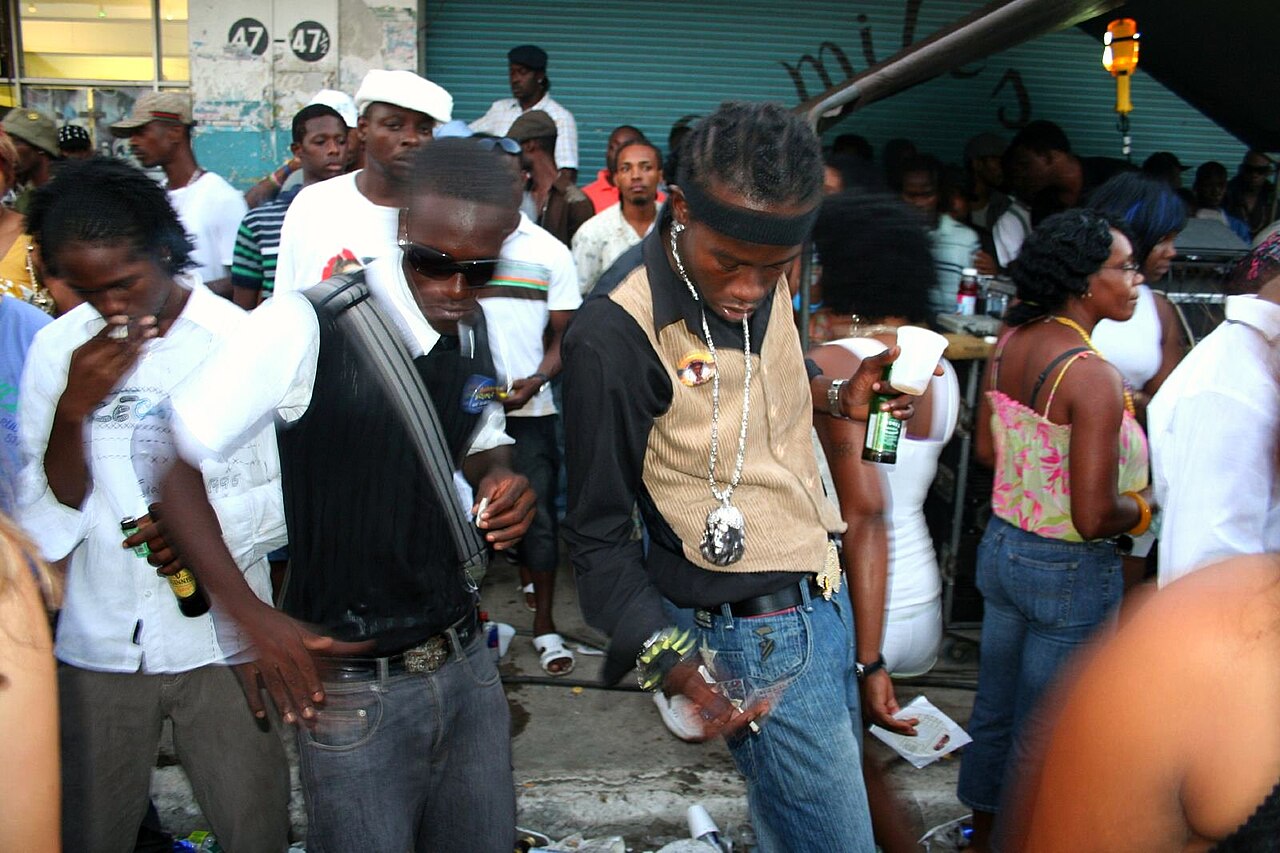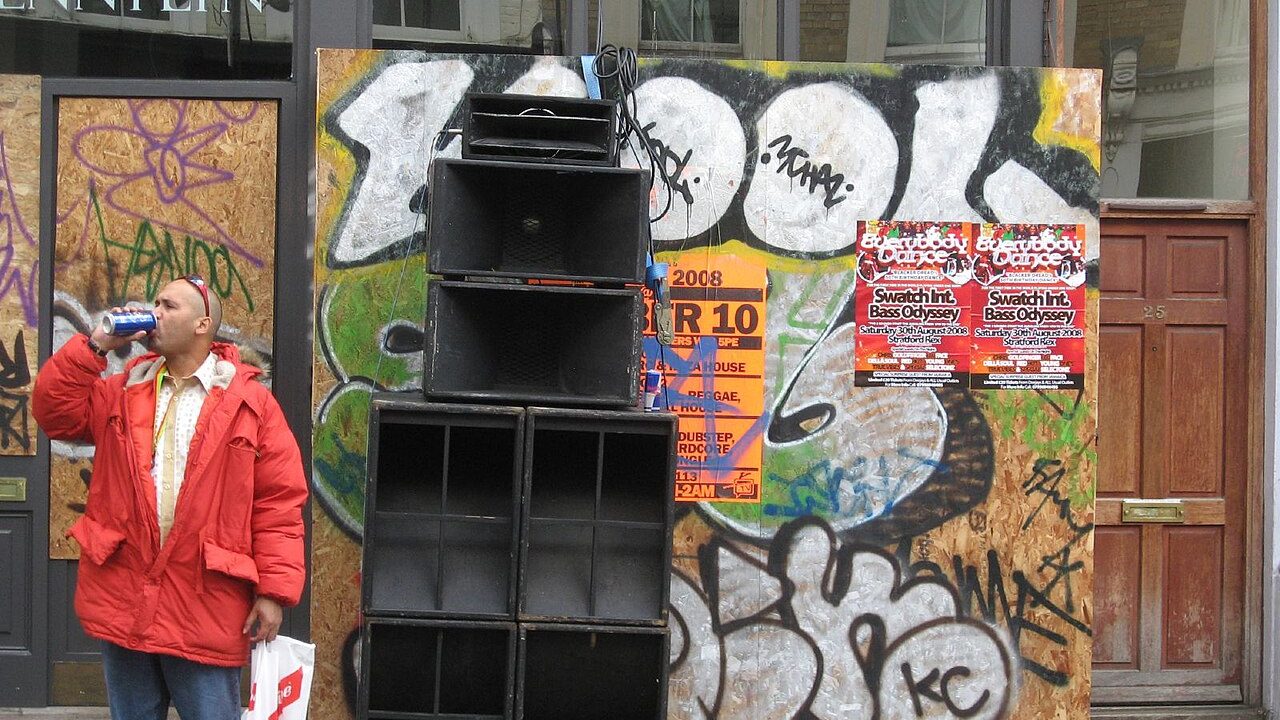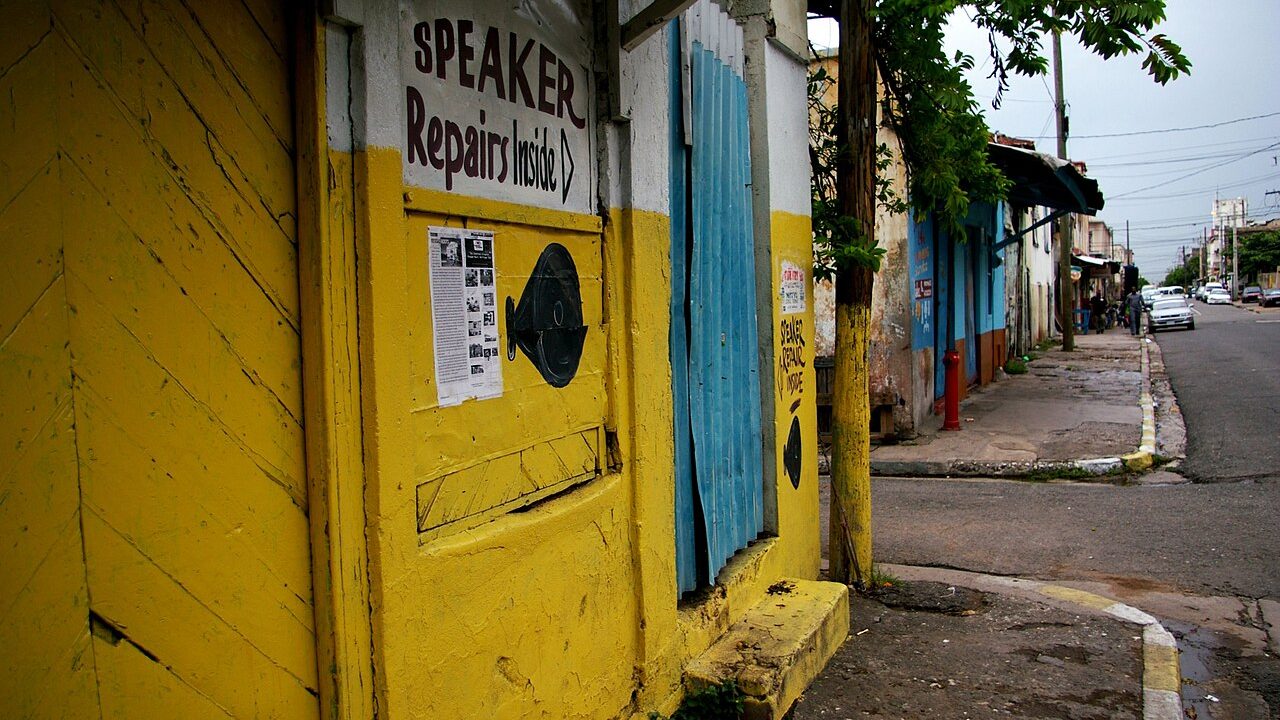
A sound clash is a battle between two or more sound systems: the mobile discos of Jamaica, with their towers of speakers, their selectors and their MCs. Each sound plays in turn and tries to win the crowd with the best records, above all dubplates, exclusive recordings made just for that sound, and with sharp, cutting talk on the mic. There are no judges in the classic format: the crowd decides, with its shouts, horns and lighters. Clashes began in Kingston in the 1950s, shaped reggae and dancehall, and still draw crowds around the world today.
Sound systems first
To understand the clash, you need the sound system. In post-war Jamaica, few people could afford records or record players, and live bands were expensive. Enterprising operators built huge speaker boxes and amplifiers, loaded them onto trucks and played American rhythm and blues records at open-air dances in Kingston's yards and streets.
The early stars of this world included Tom the Great Sebastian, run by the Chinese-Jamaican businessman Tom Wong, Arthur "Duke" Reid with his Trojan sound, and Clement "Sir Coxsone" Dodd with his Downbeat sound. Red Bull Music Academy notes that owners like Duke Reid and Sir Coxsone took names that reflected their status in the community.
A sound system is a team. The selector chooses and plays the records. The deejay or MC talks over them, hyping the crowd and boasting about the sound. Behind them are engineers and box boys who carry and wire the equipment.
The first clashes
Competition came naturally. Wikipedia, drawing on Norman Stolzoff's history of dancehall culture, dates Jamaican sound clashes back at least to the 1950s, when systems like Tom the Great Sebastian and Duke Reid's Trojan clashed in Back-O-Wall, the Kingston neighbourhood now called Tivoli Gardens.
Those early battles could be rough. Duke Reid, a former policeman, was famous for his showmanship, and rivalries sometimes spilled over into violence. But at the heart of it was the music: whoever had the record nobody else had, and played it at the right moment, won the night.
From exclusives to a record industry
The search for exclusive records changed Jamaican music. As rivals hunted the same American imports, Coxsone and Duke Reid began recording local musicians to get songs nobody else could play. Jamaicans.com describes how the rivalry between Duke Reid and Coxsone's Downbeat drove record production, as each tried to outdo the other with unreleased material.
Those exclusives, cut on soft acetate discs, became known as dubplates. Coxsone's operation grew into Studio One, and Duke Reid's into Treasure Isle, two of the most important labels in Jamaican history. In other words, ska, rocksteady and reggae owe a great deal to sound systems trying to beat each other.
How a clash works
Formats vary, but a classic clash follows a pattern. Sounds take turns, round after round. A sound might start with "warm-up" selections, then move on to its heaviest dubplates: special versions of hit songs where the artist sings the sound's name and insults its rivals. The MC frames each tune, mocks the opponent and plays on the crowd's mood.
Red Bull Music Academy points out that in the old days there was no score card, no time limit and no point system. A sound that misjudged the crowd could be "played out", beaten so clearly that it had nothing left to answer with.
Since the crowd is the judge, results are often argued about for years.
Clash goes digital and global
In the 1980s, clashes helped launch dancehall's digital era. The Sleng Teng riddim was first played at a clash between King Jammy's sound and Black Scorpio in February 1985, a story told in What is a riddim?. Dancehallmag credits Tenor Saw's "Ring the Alarm" with bringing soundclash culture to a mass audience.
As Jamaicans migrated abroad, sound systems travelled with them, packed into suitcases and rebuilt in basements and halls in diaspora cities, and new scenes grew far from Kingston.
World Clash
By the 1990s, international sounds wanted to test themselves against the best. Red Bull Music Academy describes the "world clash" format as the Olympics of sound system competition. One of the first was held in London in 1993, at Rollers Express, with sounds from Jamaica, the UK and the United States; Mixdown Magazine notes that it ended in a controversial result.
In 1998, the New York promoters Irish and Chin started their World Clash series in Queens. Dancehallmag reports that Garfield "Chin" Bourne said the goal was to reduce unruly behaviour and increase fair play. The format has since travelled widely, and brand-sponsored events such as Red Bull Culture Clash brought clash rules to festival-sized audiences.
What it means for dancers
A clash is not a dance battle, but dancers are part of it. The crowd's energy is what each sound is fighting for, and many dancehall moves and songs grew up in the same yards and lawns. The competitive spirit runs through the whole culture, from street sessions to the stage clashes of shows like Sting.
If you ever get the chance to attend a clash, go with an open mind and a loud voice. For the music behind it all, start with What is dancehall music?.
FAQ
What is a sound clash?
A competition between two or more sound systems. Each plays records in turn, often exclusive dubplates, and talks on the mic to win the crowd. The crowd's reaction decides who wins.
What is a dubplate?
An exclusive recording made for one sound system, often a version of a hit song with lyrics that praise that sound and attack its rivals. In a clash, dubplates are the main weapons.
What is World Clash?
An international sound clash format where sounds from different countries compete on the same night. One of the first was held in London in 1993, and the promoters Irish and Chin started their World Clash series in New York in 1998.
Sources
- Red Bull Music Academy Daily, "Sweet reggae music pon di attack: a history of soundclash", October 2016
- Wikipedia, "Sound system (Jamaican)" and "Sound clash", citing Norman C. Stolzoff, Wake the Town and Tell the People, Duke University Press, 2000
- Dancehallmag, "How Tenor Saw's 'Ring the Alarm' brought soundclash to the masses"
- Mixdown Magazine, "The history of sound clash culture", 30 May 2024
- Jamaicans.com, "The impact the legendary Clement 'Sir Coxsone' Dodd had on Jamaican music"