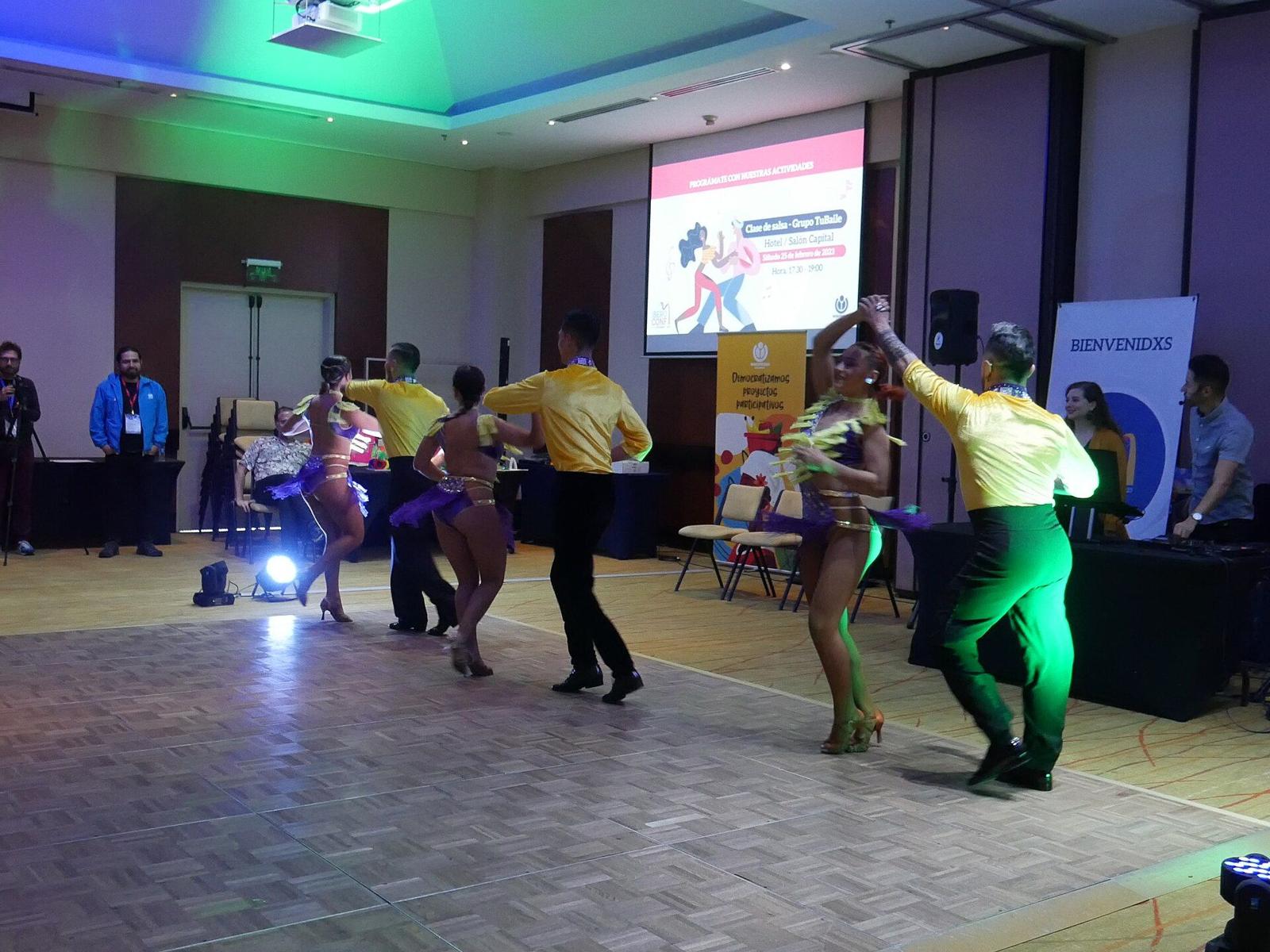
The dance congress, the weekend format of workshops, shows and all-night socials in a hotel or convention centre, was invented in Puerto Rico in 1997. The first event was called El Congreso Mundial de la Salsa, the World Salsa Congress. It was founded by Eli Irizarry on the island and Quetzy Olmos from New York. Today the format runs every weekend in cities around the world, for salsa, bachata, kizomba, zouk and more.
Puerto Rico, 1997
The best sources on the first congress are academic. The dance scholar Juliet McMains, in Spinning Mambo into Salsa (Oxford University Press, 2015), and Priscilla Renta, in a chapter of Salsa World (Temple University Press, 2014), both place it in Puerto Rico in 1997.
Renta describes it as a transnational collaboration between two founders: Eli Irizarry, on the island, and Quetzy Olmos, based in New York. Popular histories often name only Irizarry. Olmos's role is documented, and it matters, because the congress was born from the link between Puerto Rico and its New York diaspora, the same link that shaped salsa itself.
The event still exists, now under the name Destino Salsa, and held its 30th edition in 2026.
A number we will not publish
You will often read that the first congress gathered 375 participants from 19 countries. We traced that figure. It comes from an online encyclopaedia entry with no citation at all, and neither McMains nor Renta gives any number. Repetition does not make a figure true, so we leave it out.
For a sense of scale, there is a documented figure: the tenth Berlin Salsa Congress, in October 2010, drew participants from 45 countries.
The United States and Albert Torres
In the United States, the first congress is credited to Albert Torres, organised in 1998 and held in May 1999 in Los Angeles. It became an annual fixture. Albert Torres died on 25 May 2017, at 60. His LA Salsa Fest closed in 2019.
What a congress is
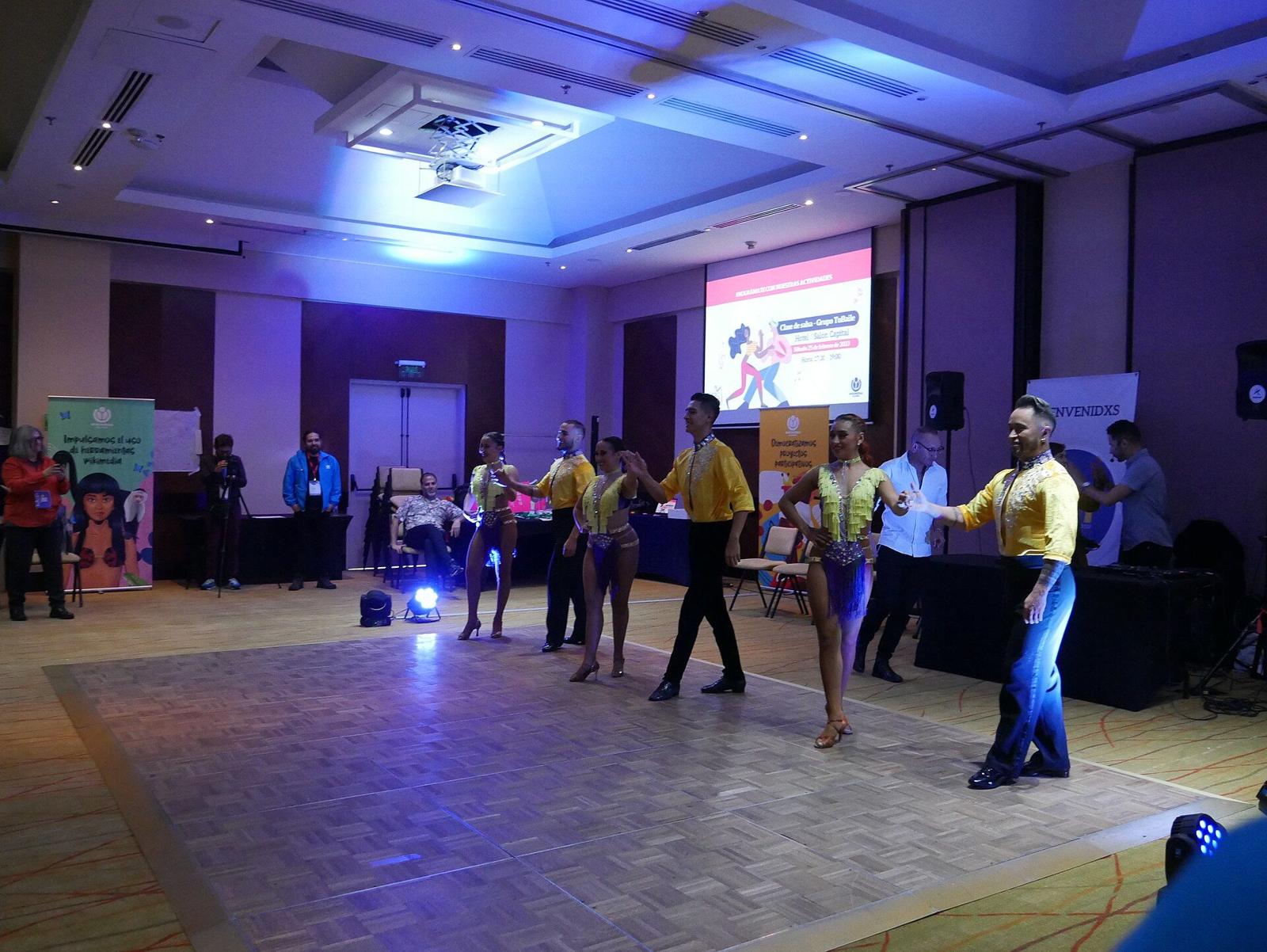
A Wiley-Blackwell chapter by Kabir (2013) describes the format well: a gathering place where salseros hone their skills, network, buy shoes, clothes and DVDs, and experience a salsa high over an extended weekend. Organised in hotels or convention centres, the congress is big business as well as big entertainment.
That description still fits most events today, whatever the dance: passes sold in tiers, international artists flown in, a hotel block, a schedule of classes from morning to evening, a show, then socials until dawn. The Spanish word congreso passed into global dance English unchanged.
The criticism came from the source
The congress has critics, and some of the sharpest are Puerto Rican. Renta argues that sabor, the flavour of street salsa, may be among the losses of salsa's global commercialisation. She records dancers putting it plainly: street salsa has more flavour, this kind is more formal.
That critique is worth remembering at any festival. The format that made partner dancing global also standardised it, priced it and moved it from the street to the ballroom.
What we still do not know
There is no reliable count of how many congresses take place each year; McMains describes several each weekend in cities around the world. There is no published data on gender ratios at congresses or on how much artists are paid. Those are questions for the next generation of research, and for the organisers who could open their books.
The congress is now the backbone of the kizomba, bachata and zouk circuits too. It is worth knowing that it began with two people, one island and one diaspora, in 1997.
FAQ
When was the first salsa congress?
In Puerto Rico in 1997. Its original name was El Congreso Mundial de la Salsa, today known as Destino Salsa.
Who founded the first salsa congress?
Eli Irizarry, on the island, and Quetzy Olmos, from New York. Scholars describe it as a transnational collaboration. Many popular accounts mention only Irizarry.
How many dance congresses are there each year?
No reliable count exists. The researcher Juliet McMains describes several each weekend in cities around the world.
Sources
- Juliet McMains, Spinning Mambo into Salsa: Caribbean Dance in Global Commerce, Oxford University Press, 2015
- Priscilla Renta, chapter 7 in Salsa World: A Global Dance in Local Contexts, Temple University Press, 2014
- Kabir, chapter on salsa congresses, Wiley-Blackwell, 2013
- U.S. National Park Service, material on Albert Torres and the first U.S. salsa congress