Salsa comes from three places at once. Its rhythms are Cuban, built mainly on son and the Afro-Cuban styles around it. Its modern sound was made in New York by Cuban and Puerto Rican musicians in the 1960s and 1970s. And its name was a label, popularised in that same New York scene and turned into a brand by Fania Records. Arguments about who "owns" salsa usually pick one of the three and ignore the others.
The Cuban foundation
The building blocks of salsa are Afro-Cuban: son, mambo, guaracha, guaguancó and cha-cha-chá. Cuban music reached a wide New York audience around 1930, when the Don Azpiazú Havana Casino Orchestra had a hit with the son "El Manisero", "The Peanut Vendor".
By the 1940s and 1950s, musicians in New York, many of them Puerto Rican, were playing mambo, son and cha-cha-chá in the city's dance halls. Bandleaders such as Tito Puente and Tito Rodríguez made New York a capital of Latin dance music long before anyone called it salsa.
The New York sound
What changed in the 1960s and 1970s was the sound and the context. Compared with 1950s Cuban son, New York salsa used more trombones and timbales, Puerto Rican touches and lyrics drawn from barrio life. The National Park Service's history of the genre lists son, bomba, plena, bugalú and mambo among its sources.
After the Cuban revolution, travel and trade between the United States and Cuba were cut. New York's Latin musicians developed the music on their own terms, for an audience that was increasingly Puerto Rican and Nuyorican.
Fania and a name
In 1964, the Dominican-born flautist and bandleader Johnny Pacheco and the lawyer Jerry Masucci founded Fania Records. Carnegie Hall's history notes that the label took its name from "Fanía Funché", an old Cuban song by Reinaldo Bolaños.
Fania grew fast, bought rival labels such as Tico and Alegre, and came close to a monopoly on the music, according to the National Park Service. Its stars, from Celia Cruz to Héctor Lavoe and Willie Colón, became the face of the genre, and the Fania All-Stars took it on tour.
The word "salsa", meaning sauce, is credited to the promoter Izzy Sanabria, who used it to describe the mix. Fania made it the name of an era.
The objection: "it's Cuban music"
Not everyone welcomed the label. Machito, the Cuban-born bandleader, said there was nothing new about salsa and that it was the same music played in Cuba for decades. Tito Puente was just as sceptical. Even Johnny Pacheco described salsa in interviews as Cuban music.
The objection is fair. The rhythms, the clave and much of the repertoire come from Cuba. But the sound, the arrangements and the culture that grew under the word "salsa" in New York were also new, and they belong to the Puerto Rican and Nuyorican musicians who built them.
The dance
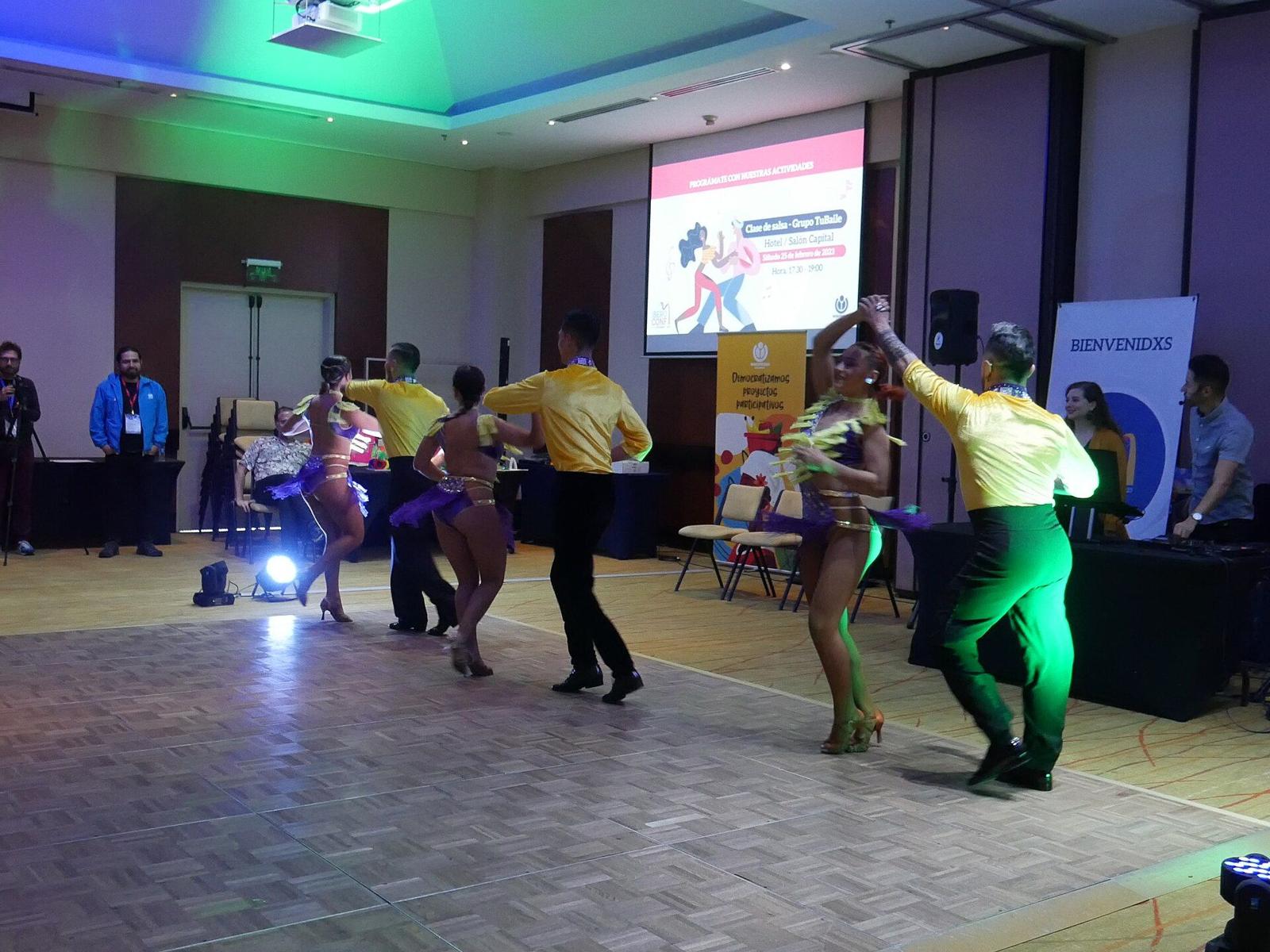
Salsa dancing has as many homes as the music. There is Cuban casino and rueda in Cuba, the line styles of New York and Los Angeles, and the fast footwork of Cali in Colombia, among others. Today the international festival circuit, which we trace in Who Invented the Dance Congress?, brings them together every weekend.
If you are deciding where to start, read Bachata vs Salsa. And for the singer who became salsa's most famous voice, read our portrait of Celia Cruz.
FAQ
Where did salsa originate?
Its musical roots are Cuban, mainly son, mambo and related Afro-Cuban styles. The sound and the name 'salsa' took shape among Cuban and Puerto Rican musicians in New York in the 1960s and 1970s.
Who named salsa?
The promoter Izzy Sanabria is widely credited with popularising the word. Fania Records, founded in 1964 by Johnny Pacheco and Jerry Masucci, turned it into a brand.
Is salsa Cuban or Puerto Rican?
Both, in different ways. The rhythms come from Cuba, while Puerto Rican and Nuyorican musicians in New York built the sound and the scene that carried the name worldwide.
Sources
- Carnegie Hall, Judy Cantor-Navas, "Salsa Music's New York Origins and History", December 2024
- National Park Service, "Salsa Is More Than Salsa", updated August 2023
- United States Patent and Trademark Office, "Inventing salsa", on Johnny Pacheco