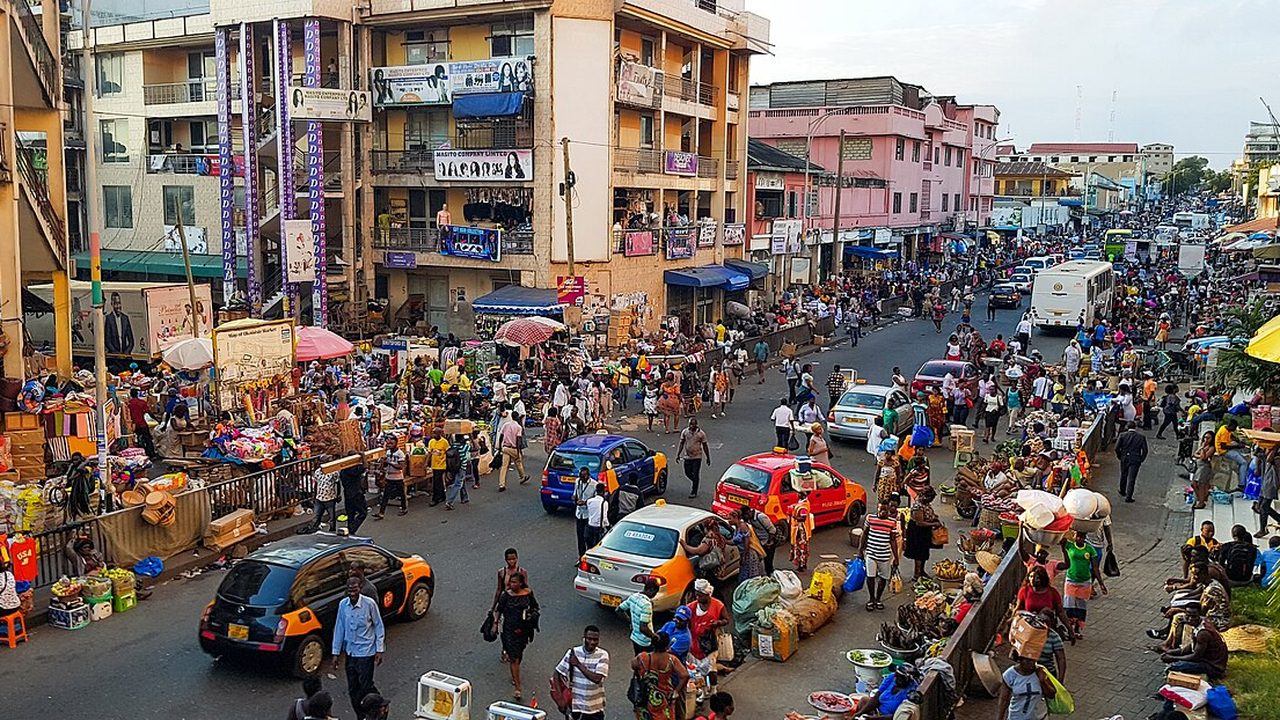
African music has become one of the strongest forces in global pop. Afrobeats stars fill stadiums in London and New York, amapiano shapes club culture far from South Africa, and both now have their own charts and awards. The influence is real and measurable. The money is a different story: by the IFPI's figures, sub-Saharan Africa still earns less than half a percent of global recorded music revenue.
The milestones
The last decade added up quickly:
- The UK's Official Afrobeats Chart launched on 26 July 2020; its first number one was NSG's "Grandad".
- Billboard's US Afrobeats Songs chart started on 22 March 2022, with CKay's "Love Nwantiti" at number one.
- The Grammy for Best African Music Performance was announced in June 2023 and first awarded in February 2024, to Tyla, then to Tems in 2025 and Tyla again in 2026.
- Wizkid played the Royal Albert Hall in 2017, then three nights at the O2 from 28 November 2021.
- Burna Boy played Madison Square Garden in April 2022 and Citi Field, with 41,800 seats, on 8 July 2023.
Not every institution has stayed committed. MTV created a VMA for Best Afrobeats in 2023 and dropped it for 2026 without public explanation. BET also removed its dedicated Africa category for 2026.
The growth
IFPI figures show sub-Saharan Africa as one of the fastest-growing music regions: up 34.7% in 2022, 24.7% in 2023 (the fastest-growing region in the world that year), 22.6% in 2024 to $110 million, and 15.2% in 2025 to $120 million. South Africa accounts for 78.1% of regional revenue.
Spotify reports that Nigerian artists earned $43.8 million on the platform in 2025, up 140% in two years, and South African artists $30.69 million, up 28%, with 74% of that earned outside South Africa.
The gap
Now put the numbers side by side. Global recorded music revenue reached $31.7 billion in 2025. Sub-Saharan Africa's $120 million is, by our own calculation from those two IFPI figures, less than 0.5% of the world market.
Part of the reason is the geography of payment. Data reported by Ecofin Agency in February 2026 shows that a million Spotify streams pays around $3,526 in the United States, $1,568 in South Africa and between $800 and $1,450 elsewhere in Africa. An artist whose fans are mostly at home earns far less for the same popularity.
Muyiwa Awoniyi, manager of Tems, and the analyst Akíntúndé Babátúndé both discussed these structural limits with Nigeria's BusinessDay in June 2025: global attention does not automatically become African income.
Why the sound travels
Several forces explain the cultural reach. Diaspora communities in London, Paris and New York built audiences and DJ networks. Streaming removed the need for Western labels to "break" an artist. And short video turned dances into the distribution system, as we show in How TikTok Changed the Way African Music Goes Global.
The music itself is built for movement, and dance floors spread it faster than any marketing campaign.
Influence is not ownership
The boom is real. So is the gap between who creates the culture and who captures the value. Royalty systems that rely on radio data, as we explain in The Black Box, and streaming payouts that depend on where listeners live both work against artists whose audiences are African.
The question for the next decade is not whether African music will shape global pop. It already does. It is whether the money will follow the music home.
FAQ
How fast is the African music market growing?
According to the IFPI, sub-Saharan Africa grew 24.7% in 2023, 22.6% in 2024 to $110 million, and 15.2% in 2025 to $120 million.
Why do African artists earn less per stream?
Streaming payouts depend on where listeners are. Data reported by Ecofin Agency in 2026 shows a million Spotify streams paying around $3,526 in the US but $800 to $1,450 in many African markets.
When was the first Grammy for Best African Music Performance?
It was announced in June 2023 and first awarded in February 2024, to Tyla. Tems won in 2025 and Tyla again in 2026.
Sources
- IFPI, Global Music Report 2023-2026
- Spotify, Loud & Clear data on Nigerian and South African artists, 2025
- Ecofin Agency, 1 February 2026, on IFPI data
- BusinessDay (Nigeria), June 2025, interviews with Muyiwa Awoniyi and Akíntúndé Babátúndé
- Official Charts Company and Billboard, Afrobeats chart launches 2020 and 2022