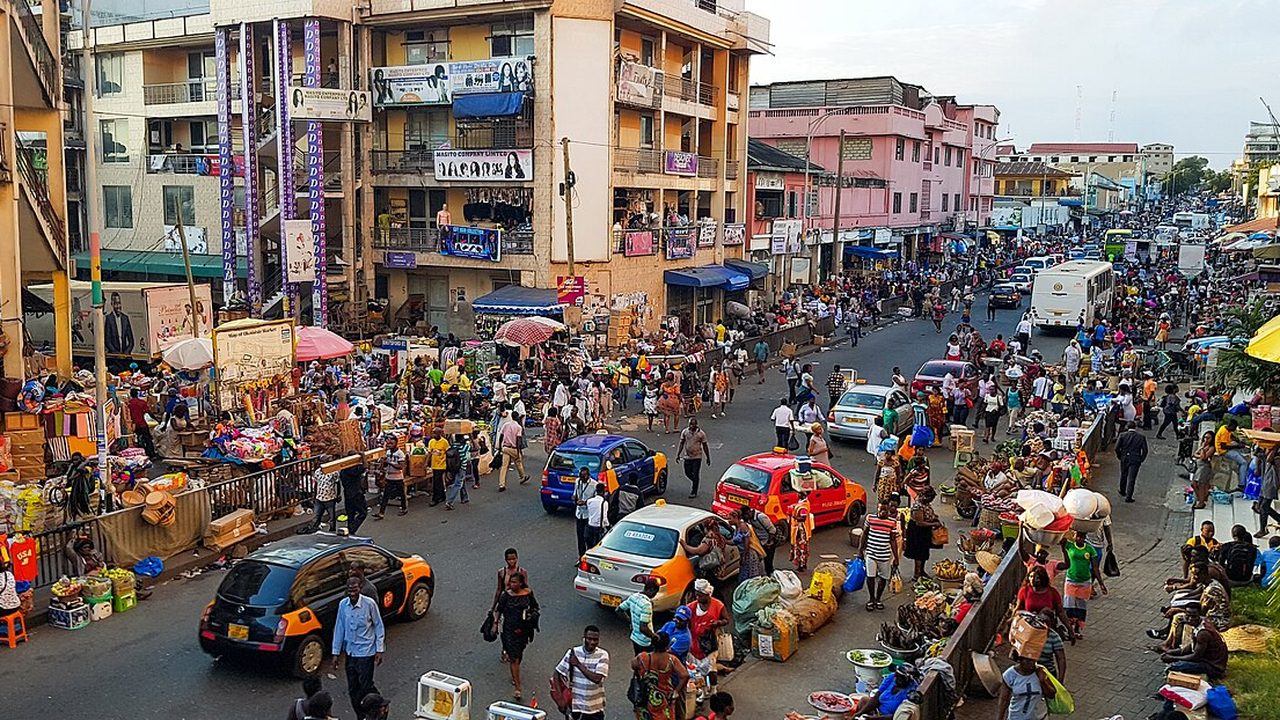
Afrobeats is neither simply Nigerian nor simply Ghanaian. The name took hold in London around 2010 as an umbrella for West African pop, and both countries built the music that sits under it. Nigeria leads its global commercial success. Ghana supplied much of its musical DNA through highlife, hiplife and azonto. And the most heated arguments about who owns Afrobeats are now happening inside Nigeria.
London named it
As we explain in Afrobeats vs Afrobeat, the word Afrobeats became current in London. Rab Bakari put it bluntly in 2016: they never called it Afrobeats in Ghana or Nigeria. The label was built for DJs, radio and marketing in the diaspora, grouping Nigerian, Ghanaian and British-African pop under one name.
That matters for the debate. Asking which country owns a word coined in London starts from the wrong place.
What Ghana brought
Ghana's contribution runs deep. Highlife, inscribed by UNESCO in December 2025, is part of the definition of Afrobeat itself. Hiplife, the term credited to Reggie Rockstone and his 1997 album Makaa Maka, fused highlife and hip-hop a generation before the Afrobeats label. Azonto became an international dance craze; Fuse ODG's "Azonto" reached number 30 on the UK chart in October 2013.
What Nigeria built
Nigeria turned the sound into a global industry. D'banj's "Oliver Twist" entered the UK singles chart at number 9 in the week of 26 May 2012. Since then, Nigerian artists have filled the O2, Madison Square Garden and stadiums, and Nigerian artists' Spotify royalties grew around 2,500% between 2017 and 2023.
The Grammy for Best African Music Performance, created for the 2024 ceremony, has gone to Tyla in 2024, Tems in 2025 and Tyla again in 2026. No Ghanaian artist has been nominated so far.
A striking streaming fact
On Spotify in 2024, two of the three most-streamed artists in Ghana were Nigerian. Ghana is not only a producer of the music; it is one of its biggest audiences.
Where the Ghanaian complaint actually points
The online story imagines Ghanaian stars accusing Nigeria of stealing the genre. We looked for that quotation and did not find it. What we found is different: Ghanaian commentary aimed at Ghanaian audiences themselves, for preferring Nigerian music to local artists. Citi Newsroom covered that debate in July 2022.
The dispute inside Nigeria
The real fight over ownership is internal. The singer Omah Lay has said that Afrobeats is mainly Lagos and mainly Yoruba. That kind of claim angers artists from other regions and languages of Nigeria, who see their music folded into a Lagos-centred brand.
What we cannot measure
There is no reliable data on how Afrobeats revenue or streams split between Nigeria and Ghana. The IFPI publishes only a combined figure for sub-Saharan Africa: $110 million in 2024, up 22.6%. Any precise national split you read is an estimate.
A better question
"Nigerian or Ghanaian?" is a question about credit, and credit matters. But the evidence points to a shared West African sound, named in London, scaled by Nigeria, deeply rooted in Ghana, and now argued over by everyone who loves it. For the bigger picture, read Why African Music Is Dominating Global Pop Culture.
FAQ
Did Afrobeats start in Nigeria or Ghana?
Neither alone. The name took hold in London around 2010 as an umbrella for Nigerian, Ghanaian and diaspora pop. Ghanaian highlife, hiplife and azonto and Nigerian pop all fed the sound.
Why is Nigeria seen as the home of Afrobeats?
Nigerian artists dominate its global commercial success: chart hits, stadium tours, streaming revenue and Grammy wins in the African music category.
Has a Ghanaian artist been nominated for the Grammy for Best African Music Performance?
Not as of the 2026 ceremony. The winners so far were Tyla (2024), Tems (2025) and Tyla (2026).
Sources
- Afropop Worldwide, Rab Bakari interview, 21 October 2016
- Citi Newsroom (Ghana), July 2022
- Recording Academy, Best African Music Performance results 2024-2026
- Official Charts Company, UK singles chart, May 2012 and October 2013