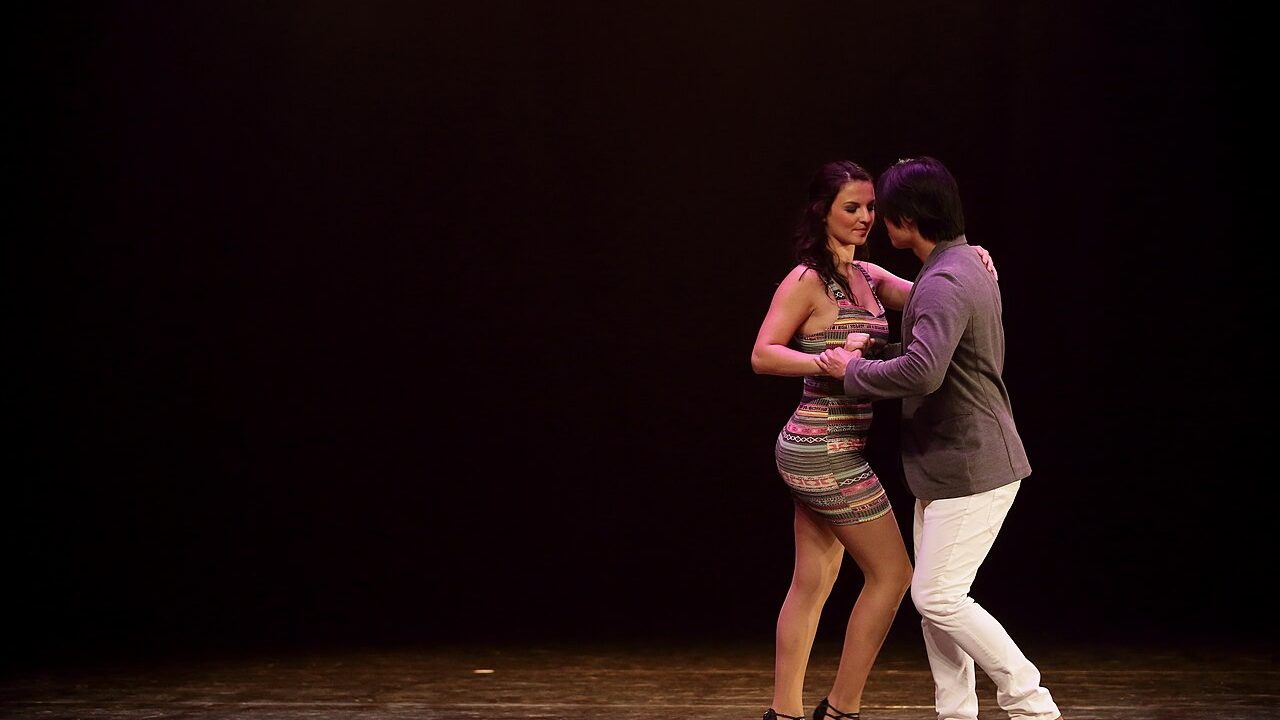
Brazilian Zouk is a family of styles rather than a single dance. The ones you will hear about most are traditional or Rio-style zouk, lambazouk from Porto Seguro, soulzouk, M-Zouk and neo zouk, alongside many sub-styles named by individual teachers. They share the same roots in lambada and the same love of body movement, but they differ in structure, music and feel. The Brazilian Zouk Dance Council notes that the dance took on different characteristics in different parts of Brazil and abroad.
Traditional or Rio-style zouk
The style created in Rio de Janeiro by Adílio Porto and Renata Peçanha is the backbone of zouk teaching. It is built on a set of basic figures with Portuguese names, such as the basic, the lateral, the viradinha, the elástico and the bonus, and can be danced in a line or in circles. The structure makes it easy to teach and learn.
Its story, and how lambada became zouk, is told in Brazilian Zouk: How Lambada Became a New Dance.
Lambazouk
Lambazouk, also called Porto Seguro style, stays closest to lambada. It is characterised by constant, non-stop movement, faster music and spins, unlike the more structured Rio style. Dancers from the Bahia coast kept the lambada feel when they switched to zouk records.
Soulzouk
Soulzouk is a style created in Rio de Janeiro by a zouk dancer known as Xina (formerly written China). It emphasises fluidity and musical interpretation, often to soulful R&B tracks.
M-Zouk
M-Zouk is another named branch. Academic research on the dance lists it among the main sub-styles, next to Rio, Porto Seguro and neo zouk, and describes it as improvisational.
Neo zouk
Neo zouk is the most experimental branch. It keeps zouk's connection but borrows from contemporary dance and contact improvisation, with floor work, slow suspensions and less reliance on set patterns. It is harder to define, because variety is the point.
Many more names
Many professional zouk dancers create and name their own sub-styles, influenced by contemporary dance, hip-hop and other forms. Some names spread, others stay attached to one school. Dancers do not always agree on the borders, and a style name may describe a whole lineage or one teacher's method.
A global scene
The Brazilian Zouk Dance Council dates the dance's rapid international expansion to 2007 onwards, when couples and teachers began taking it abroad with workshops, shows and congresses. It also organises Brazilian Zouk Jack and Jill competitions worldwide.
Which style should you learn?
Start with the fundamentals, usually taught through the Rio style, and good technique for head movements. Then explore. If you also dance kizomba, read Zouk vs Kizomba to understand what the two dances share and where they differ.
FAQ
What are the main styles of Brazilian Zouk?
The most commonly cited are traditional or Rio-style zouk, lambazouk (Porto Seguro style), soulzouk, M-Zouk and neo zouk, plus many named sub-styles created by individual teachers.
What is the difference between Rio-style zouk and lambazouk?
Rio-style is built on named basic figures and a clear structure. Lambazouk, from Porto Seguro, keeps closer to lambada, with constant, non-stop movement.
What is neo zouk?
A contemporary approach that keeps zouk's connection but borrows from contemporary dance and contact improvisation, with less reliance on set patterns.
Sources
- Brazilian Zouk Dance Council, "History of Brazilian Zouk Dance"
- Salsa Vida, "Brazilian Zouk"
- Wikipedia, "Brazilian Zouk", consulted November 2026