Hip-hop dance has two great ways of being danced. Freestyle is improvised: you create the dance in the moment, in response to the music and the people around you, the way hip-hop was born in cyphers and battles. Choreography is a set sequence, created in advance and learned, the way hip-hop is danced in studios, music videos, concerts and competitions. Purists sometimes argue that only the first is true hip-hop. In practice, most dancers today need both, because each builds skills the other does not.
Freestyle: where hip-hop began
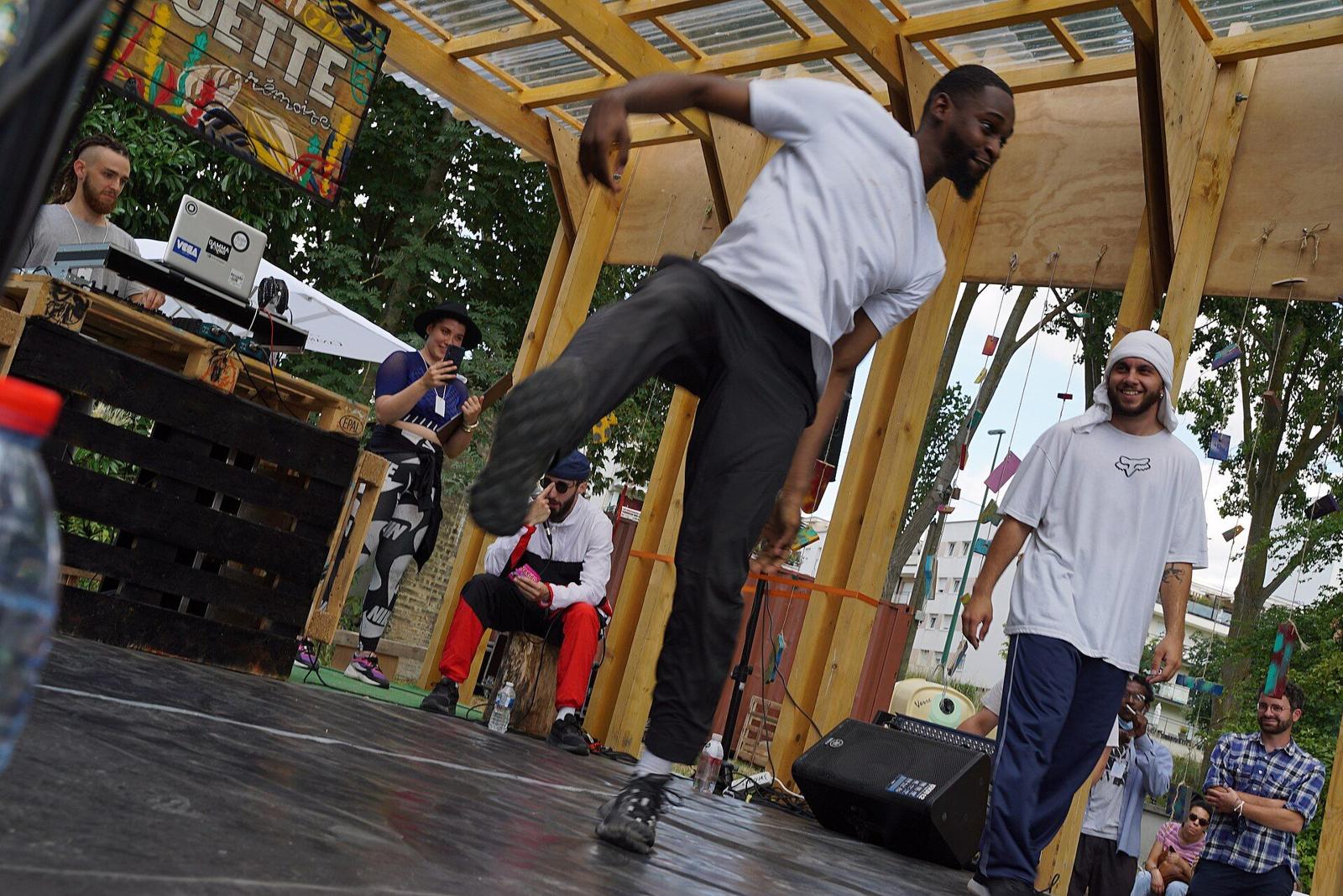
What distinguishes hip-hop from many other dance forms is that it is often freestyle, improvisational in nature, and hip-hop dance crews often engage in freestyle competitions called battles. Breaking, the first hip-hop dance, grew in improvised circles at Bronx block parties, and the hip-hop social dances spread at parties, not in classrooms. What is hip-hop dance?
In freestyle, the dancer listens and responds. There is no count to follow, no mirror and no fixed order of moves. Instead, dancers draw on a vocabulary of steps and grooves, recombine them, react to the music and to opponents, and add their own personality.
Freestyle happens mainly in:
- Cyphers: circles where dancers take turns in the centre. What is a cypher?
- Battles: one-on-one, two-on-two or crew competitions judged on the spot.
- Parties and clubs, where social dancing is improvised by nature.
Choreography: the studio and the screen
Choreographed hip-hop grew as dancers trained in studios set out to create routines from the dances performed on the street. This urban choreography or studio hip-hop, sometimes called new style, is the hip-hop seen in rap, R&B and pop music videos and concerts. In the commercial dance industry, it is described as choreographed urban party dancing with studio technique added to it.
Some landmarks:
- 1989: Janet Jackson performed the Running Man in her video for "Rhythm Nation", choreographed by the street dancer Anthony Thomas.
- 1992: Michael Jackson used hip-hop in his video "Remember the Time", choreographed by a 21-year-old Fatima Robinson.
- 1990s: on the TV show In Living Color, the dance troupe the Fly Girls opened and closed each show with hip-hop and jazz routines choreographed by Rosie Perez.
That era is described as the start of commercial hip-hop choreography as it looks today: routines that are not limited to one style, but mix urban party dancing with studio technique. Large conventions and showcases later turned choreography into a world of its own.
The tension between the two
The debate is old and real. From the point of view of someone deeply immersed in hip-hop culture, anything that looks like hip-hop dance but did not come from the streets and is not improvised is not a true hip-hop dance form. Stage performance, critics point out, can suppress the improvisation that defined hip-hop dance early on.
Emilio "Buddha Stretch" Austin Jr., a choreographer and hip-hop teacher, spoke in Dance magazine about teachers who learn steps from videos without knowing the culture. The dance historian Moncell Durden told Racked that hip-hop dance involves two dances, breaking and the social dances, and nothing else.
Others see choreography as a natural evolution: a way to present the dance on stage, to teach it at scale and to make a living from it.
What each one trains
| Freestyle | Choreography | |
|---|---|---|
| Where | Cyphers, battles, parties | Classes, videos, stage, competitions |
| Created | In the moment | In advance |
| Key skills | Musicality, creativity, reaction, confidence | Precision, memory, synchronisation, performance |
| Music | Often unknown in advance, chosen by the DJ | Known and rehearsed |
| Judged on | Originality, musicality, foundations, response to opponent | Execution, timing, staging, unison |
| Risk | Freezing up, repeating yourself | Dancing without feeling, depending on counts |
Why you need both
Freestyle teaches you to hear music and own your movement. Choreography teaches you to execute cleanly, learn quickly and dance with others. A dancer who only freestyles may struggle in a professional setting where precise routines are required. A dancer who only learns choreography may freeze when the music changes or when they are asked to improvise in a cypher.
Many teachers now combine the two: a class might start with foundations and grooves, include a short freestyle exercise, and end with a routine. Learning where moves come from, the social dances, the original styles, the people who created them, connects both worlds.
How to start
- For freestyle: learn a handful of foundations and grooves, put on music, and dance without stopping for a full song. Then do it in front of friends, then in a cypher.
- For choreography: take regular classes, film yourself, and focus on clean execution before speed.
- For both: listen to a lot of music. In freestyle it gives you ideas; in choreography it helps you understand why a move sits where it does.
Frequently asked questions
What is freestyle in hip-hop dance? Improvised dancing, created in the moment, the original way hip-hop was danced.
What is choreography in hip-hop dance? A set routine, learned in advance, used in classes, videos, concerts and competitions.
Which is better, choreography or freestyle? Neither; they train different skills, and most dancers practise both.
Why do some dancers say choreography is not real hip-hop? Because hip-hop dance was born improvised in the streets.
FAQ
What is freestyle in hip-hop dance?
Improvised dancing, created in the moment in response to the music, the space and other dancers. It is the original way hip-hop was danced, in cyphers and battles.
What is choreography in hip-hop dance?
A set sequence of movements, created in advance and learned by dancers, used in classes, music videos, concerts and competitions. Studio choreography is often called new style.
Which is better, choreography or freestyle?
Neither. They train different skills. Freestyle builds musicality, creativity and confidence; choreography builds precision, memory and the ability to dance with others in sync. Most professional dancers practise both.
Why do some dancers say choreography is not real hip-hop?
Because hip-hop dance was born improvised, in the streets. From that point of view, anything that looks like hip-hop but did not come from the streets and is not improvised is not a true hip-hop dance form.
Sources
- Wikipedia, "Hip-hop dance", including Emilio "Buddha Stretch" Austin Jr.'s interview with Dance magazine and Moncell Durden's interview with Racked