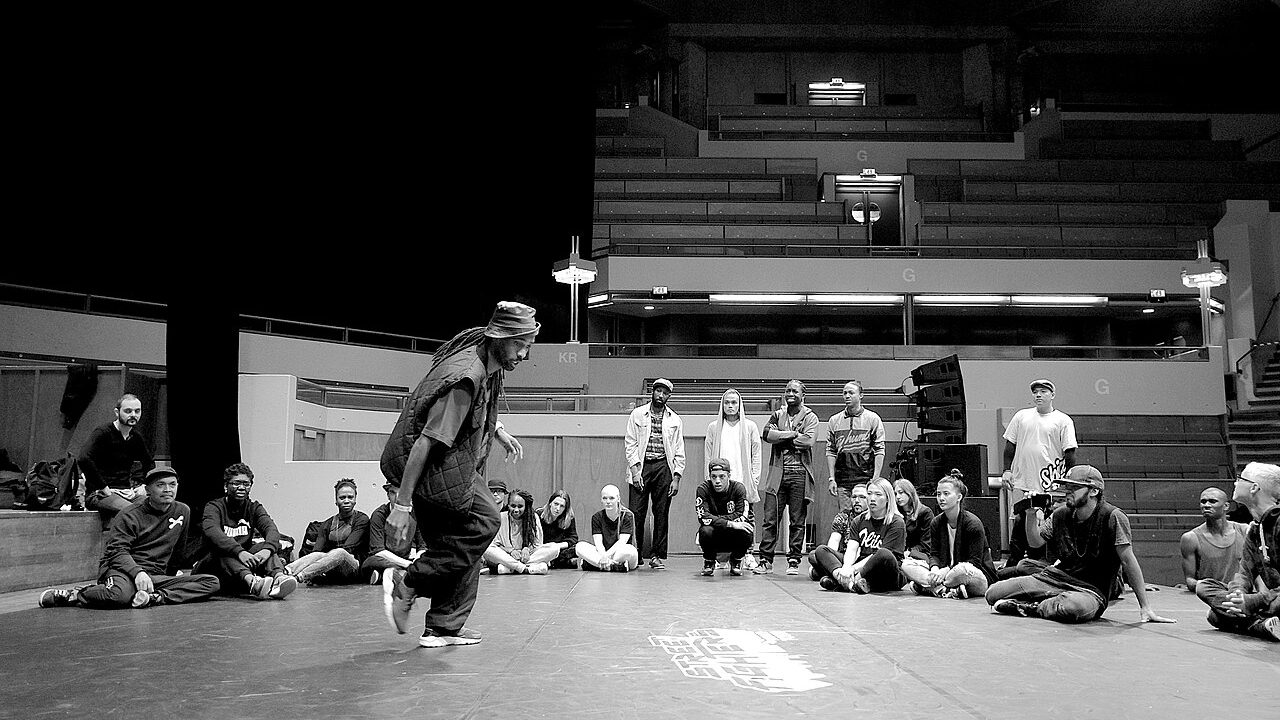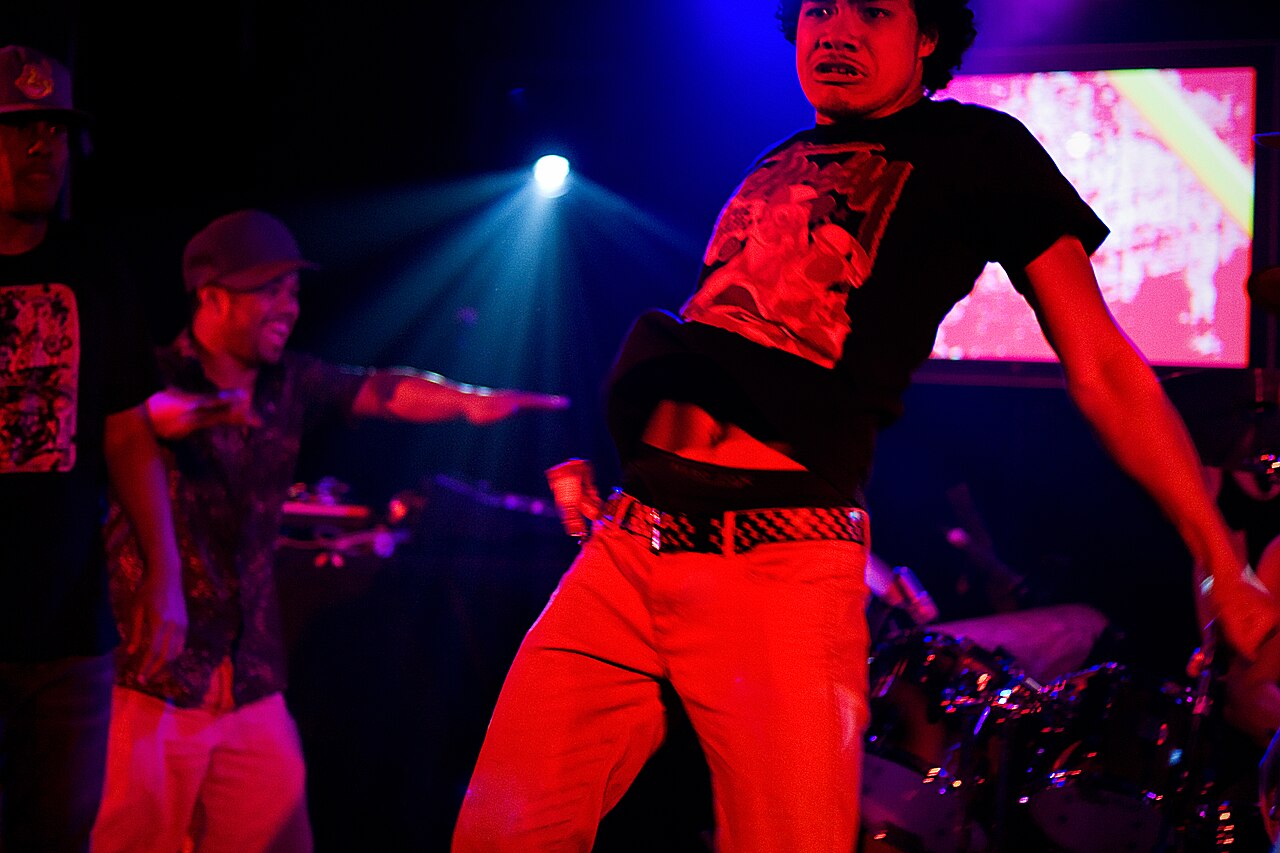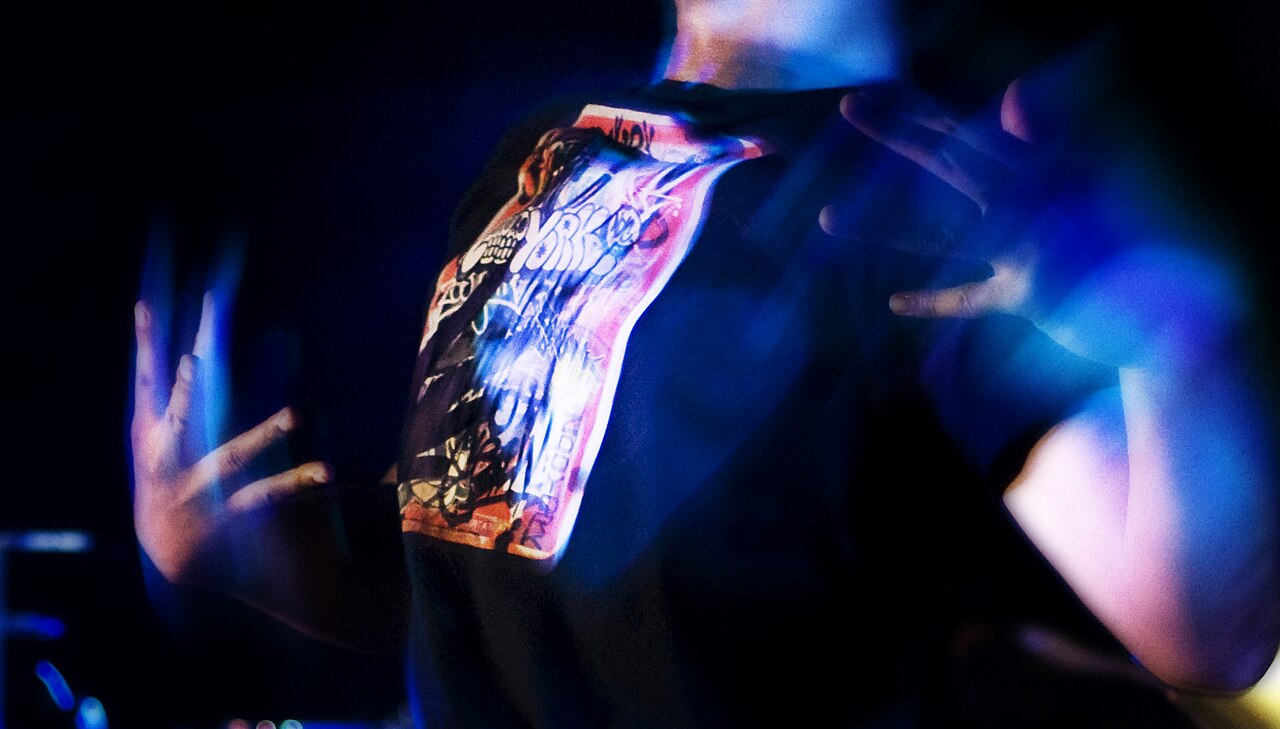
Krump lives in three places. In a session, dancers form a circle and take turns going into the middle to freestyle while the others hype them up. In a lab, krumpers get together to build new moves, concepts and combinations. In a battle, two dancers or crews face each other and try to outdo one another. Krump is almost never choreographed: it is freestyle, and these three settings are where the dance is practised, shared and judged.
The session
The session is the heart of krump. Dancers stand in a circle, and one at a time someone steps into the middle and lets go. The circle is not passive: people shout, stomp, push the dancer on and react to every big moment. Wikipedia's krump glossary uses the word live for someone who raises the energy in a session or battle.
Sessions happen wherever there is space, and some become fixtures. A University of Southern California thesis documents the 818 Session, a regular krump circle in North Hollywood, as an example of how a local community forms around one recurring gathering.
For newcomers, the session is where you learn. You watch, you feel the energy, and when you are ready, you step in.
The lab
Labbing is krump's workshop. Krumpers meet, often in small groups or crews, to create new moves and adapt their style, Wikipedia notes. It is where dancers work on foundations, build concepts (ideas or stories they act out in a round) and test combos.
The lab is also where mentorship happens. Krump is organised in families, with younger dancers learning from older ones, and much of that teaching happens in labs rather than in formal classes.
The battle
The battle is the competitive side. Two dancers, or two crews, face each other and take turns. Wikipedia describes battles as direct competitions often featuring concepts, material, combos and get-offs.
Battles can be organised events with judges, or they can start in a session when one krumper calls out another, a challenge to battle. They can be intense, but the intensity is meant to stay in the dance.
Krump battles also have a history. Before krump split from clowning, Tommy the Clown's Battle Zone events at the Great Western Forum in Inglewood brought clown and krump crews together to battle in front of their peers, as told in Rize. Today, international events such as EBS in Europe, covered in Krump in Europe, carry that tradition forward.
Words you will hear
Krump has its own vocabulary. A few common terms, drawn from Wikipedia and community glossaries:
- Buck: describes someone who excels at krump and embodies its spirit. "That round was buck."
- Live: raising the energy of a session or battle.
- Get-off: the set of movements that tells everyone a krumper's round is over, often a burst of foundations or arm swings.
- Call-out: challenging another krumper to battle.
- Buck talk: trash talk during a battle.
- Biter: someone who copies other dancers' styles without credit.
- Swag: a dancer's individual style and character.
For the moves themselves, stomps, jabs, chest pops and arm swings, see our krump moves glossary.
Respect in the circle
Krump looks aggressive, but its culture is built on respect. As one krumper explains in a PBS feature, the most important foundation is the chest pop, the heartbeat of the dance: you can throw your arms and stomp, but without the heart moving it is not krump. The energy is about expression, release and community, not violence. For the bigger picture, start with What is krump?.
FAQ
What is a krump session?
A gathering where krumpers form a circle and take turns going into the middle to freestyle, hyped by the others around them.
What is labbing in krump?
When krumpers get together to create new moves, work on concepts or adapt their style, away from competition.
What happens in a krump battle?
Two dancers or crews face each other and take turns, trying to outdo each other with energy, character, concepts and combos. Battles can be organised events or start from a call-out.
Sources
- Wikipedia, "Krumping" (glossary of terms)
- Hip Hop Dance Wiki, "Krumping"
- PBS, "How this West Coast dance style took over America"
- University of Southern California, "The 818 Session: a krump community rizes in North Hollywood" (thesis)