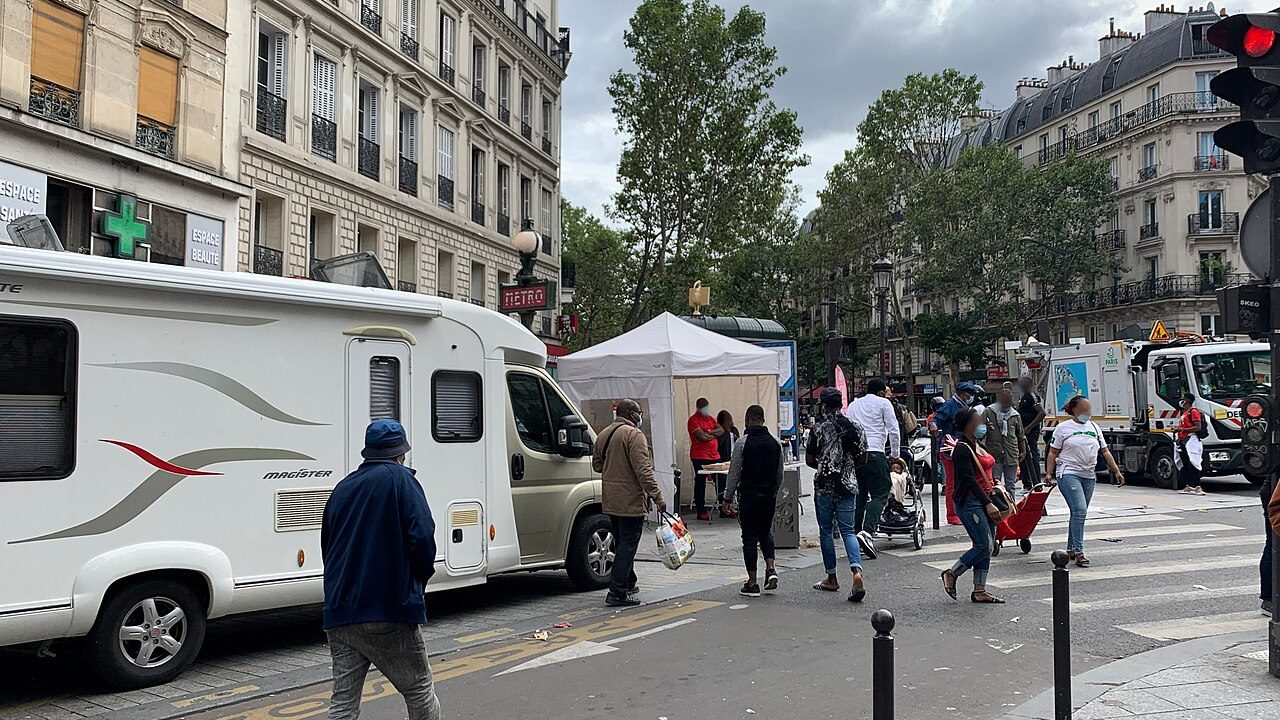
Paris became one of the world's great capitals of African and Caribbean music through migration, studios and neighbourhoods. People from the French Caribbean and from former French colonies in Africa settled in the city from the 1960s onward. Producers and studios followed, recording soukous, zouk and makossa for audiences across Africa and the diaspora. Later, the city gave birth to coupé-décalé and became central to Afro-French pop.
Migration and the BUMIDOM
From 1963, the French state organised migration from its overseas departments through the BUMIDOM (Bureau pour le développement des migrations intéressant les départements d'outre-mer). Until its dissolution in the early 1980s, it organised around 160,000 departures from Guadeloupe, Martinique, Réunion and French Guiana to mainland France. Historians today read it as a demographic and political instrument as much as an economic one.
It should not be confused with the separate scandal of the "children of the Creuse", around 2,000 Réunionese children moved to rural France between 1962 and 1984.
At the same time, migration from West and Central Africa grew. Together, these communities created the audiences, musicians and businesses that made Paris a music hub.
The neighbourhoods
North-east Paris became the commercial heart of African and Caribbean life. Château Rouge and the Goutte d'Or, in the 18th arrondissement, host more than a hundred shops. The geographer Marie Chabrol found that 67% of people using them do not live there: it is a destination for the whole region. Château d'Eau, in the 10th, is known for hair and beauty businesses, and Barbès and Belleville have long been gathering places.
Studio Caroline
Music needed studios. In summer 1980, Jacky Reggan opened Studio Caroline in the basement of a former bakery at 46 rue Haxo, in the 20th arrondissement. It later moved to Montreuil in 1990 and Montrouge in 2013. Congolese stars such as Kanda Bongo Man, whose "Iyolé" was recorded there, Koffi Olomidé and Papa Wemba worked in its rooms, according to Red Bull Music Academy Daily.
Recording in Paris gave artists access to session musicians, distributors and a market that reached Abidjan, Dakar and Kinshasa as well as Europe.
Zouk and coupé-décalé
Paris was also where the French Caribbean met its diaspora. Kassav', formed in 1979 around musicians from Guadeloupe and Paris, made zouk a global sound, as we tell in Kassav': The Group That Changed Zouk.
Two decades later, coupé-décalé was created in Paris, at the Atlantis club, by the Ivorian collective known as the Jet Set around Douk Saga, before conquering Abidjan and West Africa. Our guide to African genres covers its story.
Aya Nakamura and the Olympics
In 2024, reports that Aya Nakamura, the most-streamed French-language female artist, might sing at the Paris Olympics opening ceremony triggered a political storm. NPR reported in April 2024 that the far-right politician Marion Maréchal opposed it, while the minister Bruno Le Maire and the union leader Sophie Binet defended her, and that the Paris prosecutor opened an investigation into possible hateful remarks. The controversy showed how central, and how contested, Afro-French pop has become in national identity.
Gatekeeper or crossroads?
Paris is often described as the gatekeeper for African artists seeking international careers. The idea is discussed in academic work, notably by Elina Djebbari in Ethnomusicology Forum (2022). We looked for a named African or Caribbean artist making that claim on the record and did not find one, so we leave it as an open question rather than a quotation.
Paris's role is easier to document as a crossroads: a city where migration, studios, clubs and markets met, and where new genres were born. Its southern counterpart is Lisbon.
FAQ
What was the BUMIDOM?
The Bureau pour le développement des migrations intéressant les départements d'outre-mer, created in 1963 and dissolved in the early 1980s. It organised around 160,000 departures from the French overseas departments to mainland France.
What was Studio Caroline?
A recording studio opened in summer 1980 by Jacky Reggan in the basement of a former bakery at 46 rue Haxo, in Paris's 20th arrondissement. It recorded much of the African music made in Paris in the 1980s.
Was coupé-décalé created in Paris?
Yes. It was created by the Ivorian collective known as the Jet Set around Douk Saga, at the Atlantis club in Paris, before spreading to Abidjan.
Sources
- Marie Chabrol, Metropolitics, on Château Rouge
- Red Bull Music Academy Daily, November 2017, on Studio Caroline
- NPR, 4 April 2024, on Aya Nakamura and the Paris Olympics
- Elina Djebbari, Ethnomusicology Forum, vol. 31 no. 3, 2022