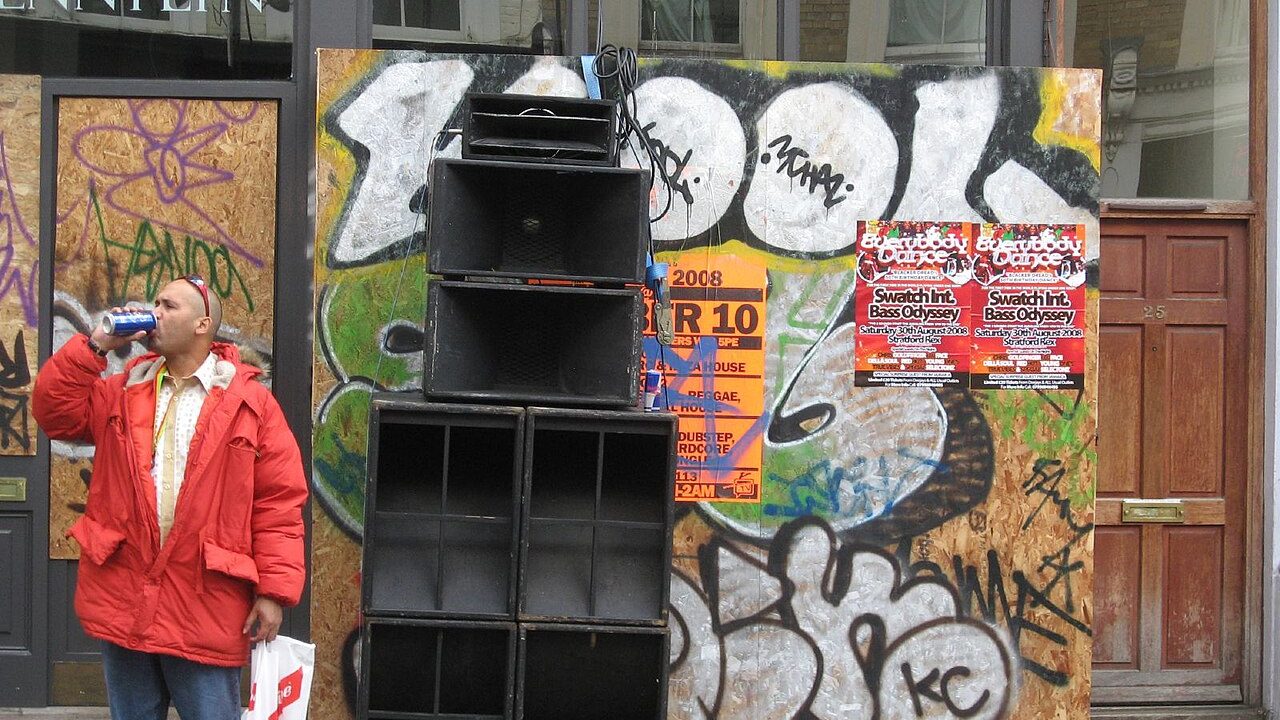
Dancehall is Jamaica's dance music. It grew out of reggae and the island's sound system culture, and it puts two things at its centre: the deejay, who chants or sings over the music, and the riddim, an instrumental track shared by many artists. Played loud on sound systems at street dances and clubs, it shaped hip-hop, reggaeton and Afrobeats, and gave the world a dance culture of its own.
Sound systems first
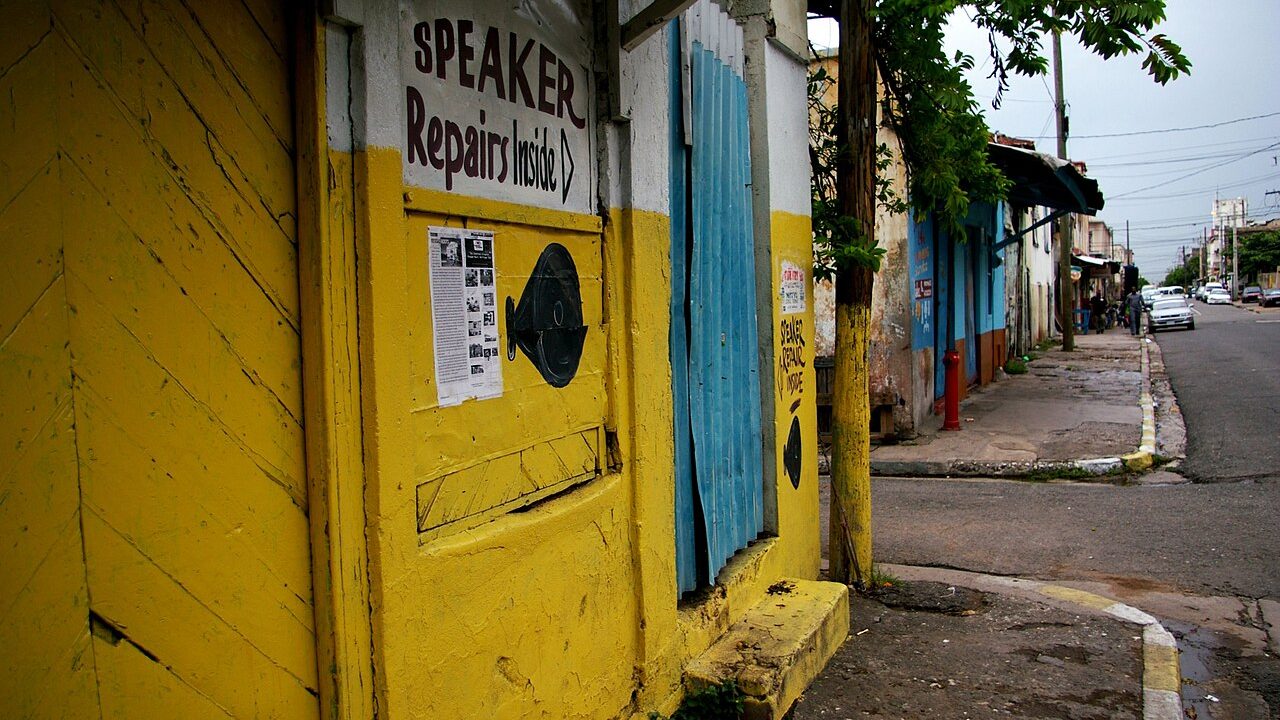
Before radio played much local music, Jamaicans heard the latest records on sound systems: mobile rigs of huge speakers run by a selector and an MC, set up in yards and streets. Rival sounds competed in clashes for the crowd.
Many of the producers who built dancehall started as sound system operators, among them King Tubby and his protégé Lloyd James, later known as King Jammy. The music was made for those dances first.
The riddim
Dancehall's most important idea is the riddim. A producer creates one instrumental, and many artists record their own songs over it. A strong riddim can carry dozens of songs in a season, and fans recognise the beat before the voice.
That system makes the music fast and competitive. A new riddim lands, everyone voices it, and the best versions rise at the dances.
1985: Sleng Teng
The decisive moment came in 1985. The story told by King Jammy and others is that the riddim began with a preset rhythm on a cheap Casio MT-40 keyboard, slowed to reggae tempo. Jammy produced it with the keyboardist Noel Davey, and the singer Wayne Smith voiced it as "Under Mi Sleng Teng", a song inspired by Barrington Levy's "Under Mi Sensi".
According to King Jammy and Jack Scorpio, it was first unleashed on 23 February 1985, in a sound clash between Jammy's sound system and Black Scorpio. The crowd went wild.
Within months, Jamaican music had gone digital. The Gleaner credits King Jammy as the producer who began the digital style of dancehall with Sleng Teng. Some accounts say King Tubby's sound had an earlier computerised riddim called "Tempo", so "first" remains debated, but Sleng Teng is the one that changed everything.
A culture of dance
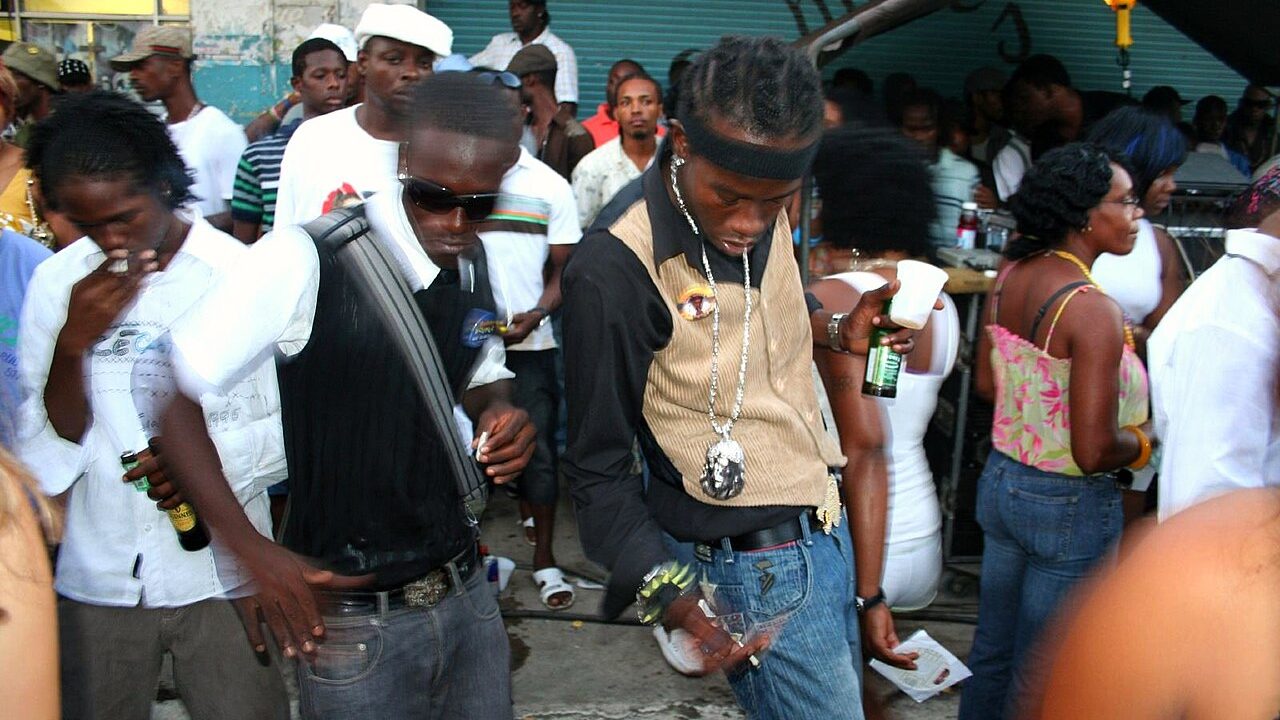
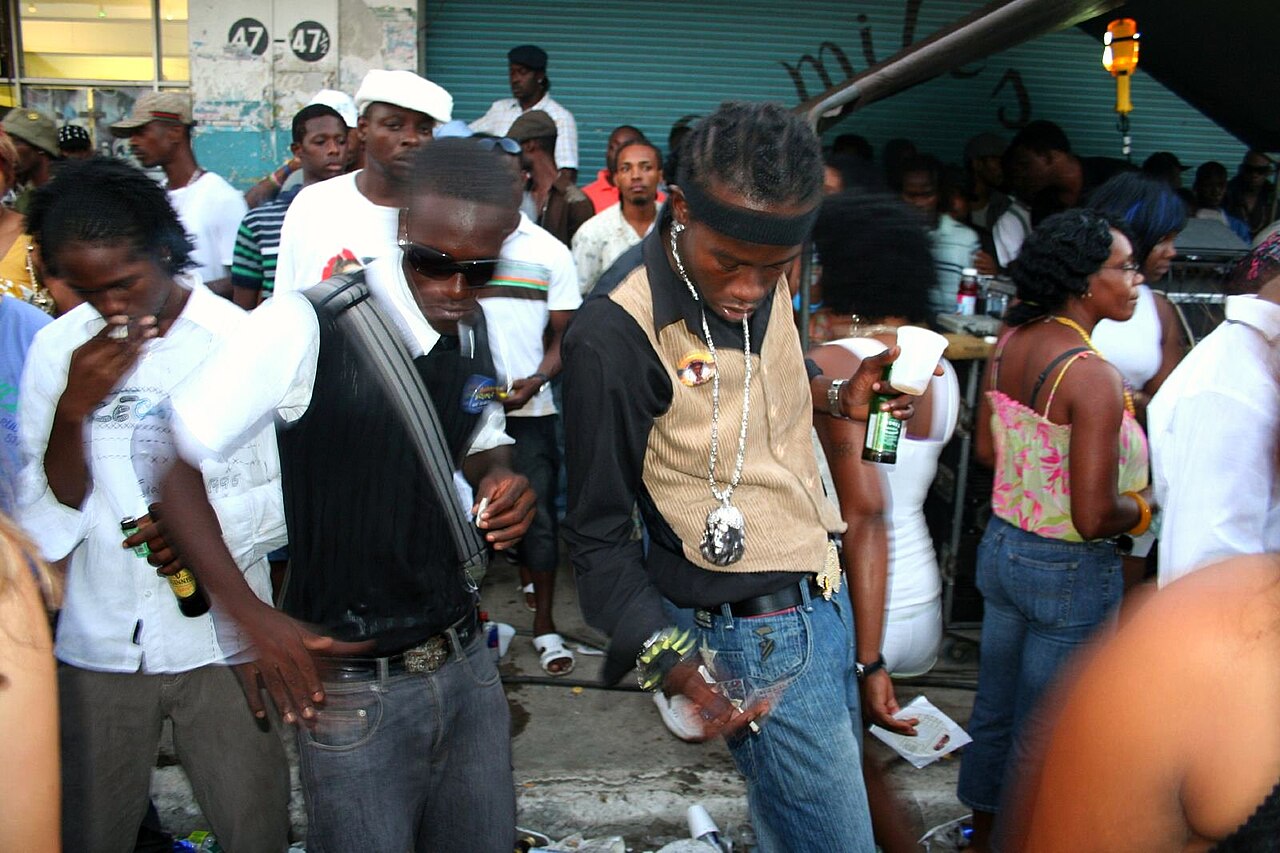
Dancehall is also a dance culture. New steps are born at street dances and spread through songs that name them and, today, through videos. Dancers and choreographers became stars in their own right, and events such as Passa Passa in Kingston turned weekly dances into a meeting point for the whole scene.
Around the world
From Jamaica, dancehall travelled with the diaspora to London, New York and Toronto, and its influence runs through hip-hop and reggaeton. In the French Caribbean it fed new styles such as shatta.
It is also a music that has attracted criticism, for explicit lyrics and, at times, homophobic content in some songs. Any honest history includes that, alongside its creativity.
For the dances where the music met its public, read our story of Passa Passa.
FAQ
What is the difference between dancehall and reggae?
Dancehall grew out of reggae in Jamaica. It puts the deejay and the riddim at the centre, and since 1985 has been largely digital, while roots reggae relied on live bands.
What was the first digital dancehall riddim?
"Under Mi Sleng Teng", produced by King Jammy and voiced by Wayne Smith in 1985, is widely credited as the first digital riddim. Some accounts say King Tubby's 'Tempo' came earlier.
What is a riddim?
An instrumental rhythm track that many different artists voice their own songs on. One riddim can carry dozens of songs.
Sources
- Red Bull Music Academy Daily, "The Essential Guide to Dancehall", July 2019
- World Music Views, interview with King Jammy and Jack Scorpio, December 2023
- The Gleaner, "Music Diaries: The evolution of dancehall", 3 February 2019
- FACT, "Sleng Teng: A beginner's guide to Prince Jammy", June 2015