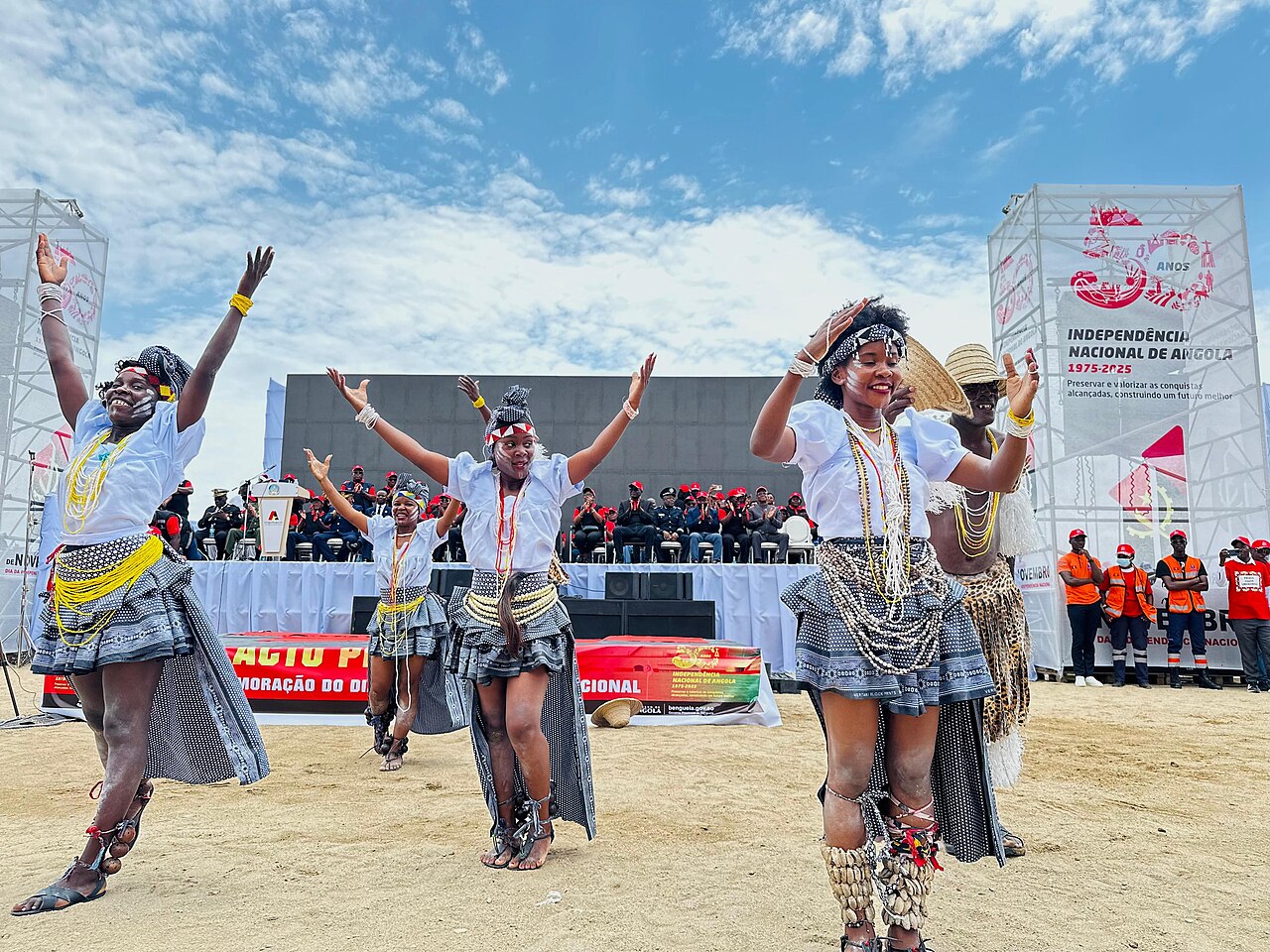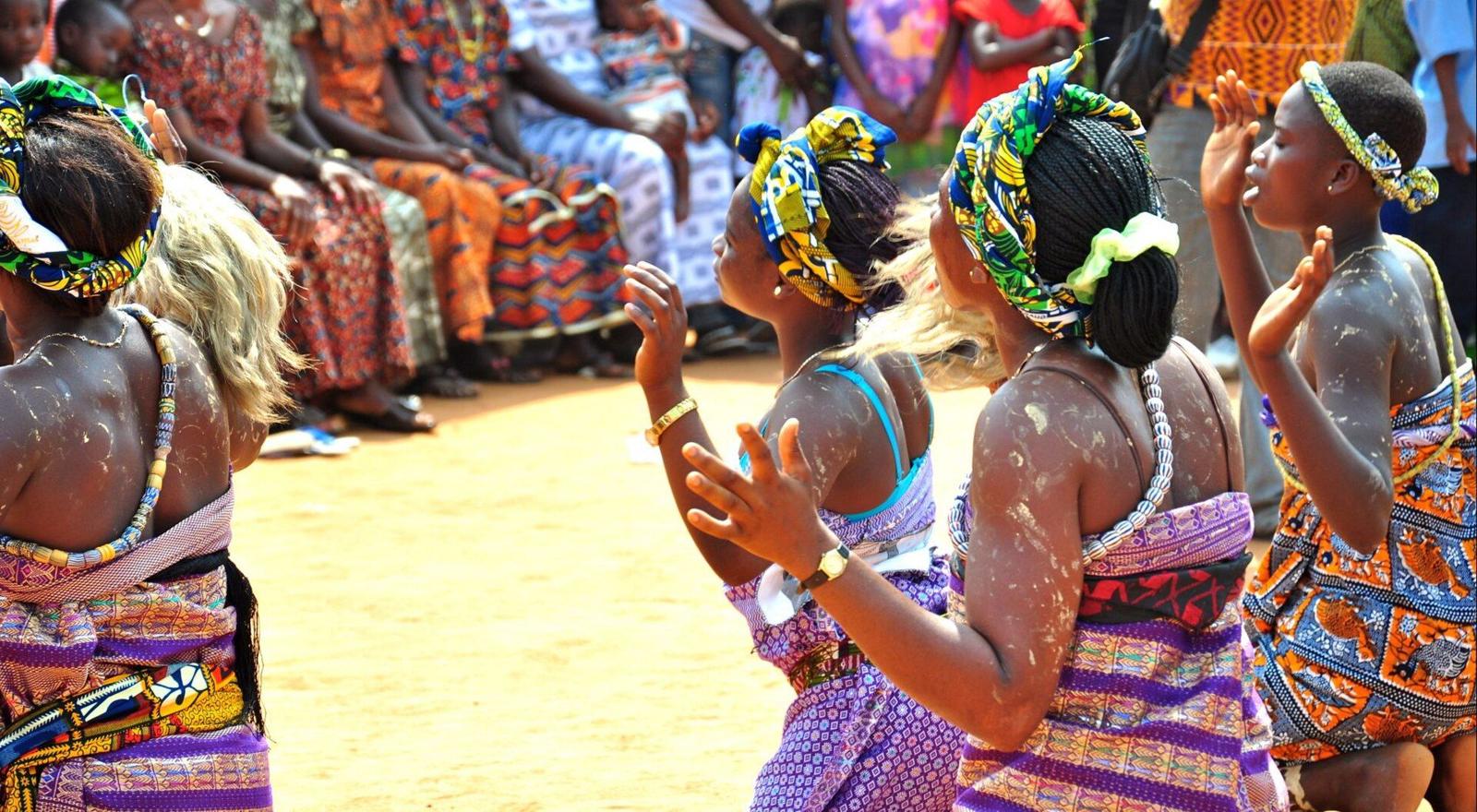
Bèlè is Martinique's traditional art of drum, song, dance and storytelling. It comes from the songs and dances brought by enslaved Africans to the island's sugar plantations. In its best-known form, four couples dance to a single bèlè drum and the steady click of the tibwa, two wooden sticks, while a lead singer calls and the crowd answers. Looked down on for decades under French assimilation, bèlè came back in the 1980s and is now taught across the island. It is a cousin of Guadeloupe's gwoka.
Born on the plantations
The Martinique Tourism Authority describes bèlè as an art form rooted in the dances and songs of enslaved Africans. It developed on the sugar plantations and in rural communities, tied to daily life and religious festivals, and it was forbidden under slavery. Its songs told the history of the island, quarrels between settlers, work and the struggles of everyday life.
The tourism authority calls the drum a symbol of Martinican identity, and its history is tied to freedom. In The Conversation, the anthropologist Camee Maddox-Wingfield recalls that the uprising which helped end slavery in Martinique in 1848 was sparked by the arrest of Romain, an enslaved man who had defied his master's ban on drumming. Every year on 22 May, Emancipation Day, drums play from sunrise to the next dawn.
Bèlè is not unique to Martinique. Wikipedia lists related bélé traditions in Dominica, Grenada, Guadeloupe, Haiti, Saint Lucia and Trinidad and Tobago, each with its own music and movement. Where the name comes from is less certain. The tourism authority traces it to the French bel air; Wikipedia gives belaire, "good air", but flags the claim as needing a source.
The drum and the sticks
The bèlè drum is made from a hollowed trunk with a goat skin stretched and nailed over it, according to the tourism authority. Wikipedia describes it as a large drum that the player rides as if it were a horse. The tibwa, or ti-bwa, "little wood", is a pair of hardwood sticks beaten on the side of the drum or on a length of bamboo on a stand.
The two have different jobs. Wikipedia explains that the tibwa plays a basic pattern while the drum marks the highlights and improvises. A chacha, a rattle, is often added.
Who does what
A bèlè evening has a clear order. Wikipedia describes the singer's first entry, the lavwa, followed by the choir's answer, then the tibwa player setting the pace, then the drum. Only then do the dancers take the floor, and a dialogue begins between the dancers and the tanbouyè, the drummer.
The tourism authority adds the vocabulary: the lead singer is the voix douvan, the backing singers the voix dèyè, and the tibwa player the tibwa-yé. The songs are often improvised, always in call and response.
The dance: four couples and a salute
In the northern bèlè linò repertoire, Maddox-Wingfield explains, the dances use a quadrille formation of four couples, a woman and a man in each pair. The sequence is improvised, but everyone shares the same base repertoire. Each couple takes its turn in the centre, then dances towards the drummers to salute them. The drummers, in turn, match their rhythm to the dancers' feet. In some styles, the woman decides whether to accept her partner's advances.
Many practitioners, she writes, see bèlè as a dance of the earth. Movements represent farm work, and the symbolism links the dance to the soil, plants and water where enslaved ancestors laboured. Atlas Obscura notes that women are admired for their dancing, which gives female performers a strong sense of affirmation.
Evenings, known as swaré bèlè, often open with danmyé, also called ladja, a combat dance in which two fighters face each other in a circle to the sound of the drum. We explain it in What is danmyé?.
North and south
The tourism authority describes two main repertoires:
- Bèlè linò, or northern bèlè, the most widely taught. It includes bèlè Sainte-Marie, named after its commune, and bèlè Basse-Pointe, more rooted in rural tradition.
- Bèlè lisid, or southern bèlè, less known and practised around Anses-d'Arlet, with slower rhythms and more melodic singing.
Other dances belong to the same family, such as lalin klè, "moonlight", danced under the full moon for fertility and harvest, and kalenda.
Near loss and revival
After slavery, bèlè faced a long period of contempt. Maddox-Wingfield writes that, as mainland French culture was imposed, many Black Martinican folk traditions were repressed. Bèlè was called primitive, indecent and outdated, and many in the Catholic Church saw drumming and dance as heathen.
The turn came in the 1980s, when student activists and youth groups worked to revive traditions that had almost disappeared. Today, she writes, a growing community treats bèlè as a source of social and spiritual healing. Classes, mutual aid projects and swaré bèlè honour figures such as Aimé Césaire and Frantz Fanon. There is even a church form, bèlè légliz, which brings the drum into the Catholic liturgy.
The tourism authority names some of the artists who carried the tradition, including Ti-Raoul and the Grivallier brothers, Ti-Emile, Sully Cally, and Eugène Mona with the Rastocle brothers.
Bèlè and the music that followed
Bèlè fed Martinique's later music. Wikipedia explains that drum biguine, or bidgin bèlè, grew out of the bèlè dances of the plantations, keeping the bèlè drum, the tibwa and the call-and-response singing. For the island's later popular music, see What is zouk music?.
To experience bèlè, the best place is a swaré bèlè in Martinique. Associations such as Lekol Tanbou Bele Matinik and La Maison du Bélè, listed by the tourism authority, teach the drum and the dance.
FAQ
What is bèlè?
A traditional art form from Martinique that combines dance, drumming, song and storytelling. It comes from the dances and songs of enslaved Africans on the island's plantations. Related bélé traditions exist in Dominica, Saint Lucia, Guadeloupe, Grenada, Haiti and Trinidad and Tobago.
What instruments are used in bèlè?
The bèlè drum, a goat-skin drum that the player sits astride, and the tibwa, two wooden sticks beaten on the side of the drum or on a length of bamboo to keep the basic rhythm. A chacha, or rattle, is often added.
How is bèlè danced?
In the northern bèlè linò repertoire, four couples dance in a quadrille formation. Each pair takes a turn in the centre and then dances towards the drummers to salute them, while the drummer follows the dancers' footwork.
What is the difference between bèlè linò and bèlè lisid?
Bèlè linò, or northern bèlè, is the most widely taught, with variants such as bèlè Sainte-Marie and bèlè Basse-Pointe. Bèlè lisid, or southern bèlè, is less known, practised around Anses-d'Arlet, with slower rhythms and more melodic singing.
What is danmyé?
A combat dance linked to bèlè, also called ladja, in which two fighters face each other in a circle to the sound of the drum. Bèlè evenings often open with it.
Sources
- Martinique Tourism Authority, "Songs, dances and stories: the bèlè", consulted 23 November 2026
- Camee Maddox-Wingfield, "The Martinican bèlè dance: a celebration of land, spirit and liberation", The Conversation, May 2022
- Wikipedia, "Bélé", consulted 23 November 2026
- Wikipedia, "Music of Martinique" and "Biguine", consulted 23 November 2026
- Atlas Obscura, "Martinique bèlè dance", consulted 23 November 2026