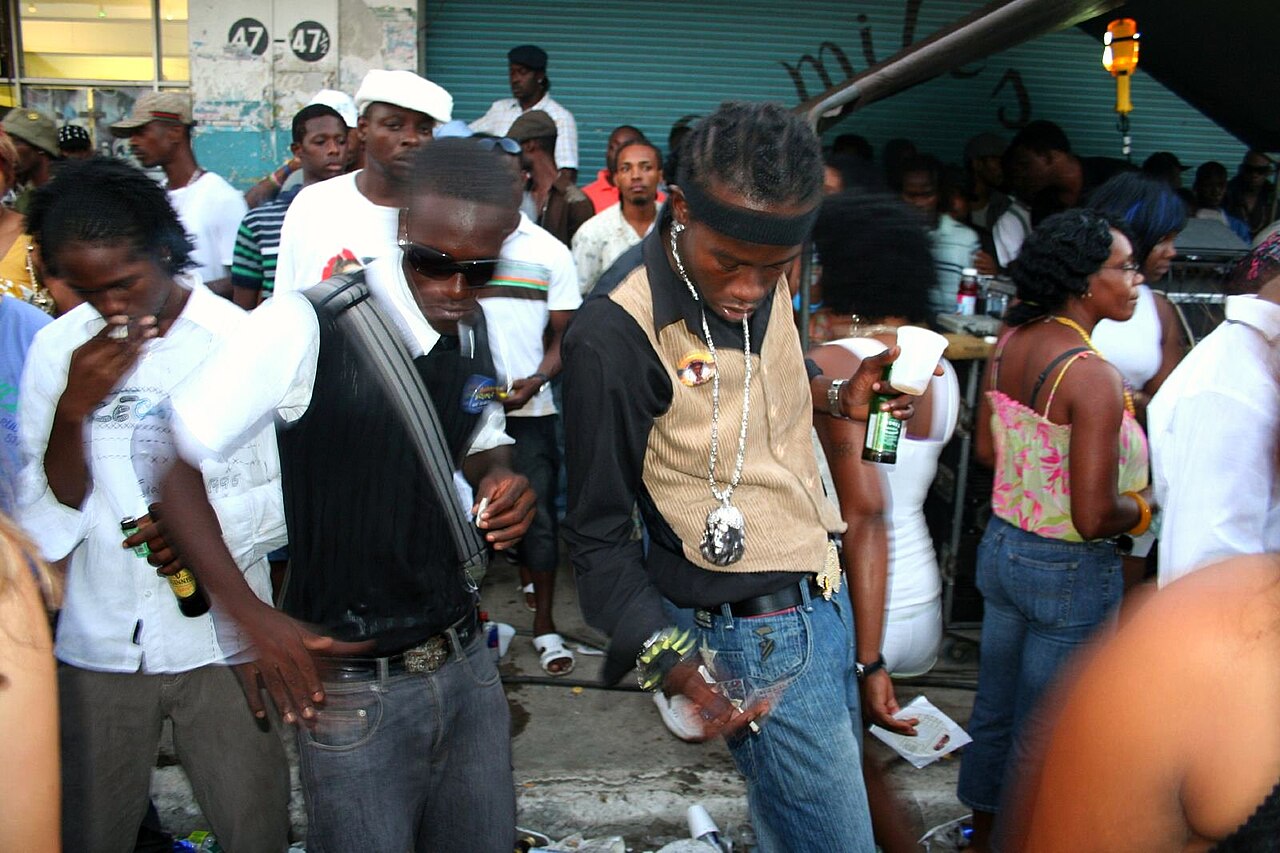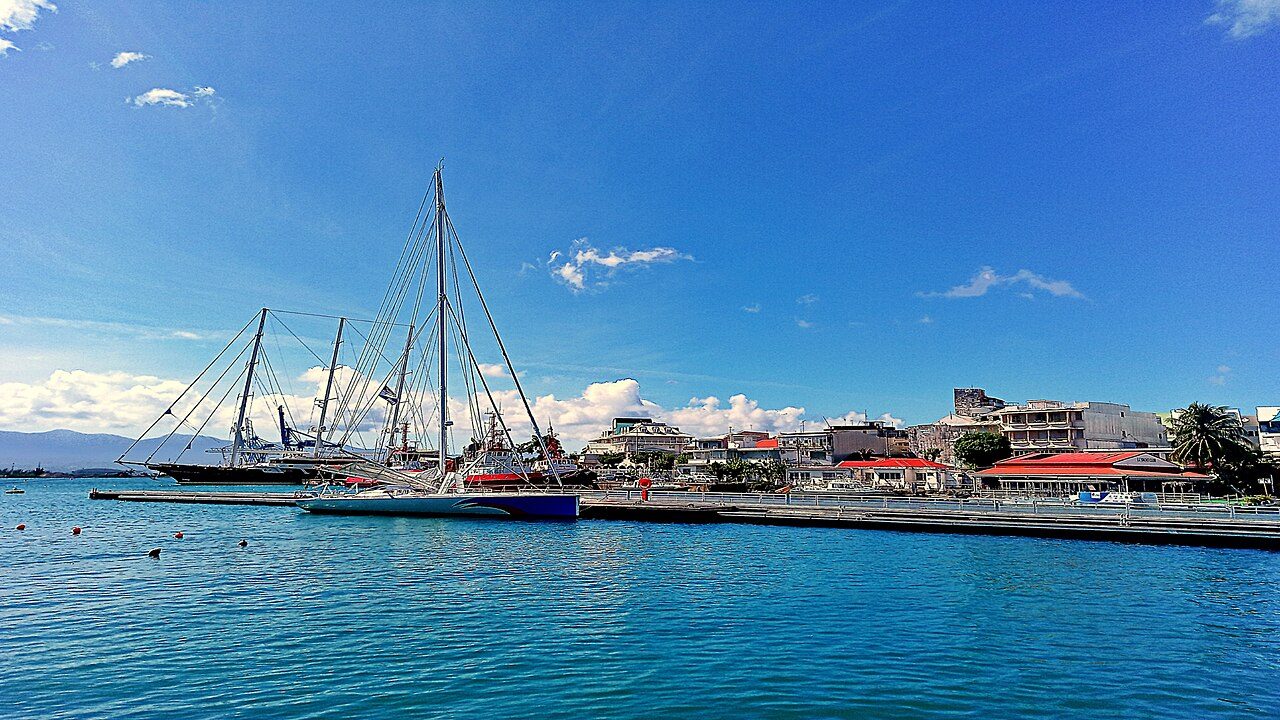
Bouyon is the carnival music of Dominica, the Caribbean island between Guadeloupe and Martinique. It was born in the late 1980s, when the band Windward Caribbean Kulture (WCK), formed in 1988, mixed the popular cadence-lypso of the day with the island's own jing ping music and carnival rhythms such as lapo kabwit. The result is fast, percussive and built for the street. Later, bouyon also fused with Trinidadian soca into bouyon soca, which spread across the eastern Caribbean and the French Antilles. Here is where it comes from and what it sounds like.
The roots: jing ping, quadrille and carnival drums
Bouyon grew from Dominica's own traditions. Wikipedia describes jing ping as a folk music born on the island's slave plantations, also known as accordion music. A jing ping band traditionally has four instruments: the boumboum, a bamboo boom pipe; the syak or gwaj, a scraper-rattle; the tambal or tanbou, a tambourine; and the accordion, which replaced bamboo flutes in the 1940s. These bands accompany the Dominican quadrille and a circle dance called the flirtation.
At Carnival, Dominica has its own sounds too: chanté mas, masquerade songs, and lapo kabwit, "goat skin" drumming, as Kreol Magazine translates it, the drums that are the most prominent part of the island's instrumental tradition. Other traditional forms include bèlè and the heel-and-toe polka.
Cadence-lypso: the bridge
The second root is cadence-lypso, a fusion of Haitian cadence rampa and Trinidadian calypso, with influences from jing ping. It was created in the 1970s by the Dominican band Exile One, and it became popular in dance clubs across the Creole-speaking world. Grammacks was another of Dominica's leading kadans bands. Cadence-lypso also fed into the zouk of Kassav' in the 1980s, as we explain in Kassav' and zouk.
In 1987, Exile One recorded a chanté mas and lapo kabwit song, "L'hivernage". Wikipedia notes that French Antilleans called that beat "jump up music" because of its carnival feel, a hint of what was coming.
WCK and the birth of bouyon
In 1988, a group of young Dominican musicians formed Windward Caribbean Kulture. They began experimenting with a fusion of cadence-lypso and jing ping, adding native drum rhythms such as lapo kabwit, elements of jing ping bands and ragga-style vocals. Their debut album, One More Sway, came out the same year, during the celebrations of the tenth anniversary of Dominica's independence.
The new sound was later labelled bouyon, and WCK is credited with creating it. Wikipedia notes that the band also gave new credibility to jing ping, a style that had been seen as backward and unsophisticated, and that bouyon helped re-establish Dominica on the Caribbean music map. Other prominent bouyon groups include Roots, Stems and Branches (RSB) and First Serenade.
The sound
Bouyon is a mix of the traditional and the modern. Wikipedia lists instruments such as the tambour bélé, the tambou lélé, lapo kabwit drums, chakchak maracas, the scraper-rattle, the tambourine and the accordion, alongside drum kits, rhythm guitar and keyboards. It blends jing ping and cadence-lypso with bèlè, quadrille, chanté mas, lapo kabwit, mazurka, zouk and other Caribbean styles.
Over the years, it has produced offshoots such as bouyon-muffin and alternative bouyon.
The new generation
Bouyon has kept growing. SocaNews describes Asa Bantan, nicknamed the King of Bouyon, as the first solo artist to take the genre global, with "Wet Fete", and Carlyn XP, the Bouyon Queen, as another of its stars. In 2025, Trilla G, Shelly and Skinny Fabulous won Dominica's first Bouyon Road March with "Rags", a sign of how central the genre has become to the island's Carnival.
The World Creole Music Festival
Bouyon's biggest stage at home is the World Creole Music Festival, launched in 1997 to promote Dominican music and tourism. It is held over three nights on the last weekend of October at Windsor Park stadium in Roseau, during the island's Independence celebrations, and brings bouyon together with zouk, kompa, soca, reggae, dancehall and cadence-lypso. Kreol Magazine describes festivalgoers greeted by lapo kabwit drumming ensembles on their way to the stadium. The 26th edition took place from 23 to 25 October 2026.
Bouyon soca
Bouyon's best-known descendant is bouyon soca, sometimes called "jump up soca". It blends bouyon rhythms from the 1990s with soca from Trinidad and Tobago and the English-speaking Caribbean. Wikipedia notes that the term was coined mainly by producers and musicians from Saint Lucia, and that, in Dominica itself, bouyon has kept a clear, recognisable style distinct from soca.
The fusion is popular in Antigua, Saint Lucia, Guadeloupe and Martinique, and Wikipedia cites songs such as "Famalay" and "Conch Shell" as hits with a bouyon flavour inside soca. For the Trinidadian side of the story, read What is soca?.
Bouyon on the dance floor
Bouyon is carnival music first, fast and percussive, close in spirit to the "jump up" beat French Antilleans heard in Exile One's carnival songs. Its energy sits near other high-tempo Caribbean sounds such as shatta from Martinique, explored in What is shatta?, and the soca of Trinidad.
The best way to learn it is the way Dominicans do: at the fêtes and at Carnival, watching and joining in.
FAQ
Where does bouyon come from?
From Dominica, the Caribbean island between Guadeloupe and Martinique. It originated in the late 1980s, in the capital, Roseau.
Who created bouyon?
The band Windward Caribbean Kulture (WCK), formed in 1988, is credited with creating it by mixing cadence-lypso with the island's jing ping music and carnival rhythms.
What does bouyon mix?
Jing ping, cadence-lypso and traditional Dominican forms such as bèlè, quadrille, chanté mas and lapo kabwit, along with mazurka, zouk and other Caribbean styles.
Where can I hear bouyon live?
At Dominica's Carnival and at the World Creole Music Festival, held since 1997 on the last weekend of October at Windsor Park in Roseau.
What is the difference between bouyon and bouyon soca?
Bouyon is Dominican. Bouyon soca, sometimes called 'jump up soca', is a fusion of bouyon rhythms with Trinidadian-style soca, popular in Saint Lucia, Antigua, Guadeloupe and Martinique.
Sources
- Wikipedia, "Bouyon music", "Bouyon soca", "Windward Caribbean Kulture", "Music of Dominica" and "Jing ping", consulted November 2026
- Wikipedia, "Soca music" (bouyon soca section), consulted November 2026
- Caribbean Entertainment Hub, "Bouyon: a celebration of Dominican music culture"
- SocaNews, "World Creole Music Festival: 25 years of music and culture", 2025
- Kreol Magazine, "Celebration of Creole music culture: Dominica's World Creole Music Festival"
- France TV Pro, on the 26th World Creole Music Festival, 23 to 25 October 2026
- A Virtual Dominica, "World Creole Music Festival"
- #DANCE, "What is soca?", "What is shatta?" and "Kassav' and zouk"