Cumbia is a rhythm and folk dance born on Colombia's Caribbean coast, from the meeting of Indigenous, African and Spanish traditions during the colonial period. Traditionally played on three drums and Colombian flutes called gaitas, it was turned into big-band dance music by Lucho Bermúdez in the 1940s, spread through records from labels such as Discos Fuentes, and then took root across Latin America. Today Mexico, Peru, Argentina and many other countries have their own cumbias, so different that the word now covers a whole family of styles. Here is where it comes from and how it travelled.
Born on the Caribbean coast
Wikipedia describes Colombian cumbia as a musical rhythm and folk dance combining American Indigenous, African and Spanish elements, the result of the long meeting of these cultures during the conquest and the colonial era. Its strongest roots are often traced to Afro-Colombian communities of the coast, and some accounts link it to Afro-Colombian funeral traditions.
In its rural sense, the Chilean musicology journal Revista Musical Chilena notes, a cumbia or cumbiamba referred to a whole social scene: people dancing around groups of musicians with drums, songs and sometimes flutes. The image many people associate with it, dancers holding lit candles, comes from this Colombian tradition.
The sound: drums, gaitas and the guacharaca
Traditional cumbia uses:
- Three drums: the tambora, the tambor alegre and the llamador.
- Flutes: the gaita hembra and gaita macho, two Colombian flutes, and the flauta de millo.
- The guacharaca, a scraper that gives cumbia its "chu-chucu-chu" sound.
The beat is in two, steady and swaying. Later bands added brass, piano, accordion and electric instruments, but that simple pulse is what makes a cumbia recognisable anywhere.
Lucho Bermúdez and the big bands
The step from village dances to dance halls came through the orchestras. Lucho Bermúdez (1912 to 1994), born in Carmen de Bolívar, was a composer, arranger and bandleader who adapted the music of the Colombian Caribbean to the big-band format. Wikipedia notes he was already playing cumbias from 1940, and his Orquesta del Caribe played the clubs, dance halls and radio stations of Cartagena, Barranquilla and Santa Marta. Radio Nacional de Colombia places him, with Pacho Galán and Edmundo Arias, among the great bandleaders of Colombian tropical music.
The Hollywood Bowl's history of the genre notes that Bermúdez's big-band line-up was the starting point for other groups focused on cumbia, such as Los Corraleros de Majagual and La Sonora Dinamita.
Discos Fuentes and the golden age
Records did the rest. In the 1950s, Medellín became the centre of Colombian record production, with labels such as Discos Fuentes, Sonolux and Codiscos. Songlines describes a golden age in which Discos Fuentes became the powerhouse of the cumbia sound. The singer Totó La Momposina, Songlines notes, became known as the Queen of Cumbia.
Cumbia also went through hard times at home: Wikipedia notes it almost disappeared in Colombia in the 1970s after the arrival of salsa, while it found a stable home in Central America, Mexico and Peru. In 2022, the Colombian Ministry of Culture launched La Ruta de la Cumbia, a musical tourism route highlighting the music's history on the Caribbean coast, Radio Nacional reported.
Cumbia across Latin America
Over the 20th century, cumbia spread through migration, radio and records, and almost every Spanish-speaking country built its own version. Wikipedia lists dozens. A few of the best known:
- Mexico: cumbia became a cornerstone of urban popular culture, with cumbia sonidera in Mexico City, cumbia norteña in the north, and cumbia rebajada, slowed-down Colombian records, from Monterrey.
- The United States: cumbia tejana, built by Chicano musicians in Texas mixing cumbia with Tejano and conjunto.
- Peru: chicha, also called Andean or psychedelic cumbia, and Amazonian cumbia.
- Argentina: cumbia villera, born in the poor neighbourhoods, and cumbia santafesina.
- Colombia itself: fusions such as cumbia vallenata, with the accordion music of vallenato.
Scholars quoted by Wikipedia see this adaptability as the reason for cumbia's success: each region adds its own instruments and rhythms while keeping the recognisable percussion.
How cumbia is danced
The dance has changed as much as the music. Wikipedia notes that cumbia began as a street dance and went through a period of becoming a ballroom dance, and that its many national subgenres each brought their own dance styles. The tradition of dancing with candles in the hands belongs to Colombian cumbia, the original form.
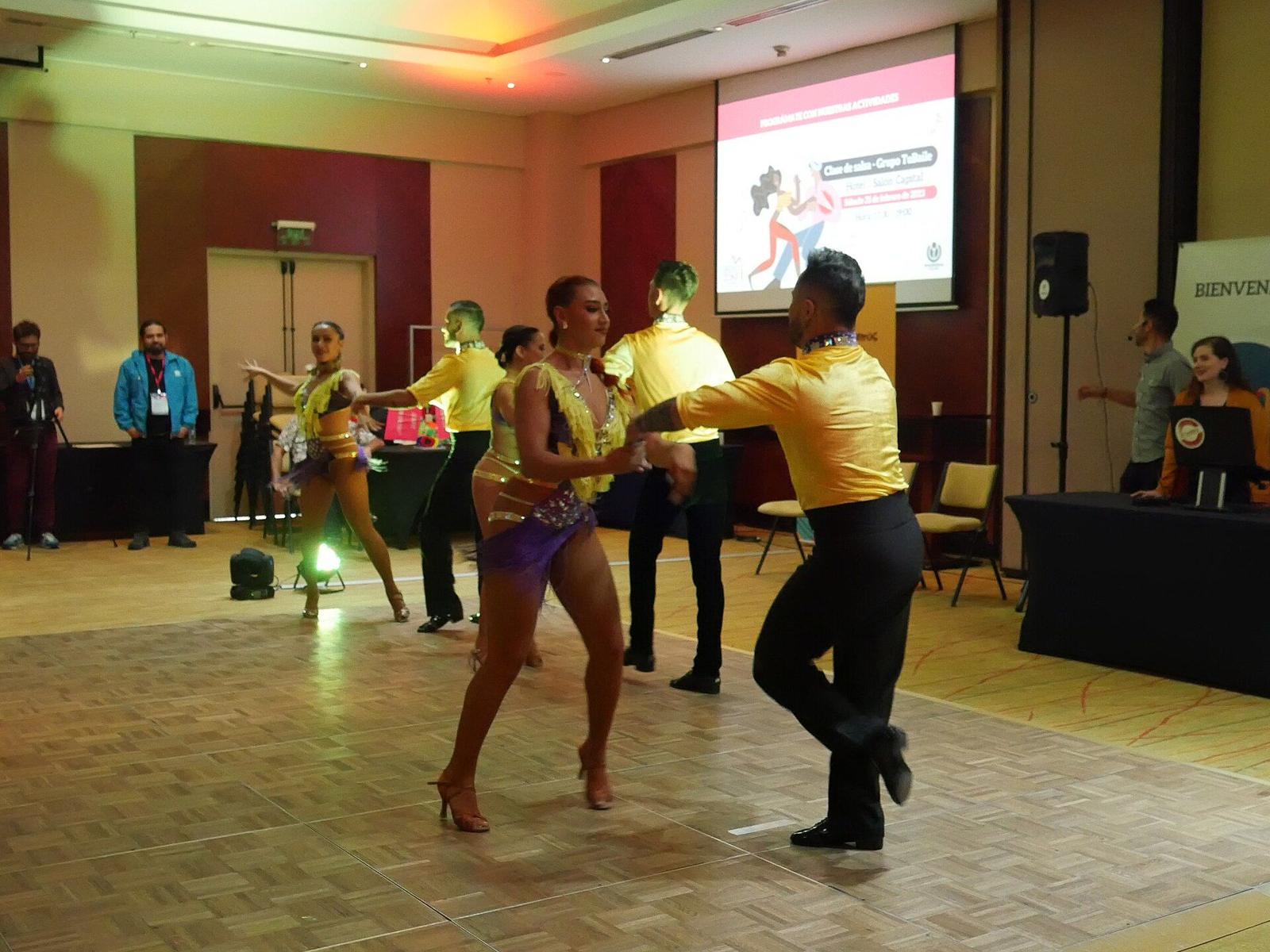
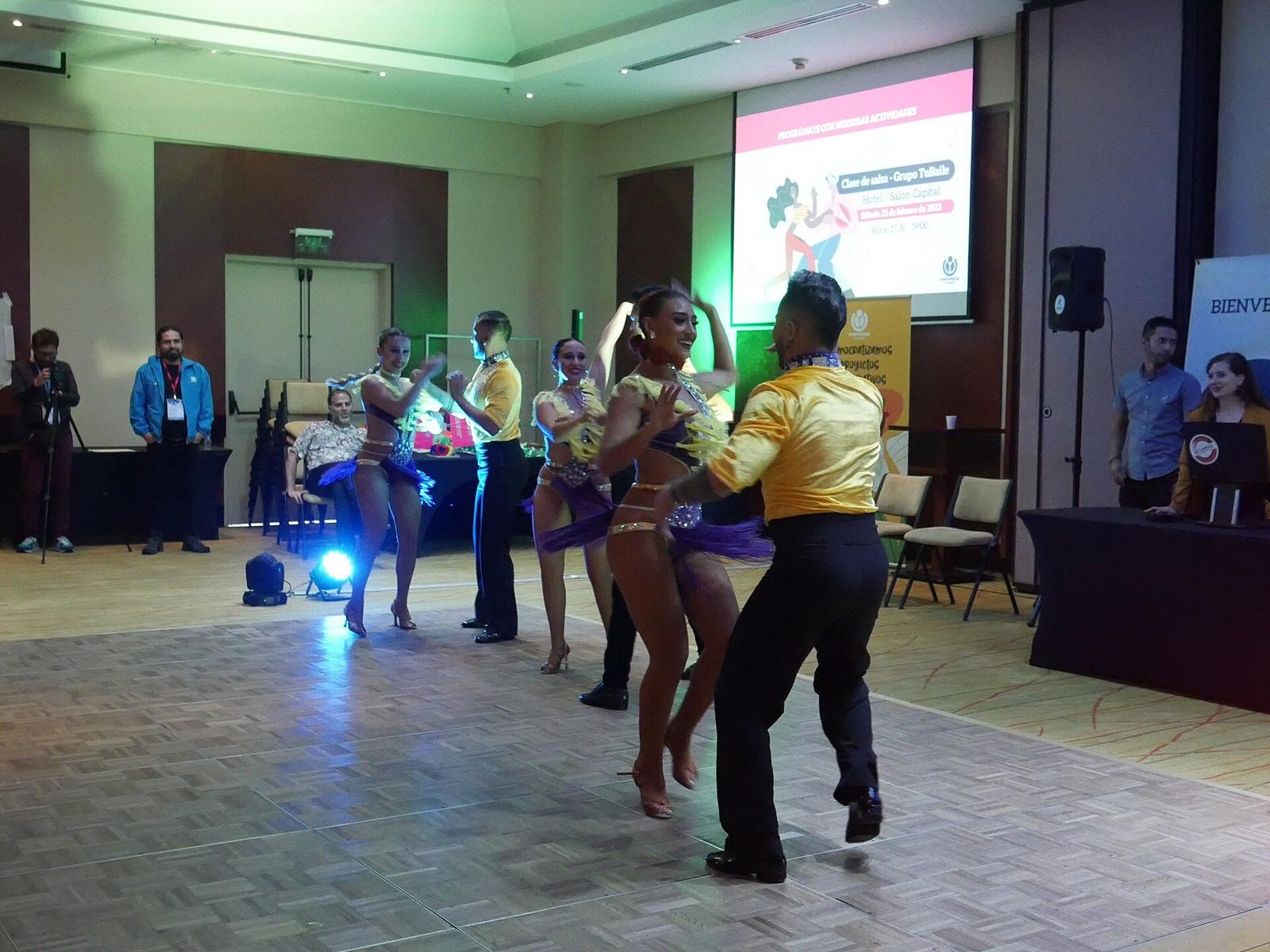
Wikipedia describes it as danced in pairs. Still, there is no single cumbia step to learn. A folk group on the Colombian coast, a sonidero party in Mexico City and a cumbia villera night in Buenos Aires look very different, even if the steady two-beat pulse links them all. The best way in is to watch dancers from the scene you want to join, then follow the beat.
For other Colombian and Caribbean rhythms, read What is Cali-style salsa?, What is merengue? and Where did salsa originate?.
FAQ
Where does cumbia come from?
From the Caribbean coast of Colombia. It mixes American Indigenous, African and Spanish elements from the colonial period, and is often linked to Afro-Colombian traditions.
What instruments are used in traditional cumbia?
Three drums, the tambora, the tambor alegre and the llamador, and flutes: the gaita hembra and gaita macho, and the flauta de millo. The guacharaca, a scraper, gives the 'chu-chucu-chu' sound.
Why do cumbia dancers hold candles?
Dancing with candles in the hands is a tradition of Colombian cumbia, the original form from which the other variations grew.
Is cumbia the same in Mexico, Peru and Argentina?
No. Each country built its own versions: cumbia sonidera and norteña in Mexico, chicha or Andean cumbia in Peru, and cumbia villera in Argentina, among many others.
Who made cumbia popular?
In Colombia, the bandleader Lucho Bermúdez took coastal rhythms to big bands from the 1940s. Labels such as Discos Fuentes, groups such as Los Corraleros de Majagual and La Sonora Dinamita, and singers such as Totó La Momposina carried it further.
Sources
- Wikipedia, "Cumbia", "Lucho Bermúdez" and "Mexican cumbia", consulted November 2026
- Hollywood Bowl, "A brief history of cumbia"
- Sounds and Colours, "How jazz provided a gateway to cumbia becoming the most popular rhythm in Colombia"
- Songlines, "Cumbia profile"
- Radio Nacional de Colombia, "Cinco cumbias colombianas inolvidables" and on Colombian orchestras
- Revista Musical Chilena, on the meanings of cumbia in Colombia