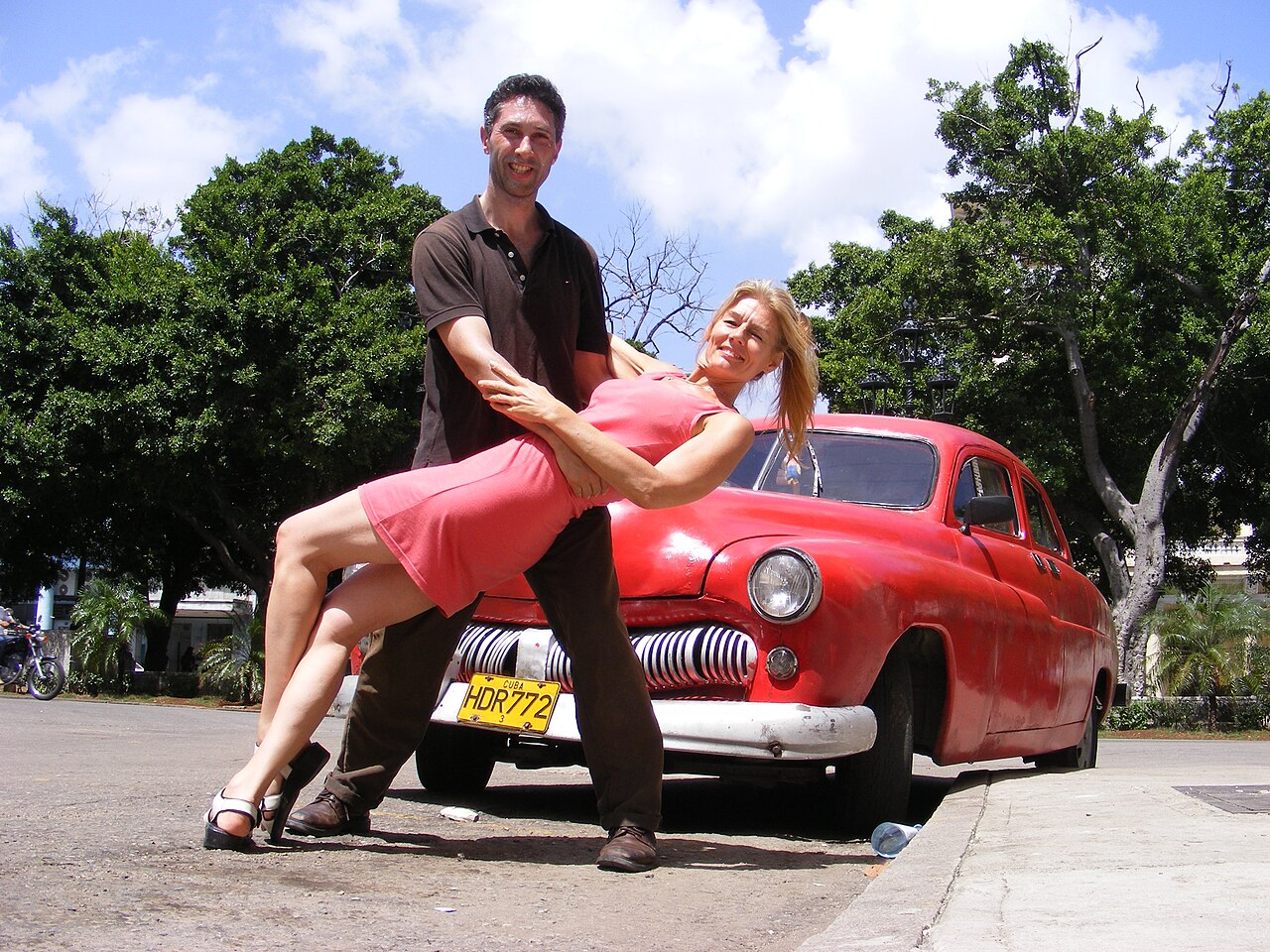
Merengue is the national music and dance of the Dominican Republic. It is fast, in 2/4, and built in its traditional form on three instruments: the accordion, the tambora, a two-headed drum held on the lap, and the güira, a metal scraper. The dance is one of the simplest in the Latin family, a "danced walk" in which partners shift their weight from foot to foot while the hips move side to side. Born in the Cibao valley in the 19th century, promoted as a national symbol under the dictator Rafael Trujillo, and carried abroad by bandleaders from Johnny Ventura to Juan Luis Guerra, merengue was inscribed by UNESCO in 2016.
Born in the Cibao
Merengue's roots are traced to the Cibao valley, the rural north of the country around the city of Santiago, which is why the classic style is still called merengue cibaeño or merengue típico. Wikipedia notes that the earliest documented mentions are newspaper articles from the middle of the 19th century, some of them complaining about a "lascivious" dance that was pushing aside the older tumba.
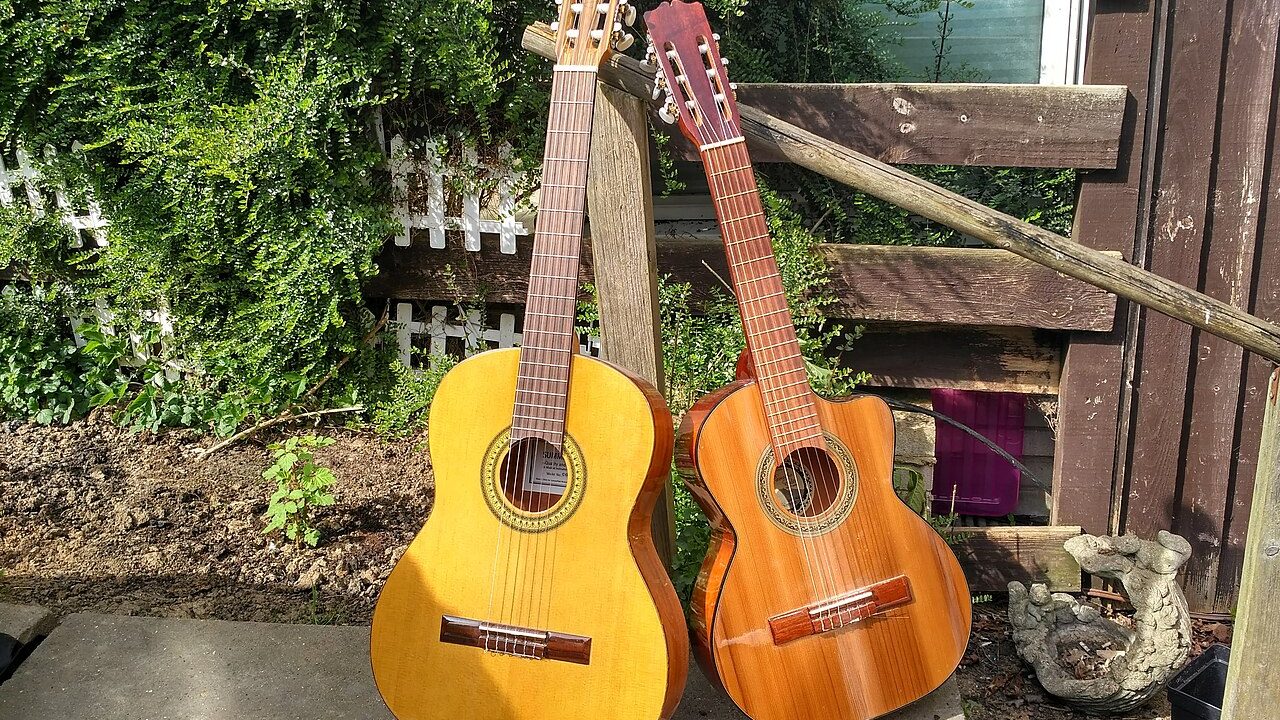
The first merengues were played on string instruments such as the guitar and the bandurria. In the late 19th century, the accordion arrived through German traders and quickly took over as the lead instrument, a role it keeps in merengue típico today. The accordionist Francisco "Ñico" Lora (1880 to 1971) is often credited with popularising it at the turn of the 20th century.
Where the word comes from is disputed. One popular theory links it to the meringue dessert, made from whipped egg whites, but there is no agreed answer.
Perico ripiao and the three styles
Today, three main kinds of merengue are played in the Dominican Republic:
- Merengue típico, also called perico ripiao, the oldest style, with accordion, tambora, güira and, in modern groups, saxophone and bass. The name means "ripped parrot", said to be the name of a brothel in Santiago where the music was once played.
- Merengue de orquesta, the big-band style, with paired saxophones, horns, piano, timbales, conga, backing singers, tambora, güira and bass. It is the most popular form today.
- Merengue de guitarra, the guitar-based style.
The tambora and the güira stay at the heart of every version. If you dance bachata, you know the güira already: it is one of the five instruments of a bachata group, as we explain in Bachata music instruments.
Trujillo and the national dance
Until the 1930s, merengue was widely considered immoral, and moralists tried to ban both the music and the dance. That changed under Rafael Leónidas Trujillo, dictator from 1930 to 1961. He made the rural merengue a symbol of the nation, invested in bands and controlled much of the music industry, and musicians were pressed to write songs praising him. Bandleaders such as Luis Alberti created a big-band merengue that the urban middle class could accept.
That history is uncomfortable, and it is part of the story: merengue became the national dance partly through propaganda. It also survived the dictatorship and kept changing long after it.
From Johnny Ventura to Juan Luis Guerra
After Trujillo's assassination in 1961, merengue opened up. In the 1960s, Johnny Ventura and his Combo Show brought showy choreography, a smaller horn section and salsa influences. In the 1970s, Wilfrido Vargas sped up the tempo and added disco and rock. By the 1980s, Wikipedia notes, merengue was even beating salsa on the radio, and all-female orchestras such as Las Chicas del Can became stars.
Since then, artists including Juan Luis Guerra, Toño Rosario and Milly Quezada, known as the Queen of Merengue, have taken the music far beyond the island. Guerra, trained at Berklee, mixed merengue with other Caribbean and African sounds, and also took bachata uptown, as we tell in Bachata Rosa.
Merengue has also had a long life in New York, where it has been heard since the 1930s, and where a newer, faster "merengue de mambo" grew popular with younger listeners.
How merengue is danced
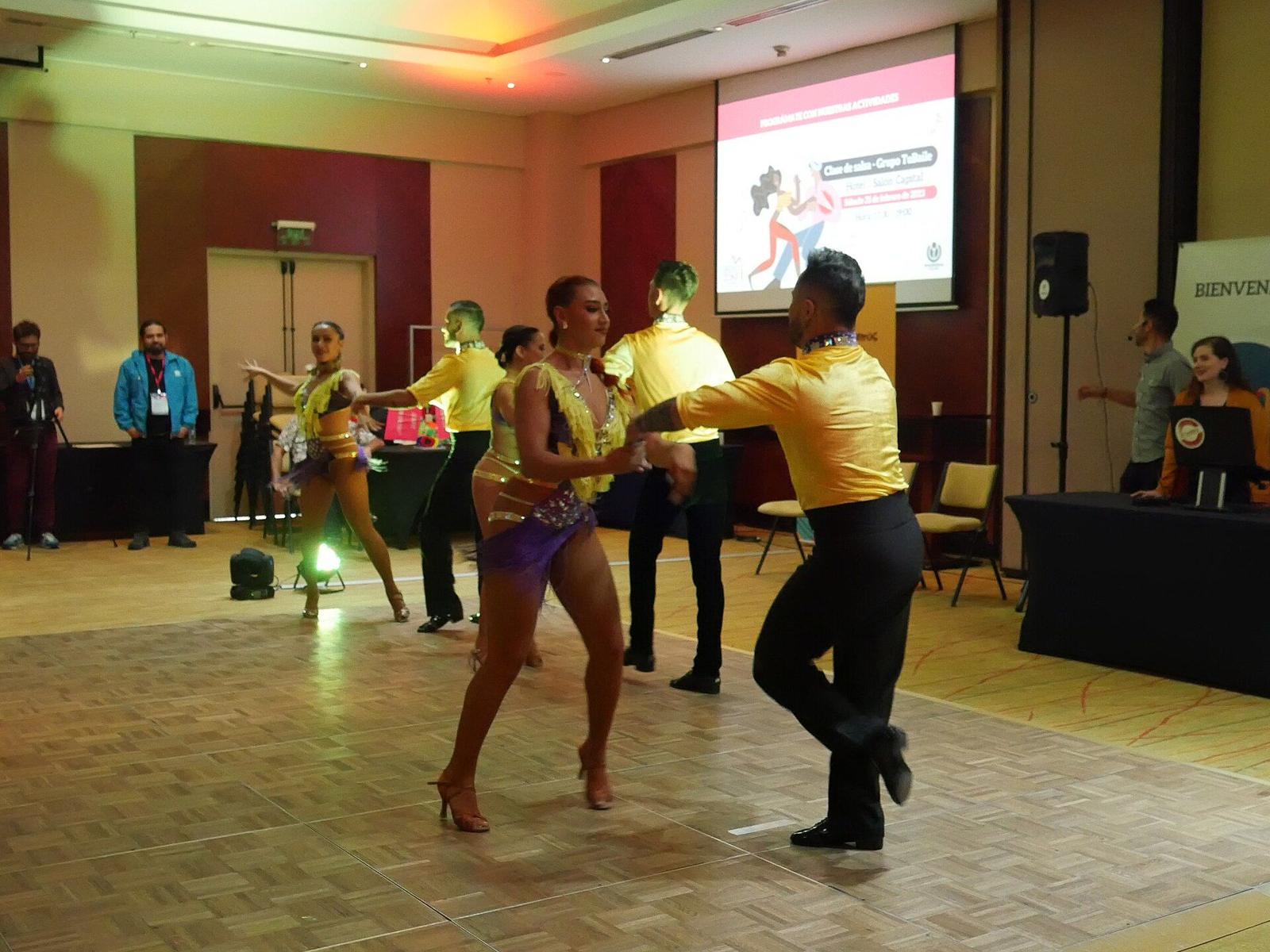
Partners usually dance in a closed hold: the leader's right hand on the follower's waist or back, the other hands joined at about eye level. The basic step is a walk in small steps, on the spot, sideways or circling, with knees slightly bent so the hips move side to side. Wikipedia describes it as a "danced walk", accessible to people with or without dance experience.
From there, couples move into open position for turns, and the arms can twist into complicated knots without letting go. Even when the music is very fast, the upper body stays calm and turns are taken slowly, often over four beats.
A few tips for beginners:
- Start with the walk. Feel the beat in your feet before you add the hips.
- Let the hips follow the knees. The movement comes from bending and straightening the legs, not from pushing the hips.
- Keep the frame. A steady upper body makes turns easier for both partners.
- Listen to the tambora. Its pattern drives the dance.
Merengue on the international scene
Merengue is not the headline of the international SBK festival circuit, where salsa, bachata and kizomba dominate, as we explain in What is SBK?. But it belongs to the same Dominican world as bachata, and knowing it helps you hear where much Caribbean dance music comes from.
It also has a cousin in Haiti: the Haitian méringue, the dance music that dominated Haiti before Nemours Jean-Baptiste launched compas direct in 1955, as we tell in Who invented kompa?. The two share a name and a Caribbean history, but they are different musics.
Heritage
On 30 November 2016, UNESCO inscribed the "Music and dance of the merengue in the Dominican Republic" on its Representative List of the Intangible Cultural Heritage of Humanity. Three years later, bachata followed, as we explain in What is bachata?.
FAQ
Where does merengue come from?
From the Dominican Republic, and more precisely from the Cibao valley in the north, around the city of Santiago. It is first mentioned in newspapers in the mid-19th century.
What instruments are used in merengue?
Traditional merengue típico, also called perico ripiao, uses a diatonic accordion, a two-headed drum called the tambora and the güira, a metal scraper. Modern bands add saxophone, bass, horns, piano and percussion.
Is merengue easy to dance?
It is one of the easiest Latin partner dances to start. The basic step is a 'danced walk', shifting weight from foot to foot in time with the music, with the hips moving side to side.
Is merengue UNESCO heritage?
Yes. The music and dance of the merengue in the Dominican Republic was inscribed on UNESCO's Representative List of the Intangible Cultural Heritage of Humanity on 30 November 2016.
What is the difference between merengue and bachata?
Both are Dominican. Merengue is fast, in 2/4, built on the accordion, tambora and güira, with a walking basic step. Bachata is guitar-based and slower, with a side-to-side basic over eight counts and a tap on 4 and 8.
Sources
- UNESCO, "Music and dance of the merengue in the Dominican Republic", inscribed 30 November 2016
- Wikipedia, "Merengue music" and "Merengue (dance)", consulted November 2026
- #DANCE, "What is bachata?", "What is Dominican bachata?", "Bachata Rosa" and "Who invented kompa?", with their own sources