Forró is the music and partner dance of Brazil's Northeast. Its classic sound comes from a trio: an accordion, a zabumba bass drum and a metal triangle. It covers a family of rhythms, among them baião, xote and xaxado, and it owes much of its national fame to Luiz Gonzaga, the "King of Baião", who took it to Rio de Janeiro in the 1940s. Danced in couples, forró is at the heart of Brazil's June festivals, and it has a well-established scene in Europe. In 2021, Brazil registered its traditional forms as national cultural heritage.
From the sertão to the radio
Brasil 61 notes that forró's traditional roots lie in sertanejo culture and in the musical and dance traditions of the Northeast. The word forró names three things at once: the rhythms, the dance, and the party where they are played.
The figure who made it national is Luiz Gonzaga (1912 to 1989). The son of an accordion player from rural Pernambuco, he moved to Rio de Janeiro in the 1940s, where, as Harvard's ReVista tells it, he found an audience among migrants from the Northeast. Encyclopedia.com notes that his radio broadcasts in the 1940s and 1950s made many Brazilians outside the Northeast aware of the music for the first time. The ethnomusicologist Adriana Fernandes credits him with adding lyrics to the baião, switching to the piano accordion and forming the trio of triangle, zabumba and accordion that still defines the sound.
Gonzaga himself was not modest about his role. A study published in the journal Espaço Acadêmico quotes him saying that he invented not only the baião, but also forró and the June festival marches. Historians see a more collective story, but his influence is not in doubt. Other great names of traditional forró include Jackson do Pandeiro, Dominguinhos and Sivuca.
The trio and the rhythms
The traditional style, often called forró pé-de-serra, rests on three instruments:
- The sanfona, the accordion, the melodic soul of the music.
- The zabumba, a large double-headed drum that plays the syncopated rhythms.
- The triangle, which keeps a steady pulse, Wikipedia notes, on every sixteenth note.
Under the forró umbrella sit several rhythms, including baião, the one Gonzaga made famous, xote and xaxado. Brazil's heritage registration also includes coco and toada. As the Brazilian education site Toda Matéria notes, the way people dance changes with the rhythm being played.
Forró universitário
Forró never stopped evolving. In the early 1990s, ReVista recounts, forró hit the dance clubs of São Paulo and Rio, and a new public began to dance it. The style was called universitário, "university", after the many students and young urban audiences who went from club to club. Other sources place its boom in the 2000s; both point to the same movement of young city dancers rediscovering the music of the Northeast. Interestingly, ReVista notes, forró universitário and pé-de-serra do not sound very different.
More recently, artists have kept bringing forró to new audiences. O Povo described the singer João Gomes as the most popular name in forró since Luiz Gonzaga.
How forró is danced
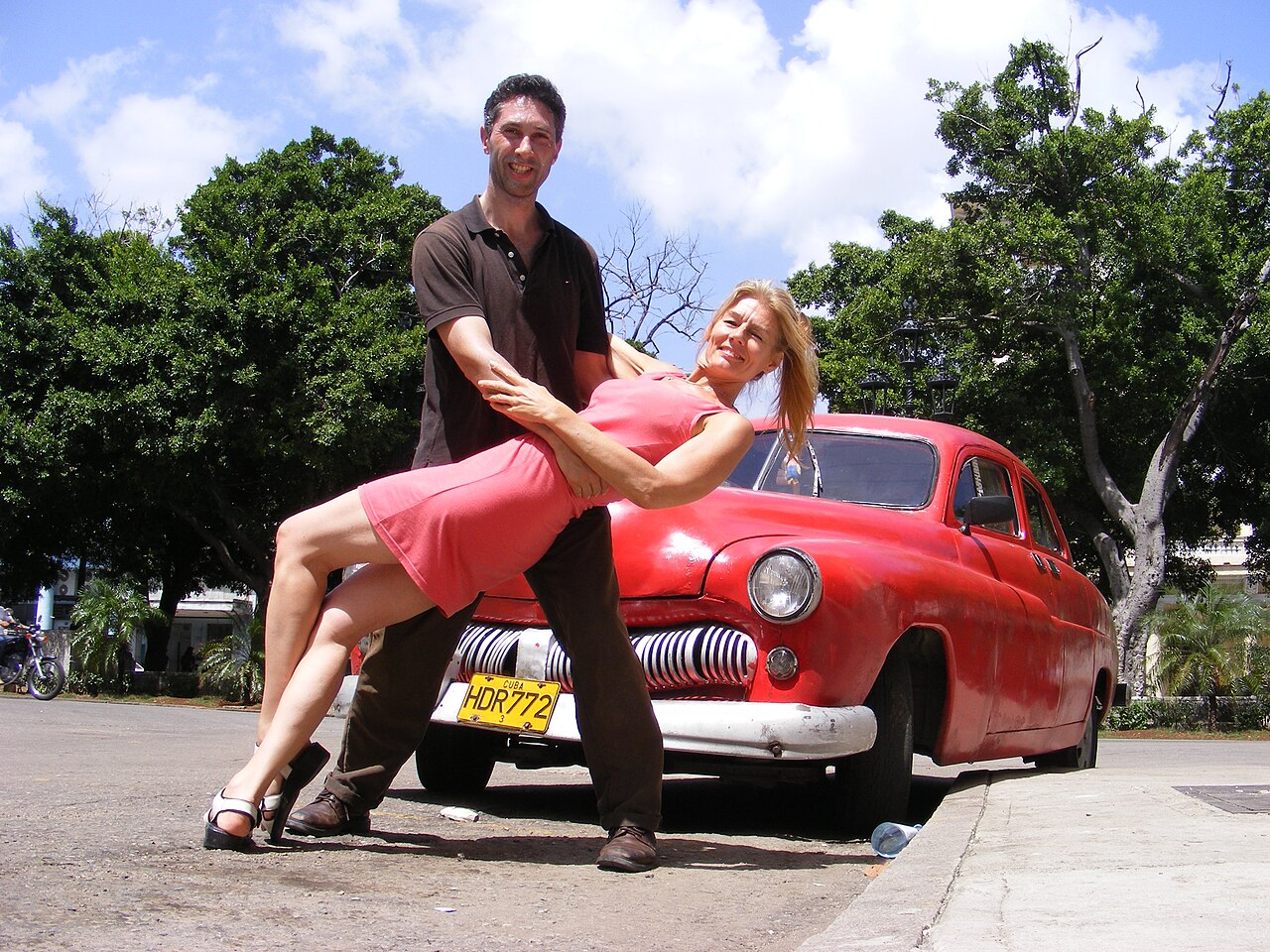
Forró is a couple dance, often danced close. MasterClass describes two broad families of steps: nordestino, the traditional partner dance, and universitário, with more elaborate figures comparable to salsa or bolero. ReVista describes dancers who swivel and slide across the floor.
A few tips for beginners:
- Start with the basic your teacher shows you, before adding turns.
- Feel the triangle. Its constant pulse tells you where the beat is.
- Stay connected. The close hold is part of the dance, so keep your frame relaxed and listen to your partner.
- Change with the rhythm. Baião, xote and xaxado do not feel the same, and the dance adapts.
If you dance Brazilian zouk, forró is a cousin worth knowing: both come from Brazil's partner dance culture, though from different regions and music. Read Brazilian zouk: from lambada to the world.
June festivals and Forró Day
Forró is inseparable from the festas juninas, the June festivals of Saint Anthony, Saint John and Saint Peter The São João festivities of the Northeast are its biggest stage.
Brazil also has an official Forró Day on 13 December, Luiz Gonzaga's birthday, established in 2005.
National heritage
On 9 December 2021, the advisory council of IPHAN, Brazil's national heritage institute, voted unanimously to register the "Matrizes Tradicionais do Forró", the traditional forms of forró, as Cultural Heritage of Brazil. The request had been filed in 2011 by the Associação Cultural Balaio do Nordeste and the Fórum Forró de Raiz of Paraíba. The registration covers xote, baião, xaxado, coco and toada, along with the instruments, festivals and knowledge around them.
Forró abroad
Wikipedia notes that forró has become increasingly popular around the world, with a well-established scene in Europe. Wherever you learn it, remember that you are dancing a living tradition of Brazil's Northeast, now protected as national heritage.
FAQ
Where does forró come from?
From the Northeast of Brazil. It is linked to rural, sertanejo culture and spread to the rest of the country from the 1940s, largely through the accordionist and singer Luiz Gonzaga.
What instruments are used in forró?
The classic trio is an accordion (sanfona), a zabumba, a double-headed bass drum, and a metal triangle. The triangle keeps a steady pulse while the zabumba plays the syncopated rhythms.
What is the difference between forró pé-de-serra and forró universitário?
Pé-de-serra is the traditional, accordion-led trio style. Forró universitário is the urban revival named after the students and young audiences who filled clubs in São Paulo and Rio from the 1990s.
Is forró cultural heritage?
Yes. On 9 December 2021, Brazil's heritage institute IPHAN unanimously registered the 'Matrizes Tradicionais do Forró', including xote, baião, xaxado, coco and toada, as Cultural Heritage of Brazil.
When is Forró Day?
13 December, Luiz Gonzaga's birthday. The day was established in 2005.
Sources
- Wikipedia, "Forró", consulted November 2026
- O Povo, "Iphan declara o forró como patrimônio cultural brasileiro", 9 December 2021
- Diário do Nordeste, "Forró ganha título de Patrimônio Cultural do Brasil", 9 December 2021
- A Gazeta, "Iphan declara o forró como Patrimônio Cultural do Brasil", 10 December 2021
- Brasil 61, "Matrizes Tradicionais do Forró reúnem ritmos, danças e saberes", 22 September 2026
- ReVista, Harvard Review of Latin America, "Bodies that sing"
- Encyclopedia.com, "Forró"
- MasterClass, "Forró: a guide to Brazilian forró music and dance"
- Toda Matéria, "História do forró"
- Jean Henrique Costa, "Luiz Gonzaga: entre o mito da pureza musical e a indústria cultural", Espaço Acadêmico
- O Povo, "13 de dezembro é Dia do Forró", 13 December 2025
- Adriana Fernandes, "Forró: the constitution of a genre in performance", Karpa 5.1-5.2 (2012)