Son cubano, or simply son, is the music and dance that came out of the hills of eastern Cuba at the end of the 19th century and went on to become the island's most popular genre. It blends Spanish and African roots: the singing style, the verse forms and the tres, a small guitar with three pairs of strings, come from the Spanish side, while the clave rhythm, the call and response and the percussion come from African, mostly Bantu, traditions. If you dance salsa, you are dancing to son's grandchildren. Salsa, the cha-cha-chá and Cuban timba all grew from it.
Where son comes from
Most historians place son's early forms in the old Oriente province, in the mountainous areas around the Sierra Maestra. Peasant musicians there played related styles such as changüí and nengón at rural parties, using early guitars and simple percussion. The tres is thought to have appeared around 1890 in Baracoa, at the far eastern tip of the island.
Not everyone agrees on that neat story. Some musicologists point out that versions of son existed in rural areas across Cuba by the 1890s, and the scholar Peter Manuel has argued that a large part of son's structure came from the contradanza played in Havana. The safest summary is that son grew in the countryside, mostly in the east, and took its finished shape when it reached the capital.
A popular legend links son to a 16th-century song called "Ma Teodora". Most historians now treat that story as apocryphal.
The move to Havana
Son reached Havana around 1909, carried by musicians and workers who moved to the capital from the east and from the countryside. Many settled in the crowded solares, the tenement houses of the poorer neighbourhoods.
In the capital, son met the urban rumba and took the clave rhythm that is now inseparable from it, around 1910. The first son recordings were made in 1917, when a group called the Cuarteto Oriental recorded for Columbia.
In 1920, that quartet became the Sexteto Habanero. Its line-up fixed the classic son sextet: guitar, tres, bongos, claves, maracas and double bass. The bass had earlier been played on the marímbula, a large box with metal tongues, or on the botija, a jug you blow across. In 1927, the Sexteto Habanero added a cornet and became a septet, and Ignacio Piñeiro's Septeto Nacional made the trumpet part of the sound.
From the margins to the whole island
For years, son was a marginal music in Havana, the sound of the poorer neighbourhoods rather than the ballrooms. That changed in the second half of the 1920s. Radio arrived in Cuba in 1922, Havana filled with American visitors during Prohibition, and between 1925 and 1928 son went from a marginal genre to perhaps the most popular music in the country.
The Trío Matamoros, founded in 1925 in Santiago de Cuba by Miguel Matamoros with Siro Rodríguez and Rafael Cueto, showed how much of son could fit into three voices, two guitars and maracas. They recorded in New York in 1928 and stayed famous until they retired in 1960.
Son also travelled. In the 1930s, Cuban bands toured Europe and North America, and American ballrooms turned son into a softer dance they called "rhumba". Radio carried son records to West and Central Africa, where they fed new styles such as Congolese rumba.
Arsenio Rodríguez and the conjunto
By the late 1930s, the classic sextets and septets were losing ground to bigger bands. The answer came in the 1940s from the blind tres player Arsenio Rodríguez, the most influential son musician of the decade. His conjunto format added congas, piano and several trumpets, and gave more room to improvised solos. The sound was heavier and more driving, and it is the direct model for the salsa bands of 1960s and 1970s New York.
The singer Beny Moré pushed son further in the same period, mixing it with guaracha, bolero and mambo.
How a son song is built
A classic son has two parts. It opens with a sung verse section, sometimes called the largo. Then it moves into the montuno: a repeated section where the lead singer, the sonero, improvises lines and the chorus answers with a short refrain, while the tres repeats a figure called the guajeo.
That montuno is the part dancers wait for, and you will hear the same structure in almost every salsa song.
The whole thing sits on the clave, a two-bar pattern played on two wooden sticks. Everything else, from the bass to the bongos, fits around it. Cubans have a saying for it, quoted by Cultura Cubana: without a clave, there is no son.
How son is danced
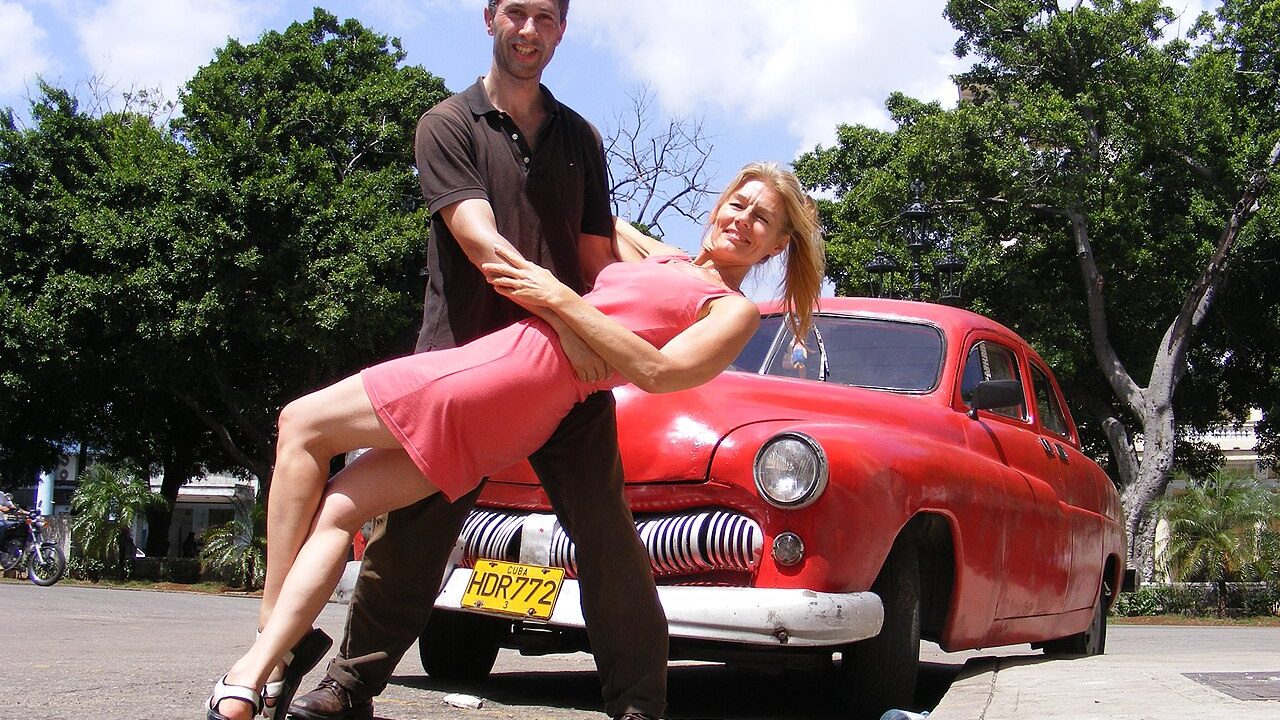
Son is a couple dance, danced close, with small steps and a lot of body movement. Many dancers mark the step on the off-beat, which feels familiar to anyone who dances salsa on 2. That is no accident: the basic step of the 1950s Palladium mambo in New York was derived from son and shares its timing, with pauses on 1 and 5.
In Cuba, the partner dance called casino grew from son and its relatives. Abroad it is usually called Cuban salsa, and its circle version, rueda de casino, appeared in Havana in the 1950s.
From son to salsa
After the Cuban Revolution cut Cuba off from the United States, son, mambo and rumba kept evolving in New York, where Puerto Rican and Cuban musicians built what the record label Fania would market as salsa in the late 1960s and 1970s. In Cuba itself, son kept evolving into styles such as songo and, in the 1990s, timba.
Traditional son never disappeared. In 1997, the Buena Vista Social Club album, recorded in Havana with veteran musicians, introduced old-style son to a global audience. Some critics noted that it showed a historical style rather than the Cuba of the 1990s, but it sent a new generation looking for the originals.
Where to start listening
- Sexteto Habanero, for the sound of 1920s Havana.
- Septeto Nacional Ignacio Piñeiro, especially "Échale salsita".
- Trío Matamoros, for the guitar-and-voices side of son.
- Arsenio Rodríguez, for the conjunto sound that leads to salsa.
- Beny Moré, for the bigger 1950s bands.
- Buena Vista Social Club (1997), if you want an easy door in.
Frequently asked questions
What is son cubano? A genre of music and dance born in the rural east of Cuba in the late 19th century, mixing Spanish and African elements. It became Cuba's most popular music in the 1920s.
What instruments are used in son cubano? The classic 1920s sextet used guitar, tres, bongos, claves, maracas and double bass. A trumpet came later in the 1920s, and the 1940s conjuntos added piano and congas.
Is son cubano the same as salsa? No, but salsa grew directly from it, in New York in the 1960s and 1970s.
How do you dance son? As a close couple dance with small, grounded steps, often marked on the off-beat, close to the feel of salsa on 2.
FAQ
What is son cubano?
A genre of music and dance from Cuba, born in the rural east of the island in the late 19th century. It mixes Spanish elements, like the guitar-based tres and the song forms, with African elements, like the clave rhythm, call and response and the percussion.
What instruments are used in son cubano?
The classic Havana sextet of the 1920s used guitar, tres, bongos, claves, maracas and double bass. Early groups used the marímbula or the botija for the bass. A trumpet was added later in the 1920s, and the conjuntos of the 1940s added piano and congas.
Is son cubano the same as salsa?
No, but salsa grew directly from it. Salsa was the name given in 1960s and 1970s New York to a mix of son, mambo and other Afro-Caribbean styles, played mostly by Puerto Rican and Cuban musicians.
How do you dance son?
Son is a close couple dance. Many dancers mark the step on the off-beat, in a way similar to salsa on 2, with small, grounded steps and a lot of hip and body movement.
Sources
- Wikipedia, "Son cubano", "Sexteto Habanero" and "Arsenio Rodríguez"
- Cultura Cubana, "Son" (en.culturacubana.net)
- College of the Holy Cross, Museo Rivera, "Cuban music"
- World Music Central, "Buena Vista Social Club"