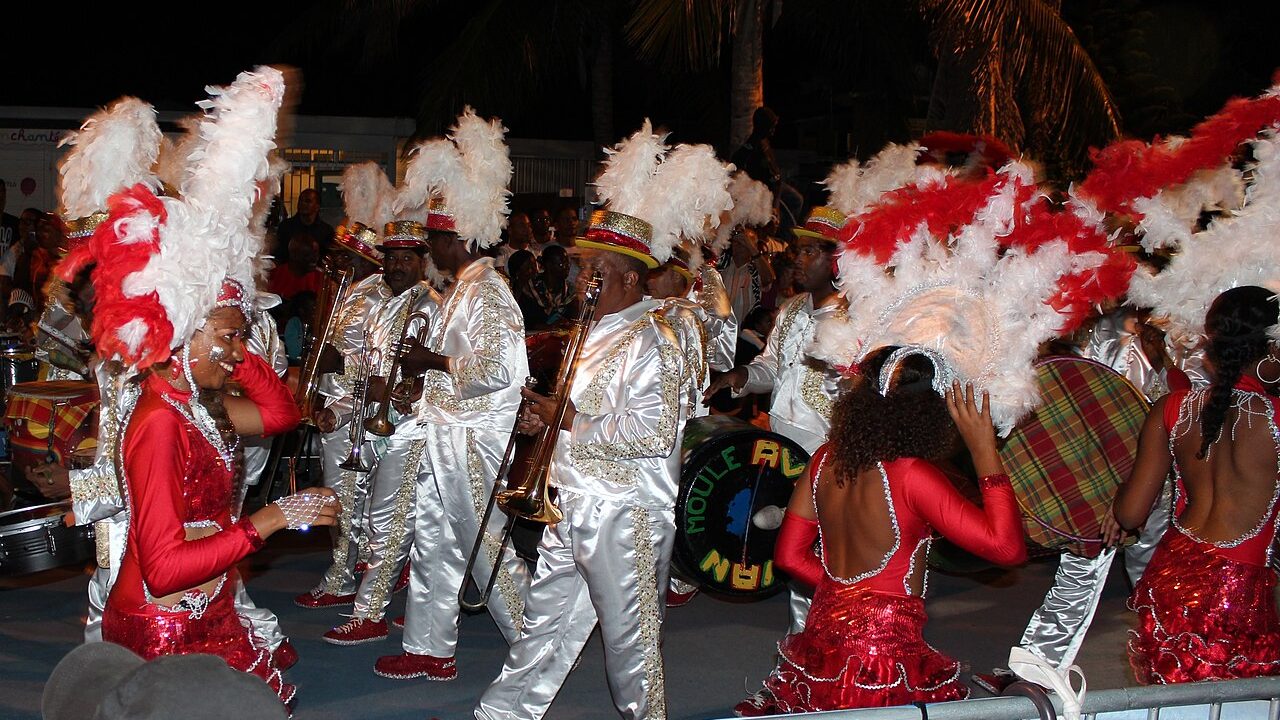
Zouk love is the slow, romantic branch of zouk, the dance music of the French Antilles. It emerged in the mid-1980s in Guadeloupe and Martinique as a gentler counterpart to the fast, festive "zouk béton" of Kassav'. With its mid-tempo groove, warm synthesisers and love songs, it became the most popular form of zouk in the 1990s, and it travelled far beyond the Caribbean, to Cape Verde, Angola and the dance floors where kizomba was born.
From zouk béton to zouk love
Zouk was popularised by Kassav' in the early 1980s. Britannica describes two main sub-styles that developed: zouk love, with romantic themes and slow tempi, and the faster zouk béton, "hard" or "concrete" zouk.
The fast style dominated the early years, built for carnival and parties. From the second half of the 1980s, artists increasingly recorded slower, more intimate songs, and that style took the name zouk love. Our story of the band that started it all is in Kassav' and Zouk.
Close to konpa
Many musicians and writers point out how close zouk love is to Haitian konpa: a steady, rolling groove, danced close, with small steps. Some go as far as calling zouk love the French Antilles' version of konpa. The relationship between the two is explored in Kompa vs Zouk.
The sound
- slow to mid tempo, built for close dancing
- synthesisers and keyboards, smooth and warm
- romantic lyrics, mostly in Antillean Creole and French
- a steady, gently syncopated rhythm, with less brass than early zouk
Over time, zouk love absorbed R&B influences, and many later singers moved between zouk love, R&B and pop.
To Africa
Zouk love's influence on Africa is one of the most important chapters in modern dance music. In the 1980s and 1990s, it shaped a new generation of musicians in Cape Verde, and in Angola it met semba and helped produce kizomba. Much of what Europe calls kizomba music is still close to that sound, as we explain in What Is Kizomba?.
It also lent its name to another dance: in Brazil, dancers who kept dancing lambada to zouk records created what became Brazilian Zouk, explained in Brazilian Zouk: How Lambada Became a New Dance.
For dancers
Zouk love is music for slow, close dancing. In the French Antilles and Paris, couples dance it much like konpa. In kizomba scenes, slower zouk tracks are still played, and Brazilian Zouk dancers sometimes use them for a more traditional feel. Learning to recognise zouk love will help you understand where several of today's partner dances came from.
FAQ
What is zouk love?
A slow-tempo, romantic subgenre of zouk that emerged in the mid-1980s in the French Caribbean, especially Guadeloupe and Martinique.
What is the difference between zouk love and zouk béton?
Zouk béton, or hard zouk, is the original fast, festive style popularised by Kassav'. Zouk love is slower and more romantic.
Is zouk love related to kizomba?
Yes. Zouk, and especially its slower romantic form, influenced Cape Verdean and Angolan musicians in the 1980s and 1990s, and was one of the ingredients of kizomba music.
Sources
- Encyclopaedia Britannica, Shannon Dudley, "Zouk"
- Wikipedia, "Zouk" and "Zouk love (music style)", consulted November 2026