You do not need dance shoes for your first salsa, bachata or kizomba classes. Comfortable shoes with a smooth sole that lets you turn are enough. Once you dance every week, though, a proper pair helps: dance shoes usually have suede soles that let you pivot without sticking, a flexible structure for footwork, and a secure fit. The four things that matter are the sole, the fit, the heel and the support. Looks come last. Here is how to choose.
Why your shoes matter
Partner dancing involves a lot of turning, pivoting and quick weight changes. A shoe that grips the floor too much makes every turn harder and puts strain on your knees and ankles, because your foot stays stuck while your body rotates. A shoe that is too slippery makes you lose balance. The right shoe sits in between: it lets your foot turn, but still gives you control.
Shoes also affect your posture, your footwork and how long you can dance before your feet hurt, which matters at a festival where you may dance for hours over several nights.
The sole: the most important part
- Suede soles are standard on dance shoes. They let you turn and slide smoothly while keeping some grip. They work best on wooden and dance floors, and they should not be worn outside, where dirt and water quickly damage them. A wire suede brush helps restore them when they become shiny and slippery.
- Smooth leather soles turn well and are more durable. Many dancers use leather-soled street shoes as a first option.
- Rubber soles with heavy grip, like most sneakers and running shoes, are the worst choice for turns. They are fine for a first trial class, but not for regular dancing.
- Split soles or pivot points, found on some dance sneakers, make it easier to turn on the ball of the foot.
If the floor at your local social is tiled or very slippery, you may need a slightly grippier sole. Ask regulars what works there.
Fit: snug, not tight
Dance shoes should fit snugly, so your foot does not slide inside the shoe when you turn. Many dance shoes stretch a little with wear, especially if they are made of soft leather or satin.
- Try them on later in the day, when your feet are slightly bigger.
- Check that your toes are not crushed, but that your heel does not lift when you walk.
- Straps should hold your foot securely without cutting into it.
- If you buy online, check the brand's sizing chart and the return policy, because sizes vary between makers.
Heel height
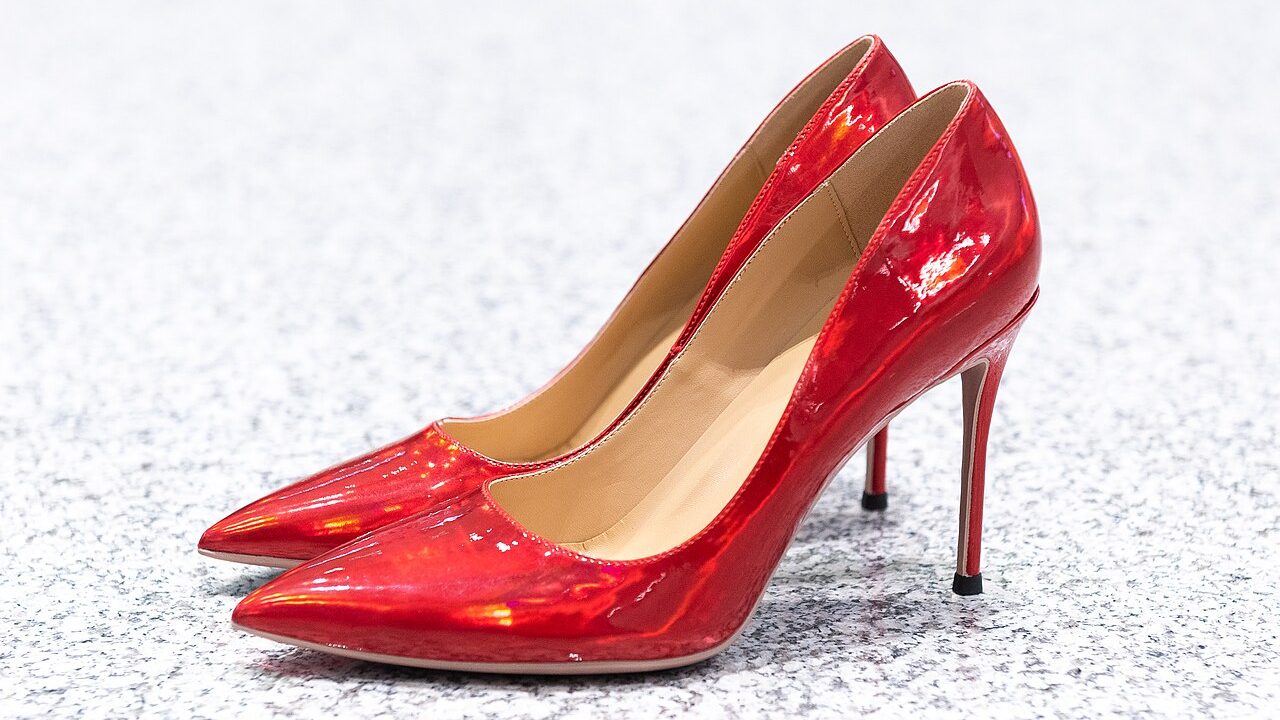
Followers often dance in heels, but they are not required. A moderate heel is a common starting point, and many experienced followers prefer lower heels or flats for comfort. A wider, more stable heel is easier on the ankles than a thin stiletto. If you want to explore dance heels, see our guide to heels dance shoes.
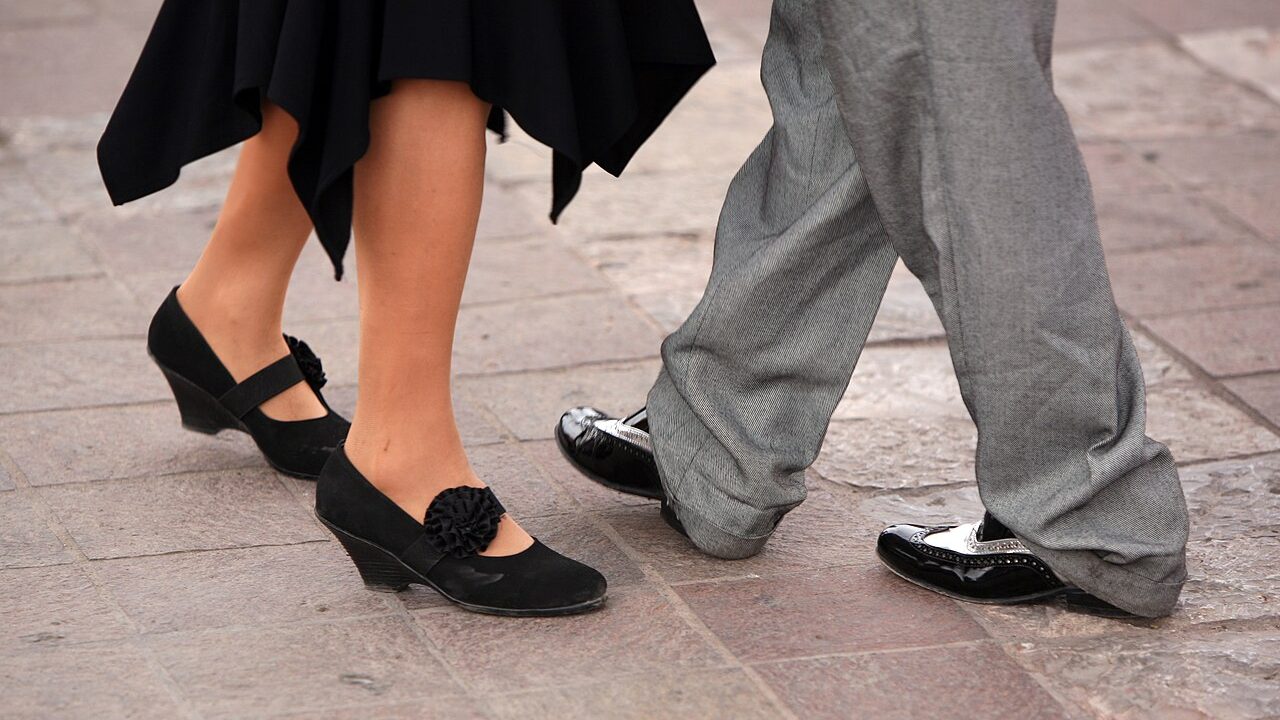
Leaders usually wear shoes with a low heel, which helps with balance and posture. Some prefer flat dance sneakers.
Whatever your role, choose the height you can dance in comfortably for several hours, not the one that looks best in photos.
Support and flexibility
Dance shoes are usually more flexible than street shoes, so you can point your foot and feel the floor. That flexibility is good for footwork, but if you have weak ankles or need arch support, look for models with a firmer structure, an ankle strap or space for an insole.
Cushioning also matters if you dance on hard floors or for long sessions. Some dance shoes have padded insoles; you can also add a thin insole if there is room.
Shoe types at a glance
| Type | Best for | Watch out for |
|---|---|---|
| Open-toe heeled sandals | Followers in salsa, bachata, kizomba | Ankle stability, heel height |
| Closed-toe dance shoes | Followers who want more support or protection | Fit at the toes |
| Low-heeled leather dance shoes | Leaders | Sole wear, fit |
| Dance sneakers | Leaders and followers who want comfort | Sole type; avoid heavy grip |
| Smooth-soled street shoes | Beginners trying classes | Can be stiff or slippery |
What to wear before you buy
For your first few weeks, choose:
- Shoes with a smooth, non-grippy sole.
- Something that stays securely on your foot: no flip-flops, loose sandals or backless slippers.
- Comfort over style. You will be standing and moving for an hour or more.
Avoid heavy boots, very grippy sneakers and anything that slips off when you turn.
Taking care of dance shoes
- Wear them only indoors, on the dance floor. Change into them when you arrive.
- Brush suede soles regularly to keep them working.
- Let them dry after a sweaty social, away from direct heat.
- Use a shoe bag to protect them and your other things.
- Bring a spare pair to festivals, in case one pair starts to hurt.
When to buy
A good moment to invest in dance shoes is when you are dancing at least once a week and know which style you will stick with. Try a few pairs, ask your teachers and other dancers what they wear, and remember that the best shoe is the one you forget about while dancing.
Frequently asked questions
Do I need dance shoes for salsa or bachata? Not at first. Smooth-soled comfortable shoes are enough; dance shoes help once you dance regularly.
What sole is best for social dancing? Suede is the most common; smooth leather also works. Avoid grippy rubber.
What heel height should I choose? A moderate heel or flats for followers, a low heel for leaders. Comfort first.
Can I wear sneakers for social dancing? Regular grippy sneakers are not ideal; dance sneakers or smooth-soled shoes are better.
FAQ
Do I need dance shoes for salsa or bachata?
Not for your first classes. Comfortable shoes with a smooth sole are enough. Dance shoes become useful once you dance regularly, because they make turning easier and reduce strain on the knees.
What sole is best for social dancing?
Suede soles are the most common on dance shoes because they let you turn and slide while giving some grip. Smooth leather soles also work. Rubber soles with heavy grip are the worst choice, because they stick to the floor during turns.
What heel height should I choose?
For followers, a moderate heel is a good start, and a lower or flat shoe is perfectly fine. Leaders usually wear a low heel. Comfort and stability matter more than height.
Can I wear sneakers for social dancing?
Regular sneakers with grippy rubber soles are not ideal for turns. Dance sneakers with a split or suede sole, or smooth-soled shoes, are a better option for comfort.
Sources
- #DANCE editorial advice, compiled from common teaching practice in partner dance classes