Dancehall steps are not anonymous moves. Each one has a name, usually a creator, often a song, and a moment when it took over the dances of Kingston. The classics include Gerald "Bogle" Levy's Bogle, World Dance, Willie Bounce and Wacky Dip; the 2000s hits Gully Creepa, Nuh Linga and Pon Di River; the Dutty Wine; and newer moves from Ding Dong and the Ravers Clavers, such as the Fling. This guide gives you the names and the stories. To learn them properly, watch the original videos and, best of all, take a class with a teacher who knows the culture.
Why steps have names
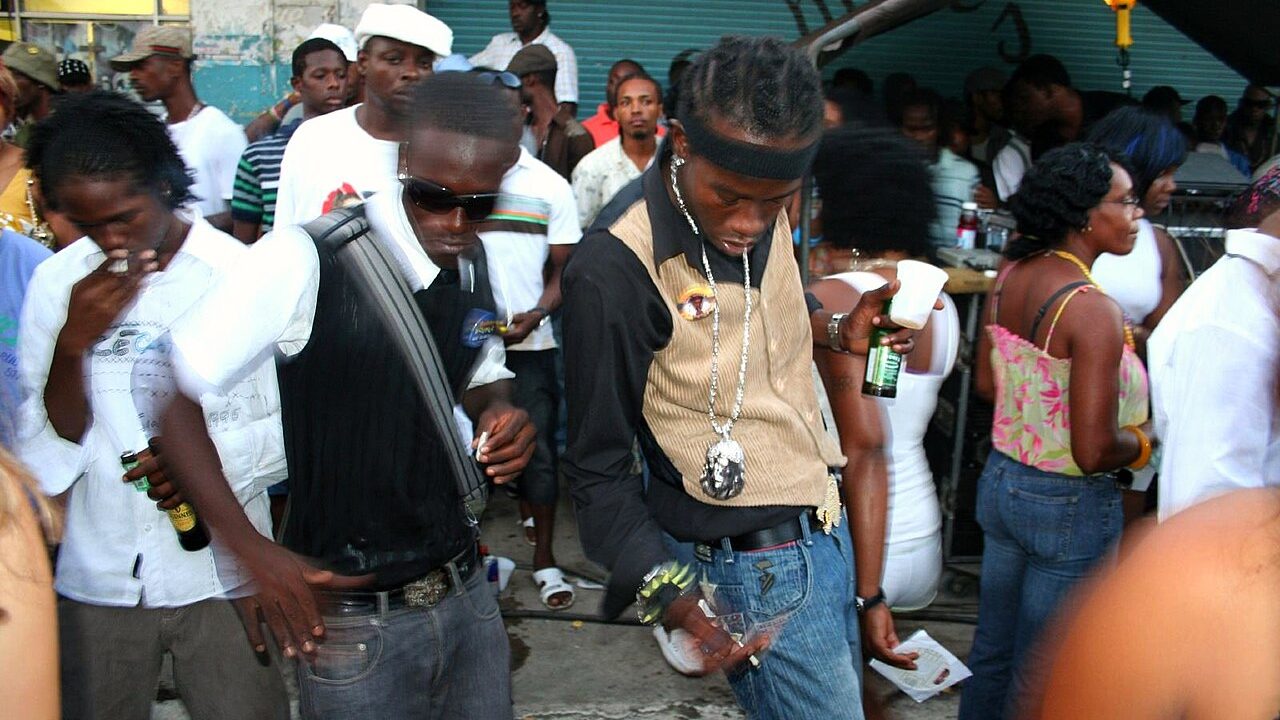
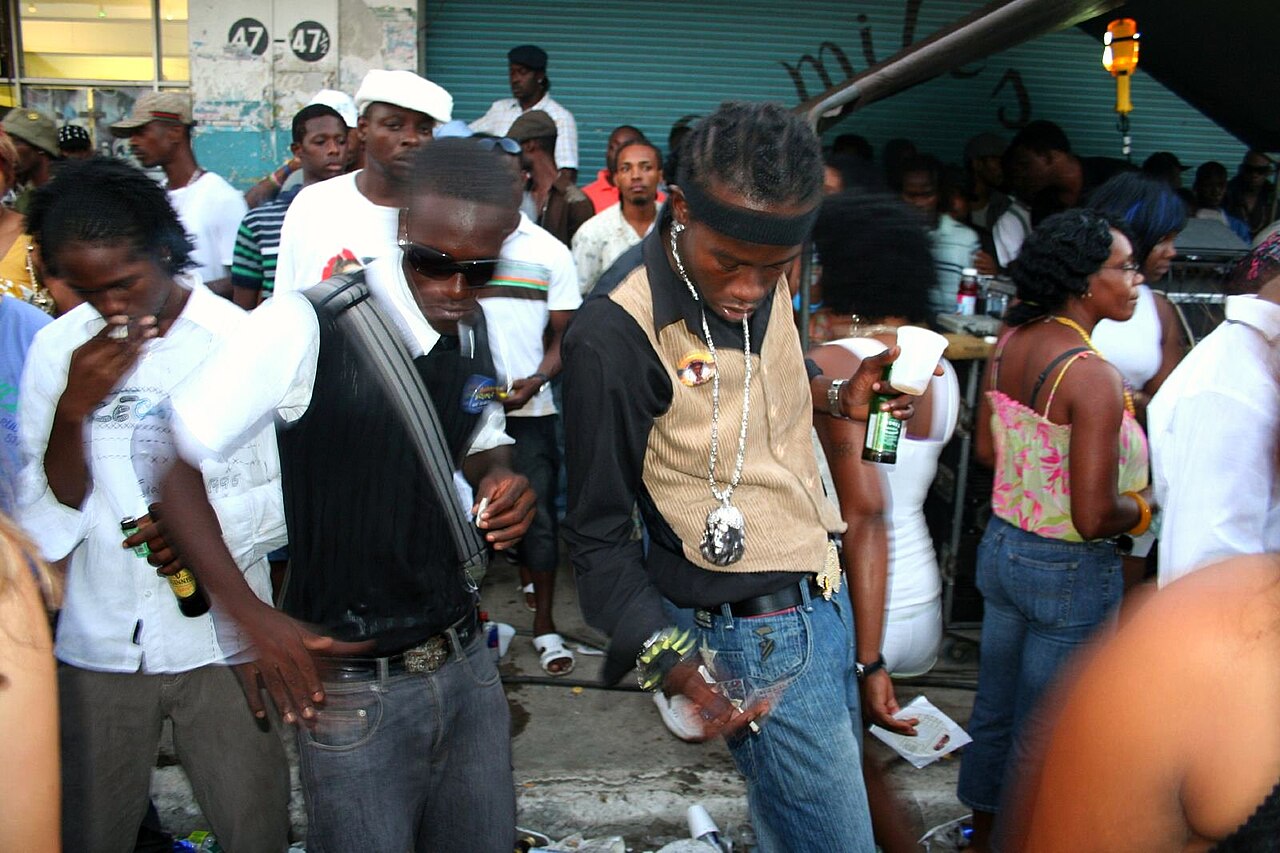
In dancehall, the dance floor and the music grow together. Dancers create a step at a street session, the crowd adopts it, and a deejay writes a song that names it and tells you how to do it. Weekly street parties such as Passa Passa were where new steps were tested in front of the public, and where the crowd decided what lived. Our guide to Kingston's weekly parties shows how that system still works.
That is why learning dancehall means learning names. Calling a step by its name, and knowing who made it, is part of respecting the culture, the same way battle dancers credit the pioneers of their foundations.
The Bogle era
No one shaped dancehall dance more than Gerald "Bogle" Levy, born in Kingston in 1964 and killed there in 2005. The Jamaica Observer credits him with the Bogle, the World Dance, the Willie Bounce, the Wacky Dip and the Urkle Dance, among many others.
- The Bogle, from the 1990s, is often described as dancehall's first crossover move, the one that travelled furthest beyond Jamaica. Buju Banton recorded "Bogle Dance" about it.
- The World Dance became famous through Beenie Man's song of the same name.
- The Willie Bounce was named after Bogle's friend Willie Haggart. LargeUp notes that Elephant Man's 2005 song "Willie Bounce", a tribute to Bogle, took dancers through two of his signature moves in one sequence.
- The Wacky Dip carries the name "Mr Wacky", one of Bogle's nicknames.
His full story, and the long list of his other dances, is in Bogle: the father of dancehall dance.
The 2000s: Elephant Man and the step songs
In the 2000s, dancers and deejays worked hand in hand, and songs with instructions in the lyrics became hits. Elephant Man was the best-known voice of that period.
- Gully Creepa: LargeUp credits the step to the late dancer Ice, with Elephant Man championing it. It evokes someone creeping through one of Kingston's gullies, and the Jamaica Observer notes you can go as low as you like or add your own freestyle.
- Nuh Linga: another hit of the decade. Usain Bolt brought it and the Gully Creepa to the Olympics, as LargeUp recalls, one of the most visible moments for Jamaican dance worldwide.
- Pon Di River: a footwork step popularised by Elephant Man's song. The Jamaica Observer sums it up with a joke: if your feet cannot cross, take a seat.
- Log On: the Observer credits Elephant Man with making it famous, and describes it as smooth.
The Dutty Wine
The Dutty Wine is one of the most famous dancehall moves of all, and one of the most debated. Wikipedia describes a dance built on a rotating movement of the neck, usually performed by women; "wine" means winding or gyrating. Several dancers have claimed to be its creator, among them the dancehall queen Mad Michelle, who points to a video from 2003. What is certain is that Tony Matterhorn's 2006 song "Dutty Wine" made it a worldwide craze.
The Observer adds a useful warning: some dancers made it look easy, others hurt their necks. Warm up, start slowly and know your limits. Women's dancehall styles and the queens who carry them are explored in Dancehall queen.
Ding Dong and the Ravers Clavers
Since the 2000s, the great dance-maker of dancehall has been Ding Dong, a dancer turned deejay, and his crew Ravers Clavers. They are credited with many of the most popular moves of recent years, including the Shampoo, the Sivva, the Lowe Mi, the Flairy, the Lebeh Lebeh and the Fling, known in full as "Fling Yuh Shoulda". The Fling spread so widely that even Jamaica's prime minister danced it. Ding Dong's "Lebeh Lebeh" video includes a salute to Bogle, a reminder that the new generation still honours the old. The full story is in Ding Dong and Ravers Clavers.
How to learn dancehall steps
Steps change fast, and a list like this one is only a starting point. A few tips:
- Learn from the source. Watch the original music videos and session footage, and look for teachers who have spent time in Jamaica or learned from Jamaican dancers.
- Learn the music. Each step lives on a riddim. Our guide What is a riddim? explains how dancehall songs are built.
- Respect the context. Dancehall is a Jamaican culture, with its own language, sessions and history. Read What is dancehall music? and Dancehall vs reggae to understand where the steps come from.
- Mind your body. Neck and back moves such as the Dutty Wine deserve a proper warm-up and a slow start.
Dancehall keeps inventing. By the time you read this, Kingston will have new steps. Knowing the classics means you will understand them when they arrive.
FAQ
What are the most famous dancehall steps?
Classics include the Bogle, the World Dance, the Willie Bounce and the Wacky Dip from Gerald 'Bogle' Levy, the Gully Creepa, Nuh Linga and Pon Di River from the 2000s, the Dutty Wine, and newer moves from Ding Dong and the Ravers Clavers such as the Fling.
Who created the most dancehall steps?
Gerald 'Bogle' Levy (1964-2005) is credited with more dancehall moves than anyone. In recent years Ding Dong and his crew Ravers Clavers have launched many of the most popular ones.
Why do dancehall songs tell you which step to do?
In dancehall, songs and steps often travel together. From the 2000s, artists such as Elephant Man worked with dancers so that the lyrics named and described the moves.
Who created the Dutty Wine?
Several dancers have claimed it, including the dancehall queen Mad Michelle. Tony Matterhorn's 2006 song 'Dutty Wine' made it famous.
Sources
- #DANCE, "Bogle: the father of dancehall dance", "Ding Dong and Ravers Clavers" and "Passa Passa", with their own sources
- Jamaica Observer, "22 of the most popular dancehall moves", 6 July 2020
- Jamaica Observer, "Dance moves that revolutionized dancehall", 6 August 2021
- LargeUp, "Toppa Top 10: Dancehall dances of the decade", 9 January 2011
- Wikipedia, "Dutty Wine", consulted November 2026
- University of Birmingham, Dancing Maps, "Willie bounce"