In partner dances such as salsa, bachata and kizomba, the leader guides the couple: they choose the moves, start each transition and signal it to their partner. The follower receives those signals, interprets them, keeps the movement going and adds their own style and musicality. Neither role is passive. A good dance is a conversation: the leader proposes, the follower answers, and the best dancers listen to each other in both directions. Traditionally men led and women followed, but today anyone can dance either role, and more and more dancers learn both.
What leading means
In improvised partner dances, the leader is responsible for guiding the couple, initiating transitions to different steps and choosing which steps to dance. They communicate those choices through subtle physical and visual signals, so that the couple moves together smoothly.
In practice, the leader has several jobs at once:
- Choosing the moves that suit the music, the floor and the partner's level.
- Signalling early and clearly, so the follower has time to respond.
- Keeping the timing, especially in the basic step.
- Managing the floor, steering away from collisions and finding space.
- Taking care of the follower, never forcing a move or putting them at risk.
A common beginner idea is that leading means pushing or pulling. It does not. Good leading is closer to an invitation: the leader creates a clear intention and space for the follower to move into.
What following means
The follower's job is to receive, interpret and maintain the movement. Once the leader initiates a move, the follower carries it through, and may choose how much to exaggerate, soften or change it within the frame of the dance.
Following well requires:
- Centred readiness: staying balanced and alert, ready for cues both visual and physical.
- Not anticipating: waiting for the signal instead of guessing the next move.
- Keeping your own basic and timing, so the leader has something stable to work with.
- Musicality and styling, which are the follower's space for expression.
- Communicating back, through the connection, for example tension if a move feels unsafe.
That last point matters. Followers often see what is happening behind the leader's back. A widely shared rule in social dancing is that both partners watch each other's back, and avoiding collisions is one of the moments when a follower may "backlead", signalling danger to the leader.
Connection: how the two talk
Leader and follower communicate mainly through connection: the physical contact through hands, arms, the frame or the body. Dancers take cues through it, and the follower uses it to give feedback just as the leader uses it to suggest moves. Advanced couples use connection to bring the follower's ideas and creativity into the dance, not just to transmit instructions.
A few basic mechanisms appear in most partner dances:
- Compression: both partners move slightly towards each other, building pressure through the arms.
- Tension: the opposite, partners moving apart while staying connected, like a gentle stretch.
- Points of balance: leaders often guide through the follower's shoulders, hips and centre rather than through the hands alone.
For example, to bring a follower closer, a leader typically uses tension, drawing the hand in; to send the follower away, they add compression and guide the hand towards the follower. Exact technique varies between salsa, bachata and kizomba, but the principle is the same everywhere: the signal comes from the body, not just the arm.
Mirroring and footwork
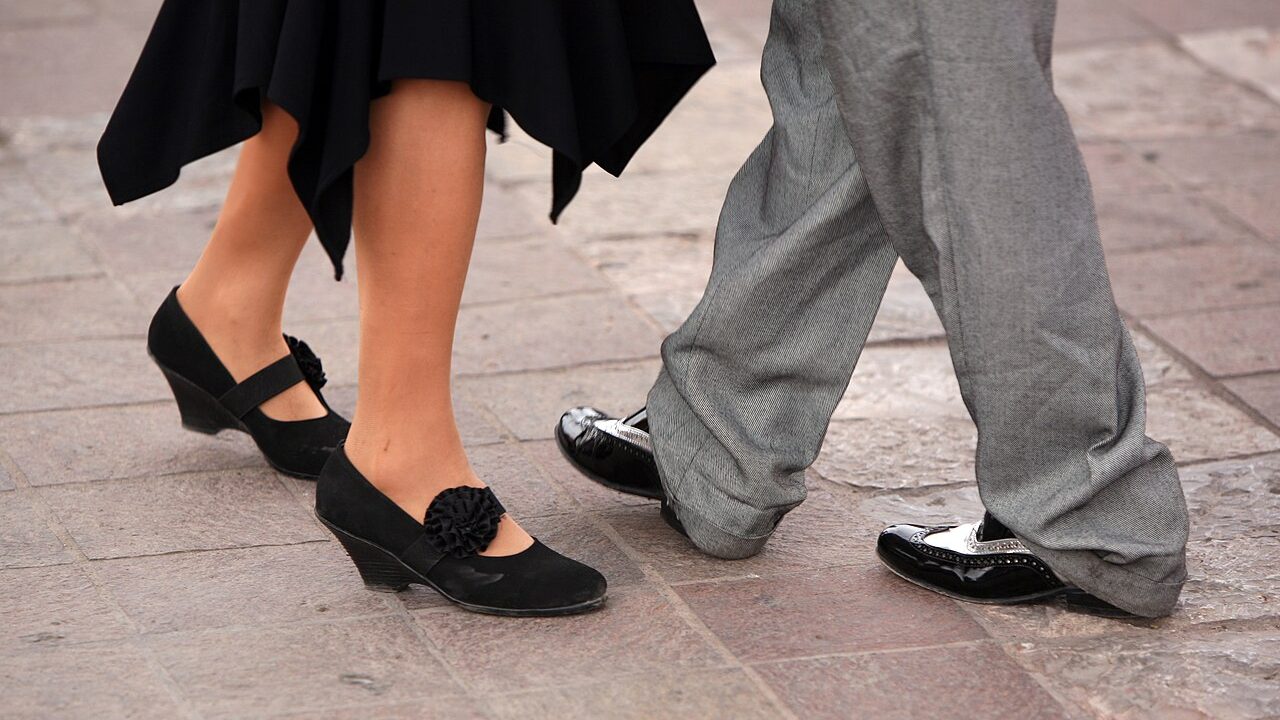
In face-to-face positions, the follower usually mirrors the leader's footwork. If the leader starts on the left foot, the follower starts on the right. In salsa on 1, for instance, the leader steps forward on 1 while the follower steps back. In some positions, such as shadow position, both dance the same footwork.
Roles across SBK styles
- Salsa: leading is often very visible, with many turn patterns and hand changes. Followers have space for spins and styling, especially in shines.
- Bachata: in sensual bachata, leading body waves and isolations requires close, precise connection. Dominican bachata gives both partners room for footwork and play.
- Kizomba: leading happens mostly through the chest and the embrace, with subtle weight changes. Followers respond to very small signals, which makes listening essential.
Common mistakes
Leaders:
- Leading too late or too fast.
- Forcing moves with the arms.
- Ignoring the follower's level or comfort.
- Forgetting the floor around them.
Followers:
- Anticipating instead of waiting for the lead.
- Losing their own timing.
- Gripping the leader's hands, which blocks communication.
- Staying silent when something hurts or feels unsafe.
Gender and role swapping
Traditionally, the man led and the woman followed. That is no longer a rule. In the 21st century, partnerships that break that pattern have become increasingly common, especially in socially progressive dance scenes, and some competitions explicitly allow same-sex couples. Some dances even include moments where the roles switch during the dance.
In the SBK world, many teachers now speak of leaders and followers rather than men and women, and many festivals welcome role swaps. Learning the other role is one of the fastest ways to improve in your own: leaders discover what a clear signal feels like, and followers understand what makes a move readable.
Frequently asked questions
What does the leader do in partner dancing? Chooses the moves, initiates transitions, signals them clearly and keeps the couple safe on the floor.
What does the follower do? Receives and interprets the signals, maintains the movement, adds styling and communicates back through the connection.
Do leaders have to be men and followers women? No. Anyone can dance either role, and many dancers learn both.
Is following easier than leading? No. Each role is hard in its own way.
FAQ
What does the leader do in partner dancing?
The leader guides the couple: they choose the moves in improvised dances, initiate transitions and communicate them to the follower through subtle physical and visual signals, while keeping the couple safe on the floor.
What does the follower do?
The follower receives the leader's signals, interprets them and maintains the movement, adding their own styling and musicality. Followers also communicate back through the connection, for example to warn of a collision.
Do leaders have to be men and followers women?
No. Traditionally men led and women followed, but in the 21st century it has become increasingly common for anyone to dance either role, and many dancers learn both.
Is following easier than leading?
No. Each role is hard in a different way. Leaders must plan, signal clearly and manage the floor; followers must stay ready, react instantly and interpret the music.
Sources
- Wikipedia, "Lead and follow" and "Dance etiquette"