Social dance etiquette comes down to a few simple ideas: ask clearly, accept any answer, respect your partner during the dance, and thank them at the end. Anyone can say no to a dance, for any reason, and a good dancer hears "no" without taking offence. On the floor, the golden rules are no unsolicited teaching, no forcing moves, and awareness of the couples around you. These rules vary slightly between salsa, bachata and kizomba scenes, but they are what keeps a social dance welcoming. Here is a practical guide.
Why etiquette matters
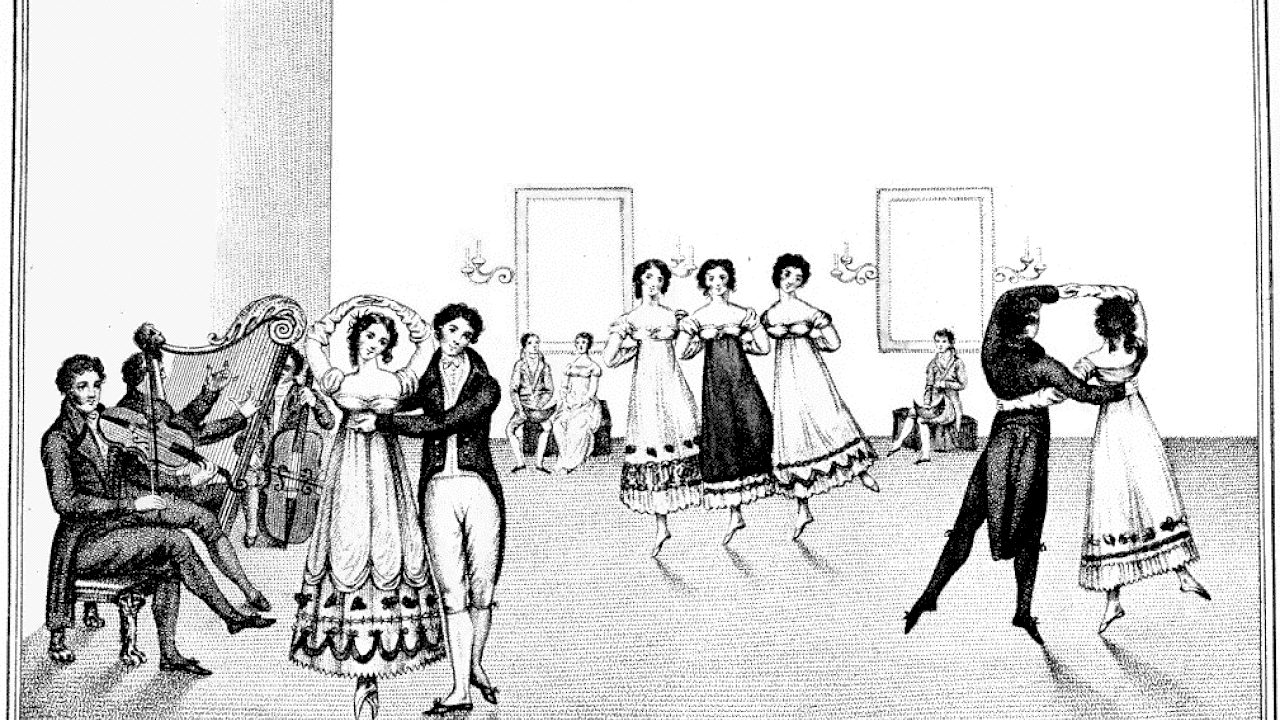
Dance etiquette is the set of conventional rules that govern behaviour at social dances: how people should present themselves, how they approach a partner, how they dance together and how they part. These rules vary between dance styles, and they have changed over time. In the early 20th century, the etiquette writer Emily Post described a world where a young woman who was dancing had to accept everyone who asked her. Today's social dance culture has moved firmly away from that idea.
The author Judy Patterson Wright split etiquette into two parts: partner etiquette, how you behave with your partner, and floor etiquette, how you behave on the dance floor. Her "minimal social dancing etiquette" includes asking and thanking politely, being respectful and courteous, making the atmosphere welcoming, and avoiding collisions.
Asking for a dance
- Make eye contact and smile. At many socials, eye contact and a raised eyebrow or an offered hand is enough.
- Ask clearly: "Would you like to dance?" Simple is best.
- Introduce yourself if you have not danced together before.
- Choose your moment. Avoid interrupting someone in the middle of a conversation, taking a break, drinking or clearly resting.
- Do not grab someone's hand or pull them onto the floor.
- Anyone can ask anyone. Followers asking leaders, and dancers of any gender asking each other, is normal in most SBK scenes.
Saying yes, and saying no
You can decline any dance, for any reason, without explaining yourself. A simple "No, thank you" or "Maybe later" is enough. Reasons can be tiredness, a song you do not like, a past uncomfortable dance or anything else.
If you are refused, smile, say "No problem", and move on. Do not ask why, insist, or ask again five minutes later.
A common courtesy, mentioned in older etiquette guides and still observed by many dancers, is to avoid accepting another person immediately after declining someone, because it can feel like a personal rejection. The exception is when you declined for safety or comfort reasons: you never owe anyone a dance.
During the dance
Respect your partner
At the core of partner etiquette is respect: being responsible for your own actions, trusting your partner, making requests politely, and thanking them. In practice:
- Dance at your partner's level. Leaders should adapt moves to the follower; followers should not demand complex figures from a beginner.
- Never force a move. If a turn or dip does not work, let it go.
- Ask before dips, drops and close embrace moves with a new partner, especially in bachata and kizomba. Many etiquette guides, such as the one used at Stanford's Viennese Ball, say special moves need the partner's consent, and that lifts and aerials have no place on a social floor.
- Respect boundaries. Close connection is part of some dances, but it is never an invitation for anything beyond the dance.
No unsolicited teaching
Giving advice or criticism nobody asked for is one of the most common breaches of etiquette. The social floor is not a class. If something is unsafe or painful, say so simply ("That turn hurt my shoulder"), but leave the teaching for later, and only if your partner asks.
Watch the floor
Avoid collisions, keep your moves compact on a crowded floor, and apologise if you bump into someone, even if it was not your fault. Floorcraft: how not to crash on a crowded dance floor.
Hygiene and appearance
Etiquette also covers how you show up. Socials get hot, and partner dancing is close:
- Shower and use deodorant before the event.
- Bring a spare shirt or two, and change when you get sweaty.
- Fresh breath: mints help.
- Avoid strong perfume, which can be overwhelming at close range.
- Watch accessories: big rings, watches and long necklaces can hurt or catch.
Ending the dance
At the end of the song, or of the agreed number of songs, thank your partner. Escorting them back to the edge of the floor is a classic courtesy, especially if the floor is crowded.
How many songs to dance together depends on the scene. At many salsa and bachata socials, one or two songs is the norm, and either partner can end the dance after any song. Some couples stay together for several songs, especially when the DJ plays a run of similar tracks. If you want to stop, a smile and a "Thank you" at the end of the song is all it takes.
Safety and consent
Most festivals and many socials now publish a code of conduct and have a team or contact person for problems. If someone makes you uncomfortable, you can stop the dance at any moment, even in the middle of a song, and report it to the organisers.
If someone tells you that something you did made them uncomfortable, listen, apologise and adjust. Good etiquette is about making sure everyone wants to come back next week.
Quick checklist
- Ask clearly, and accept any answer.
- Say no without guilt, and hear no without offence.
- Dance at your partner's level, and never force moves.
- No unsolicited teaching.
- Watch the floor and apologise for bumps.
- Shower, bring a spare shirt, skip the heavy perfume.
- Thank your partner at the end.
Frequently asked questions
How do you ask someone to dance? Eye contact, a smile, an offered hand and a simple "Would you like to dance?".
Is it rude to say no to a dance? No. Anyone can decline for any reason.
Should you give advice to your partner on the social floor? Generally no, unless they ask.
How many songs should you dance with one partner? Often one or two at salsa and bachata socials, sometimes more.
FAQ
How do you ask someone to dance?
Make eye contact, smile, offer your hand and ask simply, for example 'Would you like to dance?'. Accept the answer gracefully, whatever it is.
Is it rude to say no to a dance?
No. Anyone can decline a dance for any reason, and a simple 'No, thank you' is enough. Many dancers avoid accepting someone else straight after refusing a person, unless the refusal was for safety or comfort reasons.
Should you give advice to your partner on the social floor?
Generally no. Unsolicited advice or criticism is one of the most common breaches of social dance etiquette. Save teaching for class, unless your partner asks.
How many songs should you dance with one partner?
Customs vary by scene, but at salsa and bachata socials one or two songs is common. Some couples choose to stay for several songs. Either partner can end the dance politely at the end of a song.
Sources
- Wikipedia, "Dance etiquette" (including Judy Patterson Wright's guidelines on partner and floor etiquette, and the Stanford Viennese Ball's floor practices) and "Lead and follow"