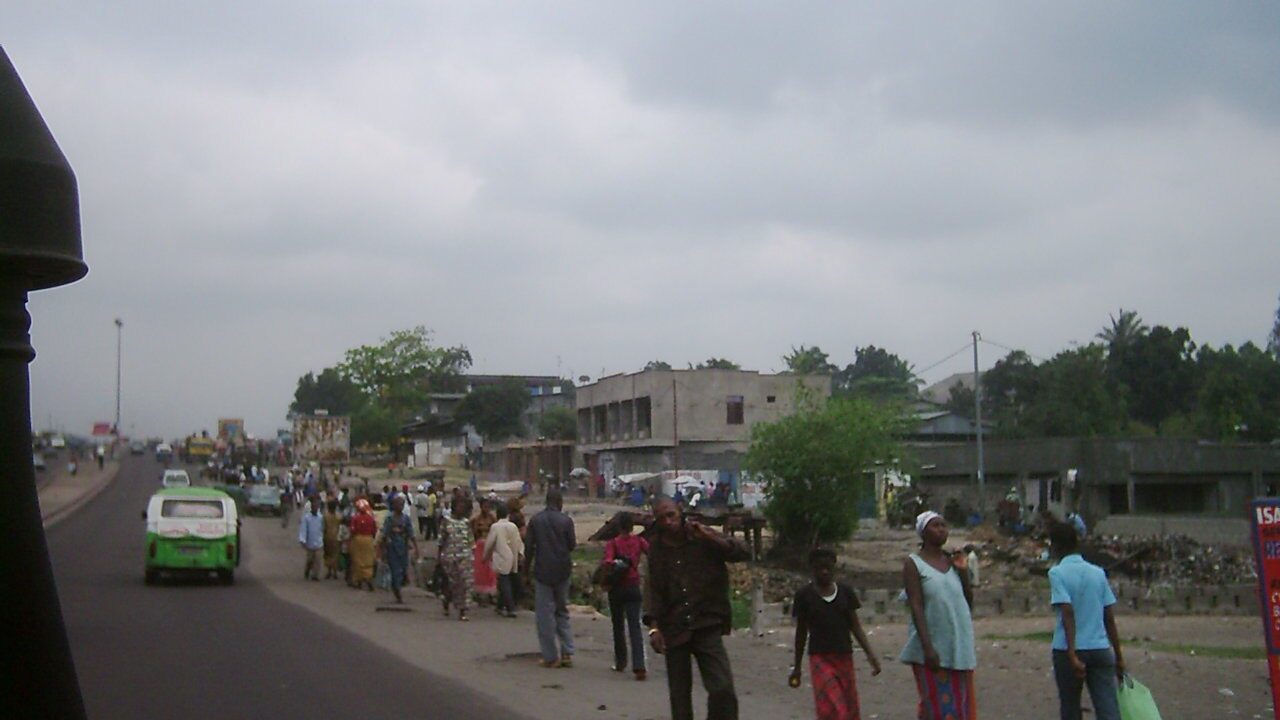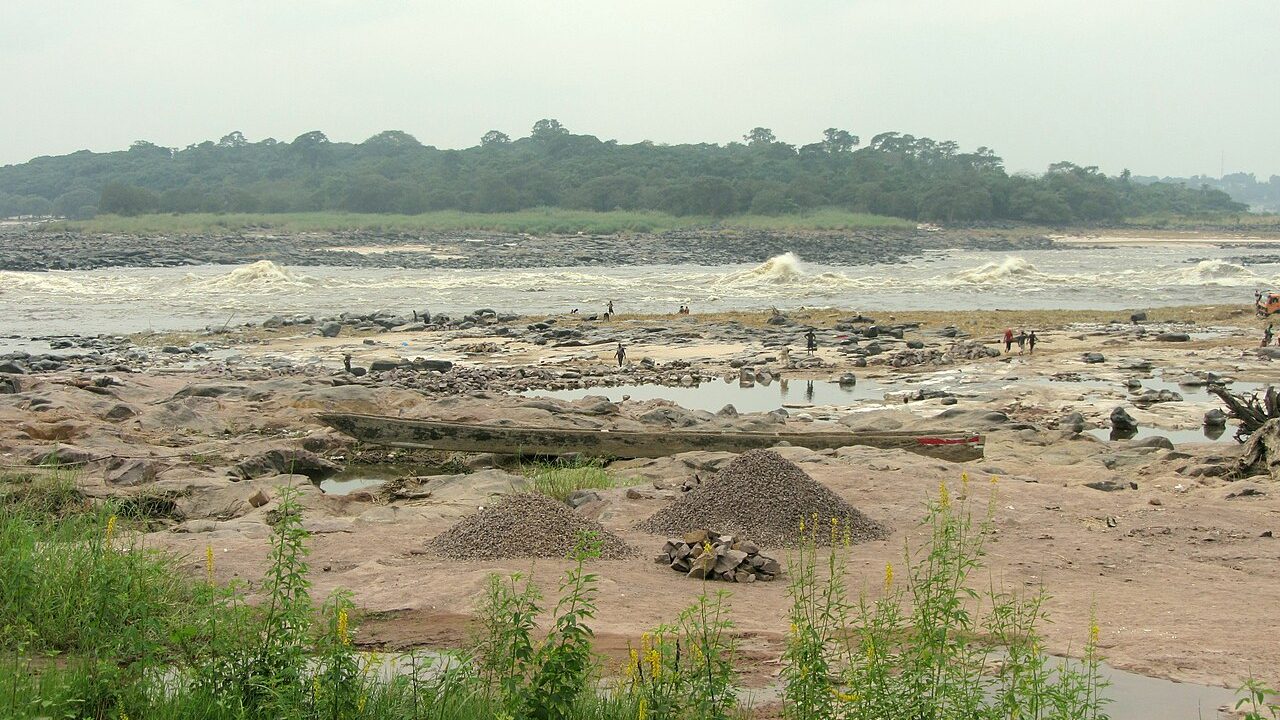
Congolese rumba is the guitar-based dance music that grew on both banks of the Congo River, in Kinshasa and Brazzaville, from the 1940s, inspired by Cuban son records played on the radio. Soukous came out of it in the 1960s: faster, built around long dance sections and dazzling, high-pitched guitar lines. Between them, they became the most influential popular music in Africa, shaped later styles from Kenya to Ghana, and found a second home in Paris in the 1970s and 1980s. In December 2021, UNESCO added Congolese rumba to its list of intangible cultural heritage.
Cuban records on Congolese radio
The story starts with local dances. In the early 20th century, partnered dances such as the maringa spread through the Lower Congo and the area around the Pool Malebo, the wide stretch of the river between Kinshasa and Brazzaville. Accordions and acoustic guitars gradually replaced the older thumb pianos as the main melody instruments.
Then came the records. In the 1930s and 1940s, Cuban son groups such as the Sexteto Habanero, the Trío Matamoros and Los Guaracheros de Oriente were broadcast on Radio Congo Belge and became hugely popular. Those records were often labelled "rumba", and the label stuck to the local music they inspired. So Congolese rumba is closer to Cuban son than to the Cuban rumba of drums and voices. More on son cubano.
Congolese bands first covered Cuban songs, singing the Spanish words phonetically. Then they wrote their own songs, in Lingala and French, and moved the Cuban horn lines onto guitars.
The first stars
Antoine Wendo Kolosoy, known as Papa Wendo, is remembered as the first star of Congolese rumba. His 1948 song "Marie-Louise", written with the guitarist Henri Bowane, became popular across sub-Saharan Africa.
By the 1950s, big bands with several electric guitars, bass, congas, horns and singers had become the norm. Two dominated:
- African Jazz, led by Joseph Kabasele, known as Le Grand Kallé.
- OK Jazz, later TPOK Jazz, led by the guitarist Franco Luambo. Franco's band introduced the mi-solo, a guitarist playing arpeggios between the lead and rhythm parts.
In 1960, Le Grand Kallé wrote "Indépendance Cha Cha" during the Brussels round table that prepared the independence of the Belgian Congo. It became one of the first pan-African hits and is still the best-known song of Congolese rumba.
From rumba to soukous
In the early 1960s, younger musicians began to speed up the rumba. Drummers moved the clave pattern to the snare drum, and the lead guitar became the centre of the music, with fast, high lines.
The word soukous comes from the French verb secouer, to shake, through secousse, a jolt. It first described someone moving jerkily, then became the name of a dance and of the music.
Who started it is disputed. The Congolese musicologist Clément Ossinondé credits Franco and his fast rumba odemba, which turned the sebene, once a short instrumental bridge, into the heart of the song. Others, including the British music historian Gary Stewart, place the birth of soukous in Brazzaville, with the guitarist Jacques Kimbembe and the Super Band, later Orchestre Sinza Kotoko, around 1966. Both cities have a claim, and the music moved across the river constantly.
The sebene: where the dancing happens
A classic Congolese song has two halves. The first is sung, often slow and melodic. The second is the sebene, an instrumental section where the guitars lock into a repeating groove, the lead guitar soars, and the dancers take over the floor.
The late 1960s saw a flood of new dances. Docteur Nico launched the kiri-kiri, Tabu Ley Rochereau "les jobs", and many others followed. Docteur Nico summed up the period by saying that they invented a new dance style every day.
The great names
- Tabu Ley Rochereau and Docteur Nico Kasanda, with African Fiesta, are considered pioneers of modern soukous. Tabu Ley became the first African artist invited to play the Olympia in Paris, in December 1970.
- Franco and TPOK Jazz, the dominant band of Kinshasa for decades.
- Zaïko Langa Langa, formed by students in 1969 around Papa Wemba, which pushed a faster, younger sound.
- Papa Wemba, Sam Mangwana, Pepe Kalle, Mbilia Bel and later Koffi Olomide.
Soukous takes over Africa
By the late 1960s, soukous was established across Central Africa, and it went on to influence East and West African music. As political and economic conditions worsened in Zaire in the 1970s, many musicians moved to Kenya, Tanzania and Uganda, where Congolese bands filled the nightclubs. The cavacha rhythm, popularised by Zaïko Langa Langa and others, became a signature of the Zairean sound in Nairobi.
Paris in the 1980s
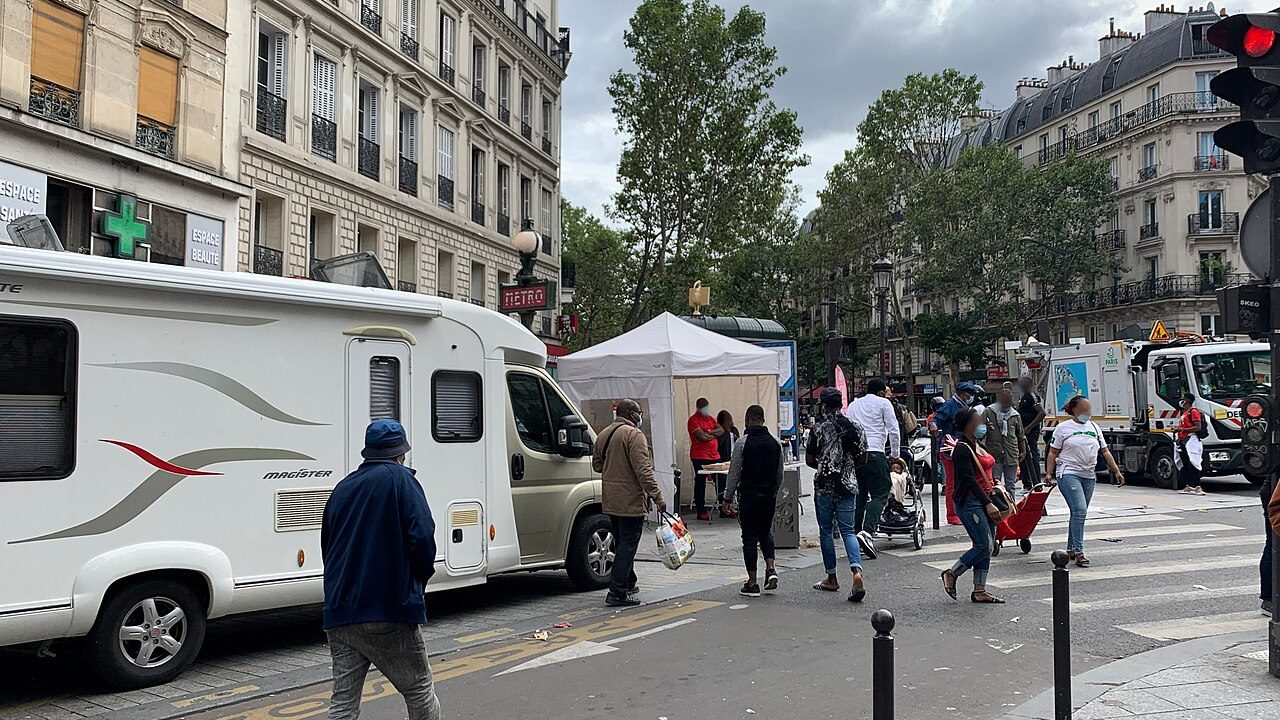
The other route led to Europe. From the 1970s, many Congolese musicians settled in Brussels and Paris, and records were often produced in Europe and shipped back to Africa.
In Paris, soukous became faster and more international. Sam Mangwana's African All Stars had a hit with "Suzana Coulibaly" at the end of 1979. Kanda Bongo Man, who moved to Paris the same year, changed the structure of the songs, putting guitar solos after every verse instead of only at the end. His style gave birth to the kwassa kwassa dance, where the hips move back and forth and the hands follow them. Paris also brought Congolese musicians into contact with the zouk of Kassav'.
What came next
In Kinshasa, the music kept changing. Ndombolo, the high-energy style of the 1990s and 2000s, grew from the same tree, with even more emphasis on the dance. More on ndombolo.
The old songs never disappeared. When UNESCO recognised Congolese rumba in 2021, on a joint nomination by the Democratic Republic of the Congo and the Republic of the Congo, it was celebrated on both banks of the river.
Where to start listening
- Le Grand Kallé and African Jazz, "Indépendance Cha Cha" (1960).
- Franco and TPOK Jazz, for the classic Kinshasa sound.
- Tabu Ley Rochereau, for the move from rumba to soukous.
- Zaïko Langa Langa, for the younger, faster style.
- Kanda Bongo Man, for 1980s Paris soukous.
Frequently asked questions
What is the difference between Congolese rumba and soukous? Rumba is the older, slower music from the 1940s; soukous grew from it in the 1960s, faster and more guitar-led.
Why is it called rumba if it is not Cuban rumba? Cuban son records were labelled "rumba", and the name stuck.
What does soukous mean? It comes from the French secouer, to shake.
Is Congolese rumba UNESCO heritage? Yes, since December 2021.
FAQ
What is the difference between Congolese rumba and soukous?
Congolese rumba is the older, slower music that grew in the Congo from the 1940s. Soukous developed from it in the 1960s, with faster rhythms, longer dance sections and bright, rapid guitar lines. Journalists often use the two words as synonyms.
Why is it called rumba if it is not Cuban rumba?
Imported Cuban son records were often labelled 'rumba', and the name stuck to the local music they inspired, even though it is closer to Cuban son than to Cuban rumba.
What does soukous mean?
The word comes from the French verb secouer, to shake, through 'secousse', a jolt. It first described jerky movement and became the name of a dance and a music.
Is Congolese rumba UNESCO heritage?
Yes. Congolese rumba was added to UNESCO's list of intangible cultural heritage in December 2021, on a joint nomination by the two Congos.
Sources
- Wikipedia, "Soukous", "Congolese rumba", "Indépendance Cha Cha", "Franco Luambo", "Le Grand Kallé", "Tabu Ley Rochereau" and "Kanda Bongo Man"
- UNESCO, Intergovernmental Committee decision 16.COM 8.B.8, "Congolese rumba" (December 2021)
- Al Jazeera, "The soul of the Congolese: Rumba added to UNESCO heritage list" (15 December 2021)