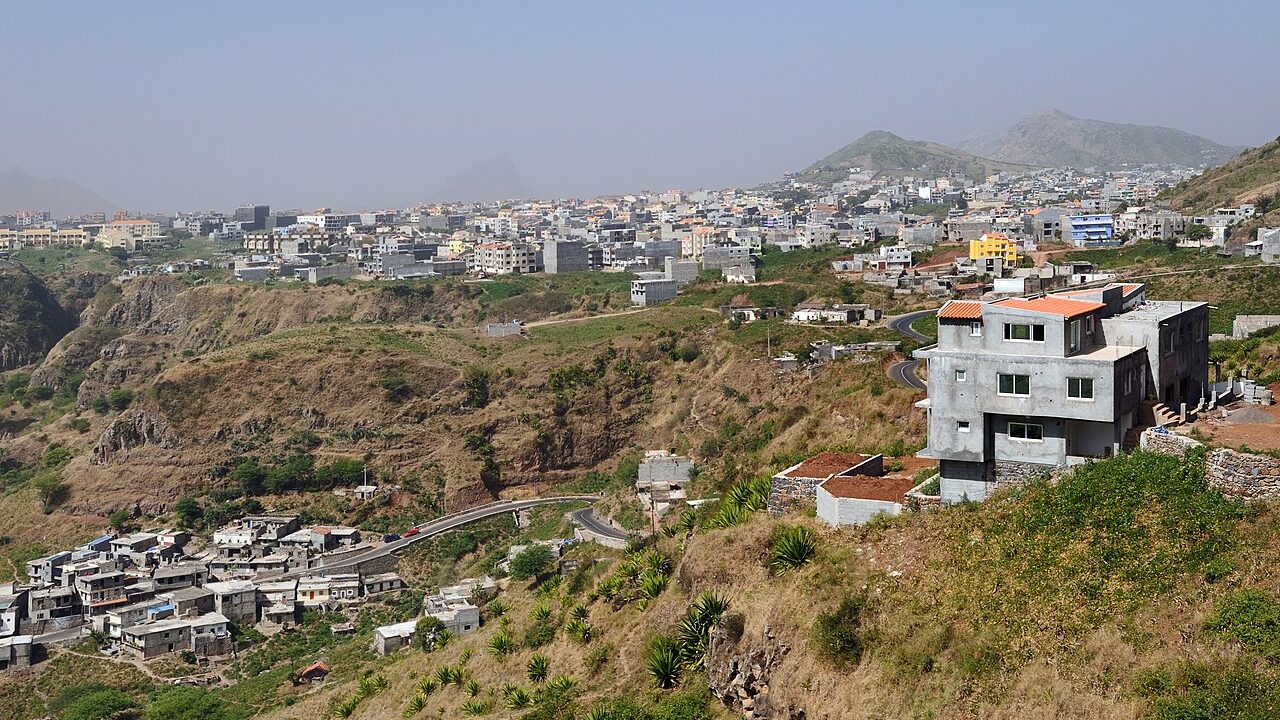
Funaná is the fast, accordion-driven music and couple dance of Cape Verde, born on Santiago, the country's largest island. In its traditional form it needs just two instruments: the gaita, a diatonic accordion, and the ferrinho, a metal bar scraped to give a relentless rhythm. For much of the 20th century, funaná was the music of Santiago's rural poor, looked down upon and repressed under Portuguese colonial rule. After independence in 1975, and above all thanks to the band Bulimundo in the 1980s, it became a national music heard on every island and far beyond.
The sound: gaita and ferrinho
Funaná is built on the diatonic accordion, known in Cape Verde as the gaita. That instrument shapes the music: in its most traditional form, funaná uses only diatonic scales. The player's left hand provides the bass and chords, and the right hand plays the melody.
The rhythm comes from the ferrinho, a metal bar that the player scrapes with a piece of metal. It works much like the washboard in zydeco or the güiro in Latin music. The researcher Gláucia Nogueira notes that the ferrinho was originally the blade of a hoe.
Songs usually alternate verses and a refrain, with an accordion solo in between. The tempo can be lively or more relaxed, always on a two-beat rhythm. The lyrics talk about daily life, love, hardship and social criticism, often through proverbs and figures of speech that require a good knowledge of local culture and of Cape Verdean Creole.
The dance
Funaná is a couple dance. Partners hold each other with one arm and join hands with the other. The dance is made of quick, strong bends of each knee in turn, marking the beat.
There are two main ways of dancing it. In the more rural style, the bodies lean slightly forward, with the partners' shoulders touching, and the feet lift off the ground. In the more urban, stylised version, the bodies are more upright, chest to chest, and the feet drag along the floor.
Where it comes from
Funaná is a relatively young genre, and its origins come mostly from oral tradition. One story says the accordion was introduced to Santiago in the early 20th century so that the population would learn Portuguese music, and that the islanders turned it into something completely new. Another links it to cheap accordions imported as a substitute for church organs. Neither story is backed by firm documents.
The name is also recent, probably from the 1960s or 1970s. Some say it comes from the Portuguese word "fungagá". Others say it joins the names of two musicians, an accordionist called Funa and a ferrinho player called Naná. Older names for the music were "fuc-fuc" and "badju l' gaita", the accordion dance.
The ban
For a long time, funaná was confined to rural Santiago and the poorer classes. Under Portuguese rule it was not just looked down upon. According to RTP, the Portuguese public broadcaster, funaná, like the batuco and the tabanca, was seen by the colonial regime as a marginal practice and faced a series of coercive measures by civil and religious authorities. Performing it was reportedly forbidden in the capital, Praia, where the more refined morna enjoyed prestige.
Accounts of the period describe it as music judged too wild and too African by the colonial authorities, as Afropop Worldwide put it. For many people on Santiago, playing funaná was therefore an everyday act of defiance, the angle RTP's report put forward.
The self-taught accordionist Bitori, one of the original interpreters of funaná, was already playing in the 1950s and lived through that period. His album Legend of Funaná later found an international audience.
Independence and Bulimundo
Cape Verde became independent in 1975, and the new government encouraged a revival of the country's popular music. The first attempts to modernise funaná in the 1970s did not really work.
The breakthrough came with Bulimundo, led by the guitarist and composer Carlos Alberto Martins, known as Catchás. He went back to the source, the interior of Santiago, and used his knowledge of jazz and classical music to create a new way of playing funaná with electric guitars, bass, drums and keyboards replacing or supporting the accordion and ferrinho. According to Cabo Verde & a Música, Bulimundo first played for the public of Praia in 1980, in a series of concerts celebrating five years of independence.
Bulimundo's success carried funaná to all of Cape Verde's islands. Two decades after Catchás's first projects, funaná was no longer a regional style but a national one.
Going international
In the 1990s, the band Finaçon, born from a split in Bulimundo, helped take funaná abroad with a contract with a foreign record label. It also travelled with the Cape Verdean diaspora.
At the end of the 1990s came a return to the roots. Bands such as Ferro Gaita put the gaita and ferrinho back at the centre, sometimes with bass, drums and guitar added. Today, funaná is played in acoustic, electric and electronic versions, and newer artists mix it with rock, punk and club music.
Funaná and its neighbours
Funaná sits in a family of Cape Verdean genres that includes the slow, melancholic morna, the livelier coladeira and the batuco of Santiago. In the 1970s, attempts to revive funaná struggled precisely because it could not step away from the coladeira, according to Catchás. Bulimundo gave it a sound of its own.
Where to start listening
- Bulimundo, for the electric revival of the 1980s.
- Finaçon, for the 1990s international sound.
- Ferro Gaita, for the return to the accordion.
- Bitori, Legend of Funaná, for the older, raw style.
Frequently asked questions
What is funaná? A music and couple dance from Santiago, Cape Verde, traditionally played on the gaita, a diatonic accordion, and the ferrinho.
Was funaná banned? It was repressed under Portuguese colonial rule, with coercive measures by civil and religious authorities and a ban on playing it in Praia. It gained acceptance after independence in 1975.
Who made funaná popular? Bulimundo, led by Catchás, in the 1980s; Finaçon in the 1990s; Ferro Gaita at the end of that decade.
How do you dance funaná? As a couple, with quick, strong bends of each knee in turn, marking the beat.
FAQ
What is funaná?
A music and couple dance from Cape Verde, originally from Santiago island. In its traditional form it is played on a diatonic accordion, called gaita, and the ferrinho, a metal bar scraped with another piece of metal.
Was funaná banned?
Under Portuguese colonial rule, funaná was treated as a marginal, rural practice. Sources describe coercive measures by civil and religious authorities and a ban on performing it in the capital, Praia. It gained acceptance after independence in 1975.
Who made funaná popular?
The band Bulimundo, led by Carlos Alberto Martins, known as Catchás, revived and electrified funaná in the 1980s and spread it to all the islands. Finaçon helped take it abroad in the 1990s, and Ferro Gaita led a return to the accordion at the end of that decade.
How do you dance funaná?
As a couple, holding each other with one arm and joining the other hands, with quick, strong bends of each knee in turn, marking the beat.
Sources
- Wikipedia, "Funaná"
- RTP, "Em Santiago, o funaná era ato de insubmissão quotidiano contra o regime colonial"
- Cabo Verde & a Música (Gláucia Nogueira), "Bulimundo" and "Funaná"
- Gláucia Nogueira and Djoy Amado, "The koladera: hypotheses for a genealogy", GIS, Universidade de São Paulo (2024)
- Afropop Worldwide, field report on the Atlantic Music Expo, Praia (2017)
- Songlines, review of Bitori, "Legend of Funaná"